
Progression & Assessment

This article explores how historical understanding can be developed with our very youngest children using a theme of families as a starting point. It considers all the age ranges identified within the Early Years Framework. It demonstrate how progression can be developed across those age ranges...
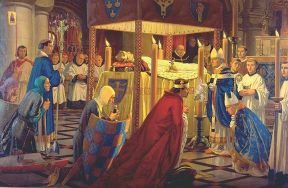
Sharing our classrooms with a student teacher has changed over recent years, as the DfE has become increasingly interested in the ITT curriculum seamlessly integrating into school placement experiences. Part of this relates to ITaPs. This article outlines an ITaP designed by the University of Reading. Not only does it...
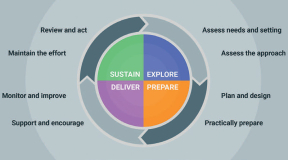
In this useful article, Matt Flynn uses the Education Endowment Foundation implementation process (2024) to exemplify how history subject leaders can affect positive whole school change and develop their history provision in line with their school’s needs. He shares the process through a developed example, providing an excellent scaffold that...
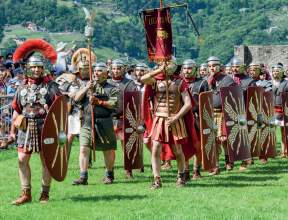
Jo Pearson uses the example of The Greetland Academy in Halifax to address the thorny issue of planning for progression and sequence. She recognises the problems of simplistic and formulaic definitions about progression. In planning the curriculum, four lenses are identified and considered to determine what is taught and when....
Very few teachers prefer assessment to teaching yet the latter has little point if there is no way of knowing that what we teach is beneficial to our pupils. The problem is that there is no such thing as perfect assessment and feedback. For example, you cannot assess everything –...
Every year schools need to produce a statutory annual report for parents and carers, setting out ‘brief particulars of achievements in all subjects and activities forming part of the school curriculum’. This should include the strengths and developmental needs of each child. In a subject such as history, how do...
The school in which I work serves a community of locals and expats and follows the English National Curriculum. Situated in Kuala Lumpur, the capital of Malaysia, we are one of a growing number of international schools in the area. It is five form entry and only opened in 2009....
Assessment issues crop up with regularity in the pages of this journal. They have also been mentioned frequently in inspections and in the schools assessed for the Quality Mark. The problem with some of the recommendations is that they anticipate massive amounts of time and energy being devoted to it...
The challenge for subject leaders and school leadership teams continues to be managing the tension between what history has to offer your vision for learning and your children's entitlement to a high-quality history education. The new national curriculum has ensured that this year you have had a close look at...
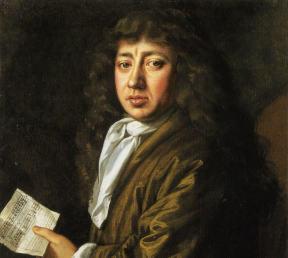
Teaching about significant individuals at Key Stage 1. Workshop by Professor Penelope Hartnett, University of the West of England The history programme of study for Key Stage 1 requires pupils to be taught about: The lives of significant individuals in the past who have contributed to national and international achievements,...
Teachers and schools should surely be forgiven for quickly turning to the pages containing the ‘subject content' - within the new 2014 history curriculum - and finding out ‘what' they should be teaching. This is especially true for Key Stage 2 where children must now learn British history from the...
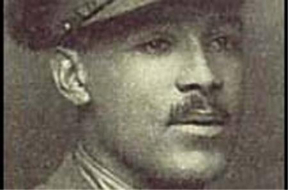
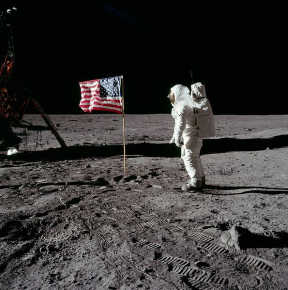
Events which encapsulate family, community, national and global history provide rich opportunities for engaging children. Some of these draw on positive memories associated with past events: the coronation of Queen Elizabeth II, how people responded to the first flight to the moon, the Millennium celebrations. Yet it is perhaps gruelling...

Using ‘Development Matters' to plan learning for history in the Foundation stage You won't find the term history in the Early Years curriculum framework at all. That being so, it can be difficult to know how best to support our Nursery and Reception colleagues when developing historical understanding within the...

The new (2014) Primary History National Curriculum is finally upon us. The first thing you might notice is that the level descriptions have gone. These were first introduced in 1995 and became the mainstay for assessing pupil progression and attainment in Key Stages 1, 2 and 3 across schools in...
The chance to pilot the new National Curriculum presented me with the opportunity I was looking for to revamp a tired Year 2 curriculum. I began teaching in Year 2 two years ago, having previously spent five years working in Key Stage 2. As in many other schools across the...

The removal of National Curriculum levels has left many schools and teachers scratching their heads and wondering how to proceed. National Curriculum levels have been used and misused in the past to both define progress in the subject and as a basis for assessment. In this pamphlet, Jamie Byrom takes...

Whilst a number of schools have had well-considered assessment procedures for primary history, these represented a minority. With the new national curriculum, the old level descriptions have been replaced by a single sentence attainment target which states that "by the end of each key stage, pupils are expected to know,...

In the 2014 national curriculum for primary and secondary history one of the key differences is that, for the first time since 1991, there are no level descriptions against which you can assess pupils' progress. The new attainment target says simply that: ‘By the end of each key stage, pupils...

Please note: this article was written before the 2014 National Curriculum and some content and references may no longer be relevant. During the Early Years and Foundation Stage children should listen to stories, ask how and why and talk about the past (DfE 2012). Young children are comfortable with stories....

Chronology: Developing a coherent knowledge and understanding of Britain's past and of the wider world First, this article considers the reasons why it is essential for children to develop a chronological framework. Next it considers ways in which this framework is necessary for the development of the time concepts set...