Similarity & difference

Similarity and difference is based upon an understanding of the complexity of people’s lives, differing perspectives and relationships between different groups. Asking how similar or different allows pupils to draw comparisons across people, their perspectives, motivations and actions as well as across time and space, helping children to develop a greater understanding of modern global society.

Sort by: Date (Newest first) | Title A-Z
Show: All | Articles | Podcasts | Multipage Articles
  • Task design for historical thinking

    Article

    In this article, Julia Huber examines how task design can support pupils’ historical thinking in the primary classroom. Drawing on her own practice, she shares examples that develop conceptual understanding in areas such as significance, similarity and difference, continuity and change, and interpretations...

    Click to view
  • History through children’s voices

    Article

    This article is free to everyone. For access to hundreds of other high-quality resources by primary history experts along with free or discounted CPD and membership of a thriving community of teachers and subject leaders, join the Historical Association today In this article, we explore examples of children’s writing, from...

    Click to view
  • Little coins, big histories

    Article

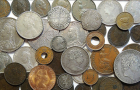
    In this article, Damienne Clarke examines how coins can be used as a focus for history teaching and learning in Key Stage One. She describes the emergence of coins from older systems of bartering, as well as their role as tokens of commemoration for significant people and events. This article provides...

    Click to view
  • Who is in charge?

    Article

    Children are introduced from the start of their lives to the idea that someone is in charge.  Helen Crawford and Karin Doull explore how the question ‘Who is in charge?’ can be used with EYFS children to develop ideas of power, authority and agency. The article looks at its relevance...

    Click to view
  • Exploring the many aspects of neolithic Britain

    Article

    The Neolithic period provides many challenges – the huge length of time, the limitations of evidence, the many different aspects.  This article suggests how a teaching programme might  be structured to explore the period.  It promotes the idea that these people, so distant in time, were much as we are...

    Click to view
  • Similarity and difference with a tasty twist

    Article

    Polly Gillow uses ice cream, something children will readily relate to, as a means of exploring similarities between past and present, drawing on a range of sources and contexts together with practical activities including their sense of taste...  

    Click to view
  • Active learners: classroom strategies for enhancing history teaching

    Article

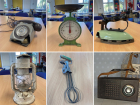
    Lindsey Rawes has provided a range of activities which she uses with children to engage them in developing their historical knowledge and understanding. She has included retrieval practice, engaging children as detectives when looking at artefacts, and evaluating the understanding of historical questions through card sorts, considering similarities and differences, and using...

    Click to view
  • The wheels (and horses…) on the bus

    Article

    A theme in the Early Years will have many cross-curricular links, encompassing many of the different areas of learning in the Early Years Foundation Stage (EYFS) Statutory Framework. The focus for this article is on historical elements of Understanding the World; however there will be some cross-over into other areas of...

    Click to view
  • Exploring the past through active enquiry

    Article

    Story and enquiry – that’s what I think of when considering history. The stories of events and people pull you into the past and stories generate a curiosity that encourages exploration. ‘Finding out’ is central to what we do in history. Our early-years classrooms must provide vibrant and challenging environments...

    Click to view
  • Film: What's the wisdom on... Similarity and Difference (Primary)

    Article

    Please note: the 'What's the Wisdom On' film series has been produced principally for secondary school history teachers, however some of the content is transferrable to a primary setting. Secondary members can view the film here 'What’s the wisdom on…' is a popular feature in our secondary journal Teaching History and provides the perfect stimulus for a department meeting....

    Click to view
  • Pandemics in history: similarity and difference

    Article

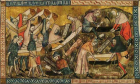
    I was inspired to put pen to paper to include an article putting Coronavirus in some sort of historical perspective after reading Peter Frankopan’s article in The Times newspaper on 28 March. The article entitled ‘Pandemics are terrifying but they can make the world better’ is written by Peter Frankopan...

    Click to view
  • Migration to Britain through time

    Article

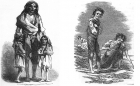
    Migration is rarely absent from the news and arouses political, social cultural and emotional responses which range from compassion to hostility, racism and anti-racism. By exploring migration in the past, it is possible for children to go beyond current issues and appreciate that, rather than being a recent characteristic of...

    Click to view
  • Developing early history skills and understanding through the EYFS

    Article

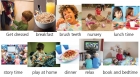
    Read more like this: EYFS scheme of work EYFS Medium term plan: Toys and Games Early Years Foundation Stage (article) Early Years: learning about the past (article) Using 'Development Matters' in the Foundation Stage (article) For many children, going to nursery school is a key part of their day. It...

    Click to view
  • Teaching crime and punishment as a post-1066 theme

    Article

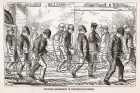
    The most recent HA survey suggests that crime and punishment is a popular theme as a Key Stage 2 development study covering the period after 1066. It is easy to see why. Crime, criminals and punishment have a fascination for many and herein lies its appeal as well as a...

    Click to view
  • Making the most of a census

    Article

    This article looks at how children can utilise and manipulate mathematical data to make sense of a historic past. The focus is on helping children see the numbers as a resource for understanding the experiences of those that lived in this place. Aim: Understand historical concepts such as continuity and...

    Click to view
  • How can old advertisements be used in the primary classroom?

    Article

    Advertising is a central part of our everyday lives. There are few ways to escape it and it has a long pedigree. It has long been recognised that it can help sell products through the power of the punch line or the visual image. Trade cards appeared as early as...

    Click to view
  • Why stop at the Tudors?

    Article

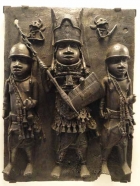
    When deciding to teach the topic of Benin to my Year 5 pupils I was somewhat daunted by the fact that I had never taught it before, and I was determined that it be a meaningful experience which benefited their narrative, chronological and historical skills-based understanding of the subject. I was...

    Click to view
  • Food – a theme for learning about the past

    Article

    Food is a theme that can provide many opportunities for children to develop their understanding of the past. This is a popular theme in many Early Years settings and Reception classes. It can be planned at any time of year and can be adapted in many ways.

    Click to view
  • Overground, underground and across the sea

    Article

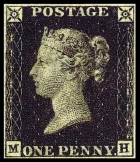
    Communication is at the heart of what it is to be human, and the British postal service has helped to shape the modern world as we know it today. From cryptic Victorian Valentine cards to a lion encountered on Salisbury Plain, there is nothing ordinary about the story of the post! The British postal service...

    Click to view
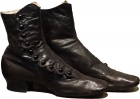
  • Using shoes as an historical source

    Article

    There is something fascinating about what people wore in the past. From corsets to clogs, the evolution of clothing and footwear can give an insight into different periods of history, an excellent way of engaging with the past. Shoes, in some form or another, have been around from the earliest...

    Click to view