Similarity & difference

Similarity and difference is based upon an understanding of the complexity of people’s lives, differing perspectives and relationships between different groups. Asking how similar or different allows pupils to draw comparisons across people, their perspectives, motivations and actions as well as across time and space, helping children to develop a greater understanding of modern global society.

Sort by: Date (Newest first) | Title A-Z
Show: All | Articles | Podcasts | Multipage Articles
  • Our Iron Age challenge

    Article

    The University of Chichester’s three-year BA (Hons) Degree for Primary Education and Teaching involves learning how to provide rigorous and creative educational opportunities for children. The course involves one creativity module each year. The final one involves the development of skills and confidence in creating problem-solving. Four of us were...

    Click to view
  • So was everyone an ancient Egyptian?

    Article

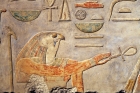
    I will be honest – no child has actually asked me if the world was ever full of Ancient Egyptians! Having said that, by focusing on one part of the world, children are left with either this impression or the idea that nothing was happening elsewhere in the world. Clearly,...

    Click to view
  • Beyond compare: a study of Beatrix Potter and Benjamin Zephaniah

    Article

    The Key Stage 1 National Curriculum encourages teachers to teach their pupils about ‘the lives of significant individuals in the past who have contributed to national and international achievements.’ (DfE, 2014, p. 205). Some teachers have begun to move away from the old favourite subject of Florence Nightingale and as...

    Click to view
  • History supporting global learning

    Article

    I am the teaching head of a small village primary school, Hawkshead Esthwaite Primary, in Cumbria. We have, for the last year been one of the first Centres for Excellence for the Global Learning Programme (GLP).The GLP is a Department for International Development (DFID) initiative which began in September 2013...

    Click to view
  • Ancient Sumer

    Article

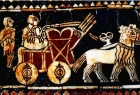
    For many teachers and children alike, Ancient Sumer will be completely new. Although Sumer has always been an option for teaching about Early Civilisations, the fame of Ancient Egypt, as well as being a tried-and-tested topic, has meant that Sumer has perhaps been overlooked. There is little danger of failing...

    Click to view
  • From Home to the Front: World War I

    Article

    Events which encapsulate family, community, national and global history provide rich opportunities for engaging children. Some of these draw on positive memories associated with past events: the coronation of Queen Elizabeth II, how people responded to the first flight to the moon, the Millennium celebrations. Yet it is perhaps gruelling...

    Click to view
  • Early Islamic civilisation

    Article

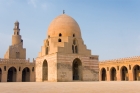
    The Primary National Curriculum pinpoints Early Islamic Civilisation as Baghdad c. AD 900 - yet it was so much more. For approximately a thousand years after AD 700 there was an extraordinary amount of activity that radiated out from Baghdad and along a glittering crescent through North Africa and into...

    Click to view
  • Assessment and Progression without levels

    Article

    The new (2014) Primary History National Curriculum is finally upon us. The first thing you might notice is that the level descriptions have gone. These were first introduced in 1995 and became the mainstay for assessing pupil progression and attainment in Key Stages 1, 2 and 3 across schools in...

    Click to view
  • Britain's settlement by Anglo-Saxons and Scots

    Article

    Anglo-Saxons have been a part of the primary national curriculum from the onset so they may not be as unfamiliar to teachers as some themes. Many teachers also report that pupils enjoy studying them so there is clearly much in their favour. That does not mean, however, that all is...

    Click to view
  • The Maya: a 4,000-year-old civilisation in the Americas

    Article

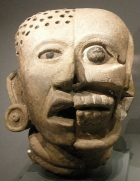
    Obscured by the fame of the Aztec empire or shrouded by a veil of mystery, the cultural history of the Maya has generally been misunderstood by the British public. Maya civilisation developed in a territory the size of Germany and Denmark together (nearly 400,000 km2). This vast territory shows three...

    Click to view
  • Why stories?

    Article

    Please note: this article was written before the 2014 National Curriculum and some content and references may no longer be relevant. During the Early Years and Foundation Stage children should listen to stories, ask how and why and talk about the past (DfE 2012). Young children are comfortable with stories. Through...

    Click to view
  • The Great Fire of London and the National Curriculum

    Article

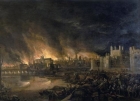
    The Great Fire of London is a favourite National Curriculum teaching topic. This paper draws on the latest resources and teaching ideas to suggest how you can meet both the NC history requirements and the wider ones of the National Curriculum, particularly in integrated programmes that include teaching about the Great...

    Click to view
  • Churches as a local historical source

    Article

    At Key Stage 1 children should learn about significant events, (e.g. the Great Fire of London) and about people and places in their locality. At Key Stage 2 they should learn about British settlement by Anglo-Saxons and Scots (e.g. Anglo-Saxon art and culture) and do a local history study (e.g....

    Click to view
  • OFSTED, primary history and creativity

    Article

    Co-ordinators concerns: OFSTED, primary history and creativity I'm told the emphasis in schools now is for a rigorous approach to history where the children are taught the main facts and features of history. I recall a time not so long ago when the whole curriculum was about creativity but surely...

    Click to view
  • A creative Egyptian project

    Article

    Ideally when teaching history, teachers will look to deliver projects that will engage and motivate, hopefully making the hard work of being creative stimulating and rewarding, based upon questioning, enquiry, investigation of sources and reaching conclusions grounded in the evidence.Ancient Egypt is one of those history topics which, because it...

    Click to view
  • Local History and the 2012 Olympics

    Article

    Please note: this article pre-dates the 2014 National Curriculum and some content may be outdated. With the 2012 London Olympics rapidly approaching, you are probably marvelling at what a once-in-a-lifetime opportunity this is and what amazing classroom teaching opportunities it might bring. You have probably already been inundated with ideas for...

    Click to view
  • Dimensions Of Britishness: Cultural Diversity and Ethnicity

    Article

    Please note: this article pre-dates the 2014 National Curriculum and some content may be outdated. Teaching history is a balancing act between generalities and the particular. This article seeks to explore how Britishness and ethnic diversity relate to a broader understanding of diversity. We do not challenge the teaching of topics...

    Click to view
  • Whose history is it anyway?

    Article

    Please note: this article pre-dates the 2014 National Curriculum and some content may be outdated. The main goals of educating children are meeting their educational and achievement needs. Herein is the challenge. Our classrooms are a cornucopia of diversity. The most prominent or acknowledged being gender, class, religion and ethnicity. Some...

    Click to view
  • Hearts, Hamsters and Historic Education

    Article

    Please note: this article pre-dates the 2014 National Curriculum and some content may be outdated. This is a reflection on a project, set up with a variety of different thoughts about education in its widest sense. Or, to put it another way, a primary school teacher's record of a unique...

    Click to view
  • Learning what a place does and what we do for it

    Article

    Please note: This article pre-dates the current National Curriculum and some content and references may be outdated. Why teach children about architecture and the built environment? Because they shape the future and because they already change our architecture and define the public realm everyday through their actions. Learning about architecture and the built...

    Click to view