Using Sources

It is important to use a wide range of sources such as pictures, artefacts, music and sights. Children will use these to build up their enquiry thought and processes and to build up their understanding of past.

Sort by: Date (Newest first) | Title A-Z
Show: All | Articles | Podcasts | Multipage Articles
  • Think Bubble 54 - Arte facts - Get my Meaning?

    Article

    Please note: this article pre-dates the 2014 National Curriculum and some content may be outdated. It is difficult to think of an area of primary history that has had a more transforming effect on the subject than that of artefacts. The idea of giving children a ‘real' experience of the past...

    Click to view
  • Think like an archaeologist!

    Article

    Since the great brick-built cities of Mohenjodaro and Harappa were first excavated in the early twentieth century, other large and thousands of small sites have been discovered. Clay was the raw material (bricks) for Indus architecture and everyday objects. Pottery was produced in industrial quantities on the foot wheel, an...

    Click to view
  • Time travel to the Early Modern period...

    Article

    This article describes how children in a German primary school explored some documents from the early modern period (seventeenth and eighteenth centuries) relating to the capture of merchant vessels. It makes use of a digital resource ‘The Prize Papers’ linked to the National Archives and found here: www.prizepapers.de The article also explains how...

    Click to view
  • Turn your pupils into history dectectives: using sources to interpret old photographs

    Article

    Give your pupils an interesting old photograph and a magnifying glass and let them be history detectives investigating the past. Use local photographs of places they are familiar with and they will be instantly hooked. Add some more complex sources and give them an insight into the way that 'real'...

    Click to view
  • Using Horrible History to develop primary literacy and history

    Article

    When I started planning for my Key Stage 2 literacy lessons last year, I wanted to link them to my history topic, the Tudors, and I also needed them to cover a significant amount of non-fiction English objectives, having focused on fiction and poetry texts in the previous term. One...

    Click to view
  • Using artefacts to develop young children’s understanding of the past

    Article

    In the children’s picture book Wilfrid Gordon McDonald Partridge, Wilfrid is a small boy who meets Miss Nancy, an old lady who has lost her memory. Wilfrid wants to help, and so he carefully fills a basket with special objects and takes them to her. He places a medal in...

    Click to view
  • Using classic fiction to support the study of childhood in Victorian times

    Article

    Please note: This article pre-dates the current National Curriculum and some content and references may be outdated. Classic fiction provides useful sources of information for investigating the lives, beliefs and values of people in the past. In this article Ann Cowling describes activities undertaken with student teachers which may also serve as models...

    Click to view
  • Using different sources to bring a topic to life: The Rebecca Riots

    Article

    For primary school pupils a key aim of the National Curriculum for history is to understand the method of historical enquiry. Working with original sources is of course central to the whole process and provides a great way to inspire pupils’ experience of the subject. Young pupils, once they have...

    Click to view
  • Using feature films as a means of enhancing history teaching in the primary school

    Article

    Please note: this article pre-dates the 2014 National Curriculum and some content may be outdated. Although I have always been fascinated by history and almost took it as my major subject at university, I have to admit that the bulk of my ‘knowledge' about historical people and events was shaped...

    Click to view
  • Using inventories in Key Stage 2 history

    Article

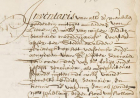
    Continuing the focus on using historical sources, this article by Clare Lally introduces us to the use of historical inventories. Using examples from the Tudor period, Clare considers how inventories can be used to explore diversity of experience between rich and poor. At every stage of historical enquiry, from primary...

    Click to view
  • Using oral history in the classroom

    Multipage Article

    The Oral History Society has kindly agreed to produce two new films aimed at history teachers who are new to carrying out or using oral histories either in their teaching or with students. These two films will equip teachers with the essential tools and knowledge for using and devising effective...

    Click to view
  • Using original sources

    Article

    Why would I want those old books in my classroom? It has always been recognised that good primary history is able to connect the past with the world the children currently inhabit. That is why focusing on schools can be so useful. If there is one experience the children have...

    Click to view
  • Using school logbooks - Bishop Graham Memorial Ragged School, Chester

    Article

    Please note: this article pre-dates the 2014 National Curriculum. Logbooks can be described as the diary of the headmaster. The contents can vary in interest depending on how diligent the headmaster was at recording events. Some merely record the delivery of coals, the attendance at the school or the visitors to...

    Click to view
  • Using shoes as an historical source

    Article

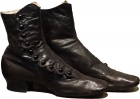
    There is something fascinating about what people wore in the past. From corsets to clogs, the evolution of clothing and footwear can give an insight into different periods of history, an excellent way of engaging with the past. Shoes, in some form or another, have been around from the earliest...

    Click to view
  • Using some more unusual sources in the primary classroom

    Article

    In this article Tim Lomas illustrates how it is valid and creative to go beyond some of the most popular sources used by primary history teachers. He looks at a number of historical enquiries and questions that might be considered as a theme and some sources that might be used....

    Click to view
  • Using the back cover image: Moustache cup

    Article

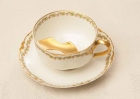
    The moustache cup I purchased on ebay is one of the most popular artefacts I use with students in a good game of ‘guess the object’. It has a wonderful quality of being at the same time familiar yet strange. Despite telling the students not to start with the question...

    Click to view
  • Using the back cover image: Mummified cat

    Article

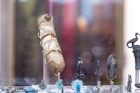
    For hundreds of years, travellers to Egypt have marvelled at the amazing monuments evident throughout the country. The treasures of Ancient Egypt became more fascinating after  the discovery of the Rosetta stone in 1799, which led to the deciphering of the hieroglyphic language. Many Victorian explorers returned to their European...

    Click to view
  • Using the back cover image: Oxford Street in the 1960s

    Article

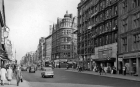
    Photographs are very useful and productive documents when teaching history. They provide a snapshot of the past such as this one from just outside Selfridges on Oxford Street in London c.1962-64. Combined with further images from Heritage Explorer, clips from Pathé News, extracts from the 1911 Census, locally gathered images...

    Click to view
  • Using the back cover image: Reconstructing the Romans

    Article

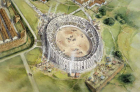
    Reconstruction drawings, diagrams and models are vital examples of interpretation that we can use to help pupils understand the past. On one level they help to fire imagination, while on another they offer a way of presenting important historical facts. The image overleaf is a reconstruction drawing of Chester's Roman...

    Click to view
  • Using the back cover image: Sandbach Crosses - an Anglo-Saxon market cross

    Article

    This image is a reconstruction, or interpretation, by Peter Dunn, an artist, of what Sandbach Crosses might have looked like in the ninth century. They are one of the few remaining Anglo-Saxon stone crosses in the country. They stand in the market place in Sandbach, Cheshire. You can find a...

    Click to view