Using Sources

It is important to use a wide range of sources such as pictures, artefacts, music and sights. Children will use these to build up their enquiry thought and processes and to build up their understanding of past.

Sort by: Date (Newest first) | Title A-Z
Show: All | Articles | Podcasts | Multipage Articles
  • Oral history - a source of evidence for the primary classroom

    Article

    Please note: this article pre-dates the 2014 National Curriculum and some content may be outdated. To help children develop a more rounded awareness of historical understanding, they should have the opportunity to examine different types of evidence. The National Curriculum states that, "children should recognise that the past is represented and interpreted...

    Click to view
  • 'Doing Local History' through maps and drama

    Article

    Please note: this article pre-dates the 2014 National Curriculum and some content may be outdated. Editorial note: John Fines produced two case studies of Local History for the Nuffield Primary History Project. One on them is published here for the first time.

    Click to view
  • History in the Urban Environment

    Article

    Please note: this article pre-dates the 2014 National Curriculum and some content may be outdated. A study of the local environment can make a vital contribution to children's sense of identity, their sense of place and the community in which they live. More importantly, a local study can enable children...

    Click to view
  • Learning what a place does and what we do for it

    Article

    Please note: This article pre-dates the current National Curriculum and some content and references may be outdated. Why teach children about architecture and the built environment? Because they shape the future and because they already change our architecture and define the public realm everyday through their actions. Learning about architecture and the built...

    Click to view
  • Hearts, Hamsters and Historic Education

    Article

    Please note: this article pre-dates the 2014 National Curriculum and some content may be outdated. This is a reflection on a project, set up with a variety of different thoughts about education in its widest sense. Or, to put it another way, a primary school teacher's record of a unique...

    Click to view
  • Cross Curricular Project on a famous person

    Article

    Please note: This article pre-dates the current National Curriculum and some content and references may be outdated. If you are considering studying someone other than Florence Nightingale you have two basic options. You can either choose a local character who would be more relevant to the children, or you could study someone who...

    Click to view
  • Pride in place: What does historical geographical and social understanding look like?

    Article

    Please note: this article pre-dates the 2014 National Curriculum and some content may be outdated. ‘Some primary schools are like the High Street in many of our towns. I can predict what I will see before I go through the door. What I want to see is something that gives me...

    Click to view
  • Archaeology and the Early Years: The Noah's Ark Experience

    Article

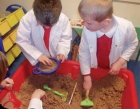
    Please note: this article pre-dates the current National Curriculum and some content and links may be outdated. The authors of this article first worked together on a number of small scale excavations while Bev was still a primary school teacher in the Bradford area. When Bev changed roles to train...

    Click to view
  • Case Study: Working with gifted and talented children at an Iron Age hill fort in north Somerset

    Article

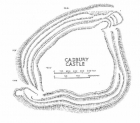
    Please note: this article pre-dates the 2014 National Curriculum and some content may be outdated. The phone call was over - manna from heaven. The opportunity to work with a ‘real' archaeologist on a ‘real' Iron Age site seemed far too good to be true. The cluster of eight South...

    Click to view
  • Case Study: Classroom archaeology. Sutton Hoo, or the mystery of the empty grave

    Article

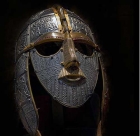
    Please note: this article pre-dates the 2014 National Curriculum and some content may be outdated. ‘Would you like to go for a walk in the woods on the other side of the river? I asked my wife on a spring day in 1982. Happily she assented, and we drove off...

    Click to view
  • Children's thinking in archaeology

    Article

    Please note: this article pre-dates the 2014 National Curriculum and some content may be outdated. Young children enjoy prehistory Tactile, Physical and Enactive engagement with archaeological remains stimulates, excites and promotes children's logical, imaginative, creative and deductive thinking. Through archaeology there are infinite opportunities for ‘reasonable guesses' about sources and...

    Click to view
  • Using feature films as a means of enhancing history teaching in the primary school

    Article

    Please note: this article pre-dates the 2014 National Curriculum and some content may be outdated. Although I have always been fascinated by history and almost took it as my major subject at university, I have to admit that the bulk of my ‘knowledge' about historical people and events was shaped...

    Click to view
  • In my view: Using Pictures

    Article

    Children grow up surrounded by pictures - moving pictures on the TV, still advertisements on hoardings, pictures in newspapers and magazines and comic books. ‘The media' are ever present, and so we assume that our children are visually literate - wise eyed. When we see them flicking through books ‘looking...

    Click to view
  • History and Illustration: Quentin Blake

    Article

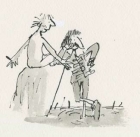
    When, at your invitation, I bring together the words ‘History' and ‘Illustration', two images spring immediately to mind. One is John Leech's illustrations to The Comic History of England (1847-1848); the other is the drawings that Ronald Searle brought back from being a prisoner of war of the Japanese a hundred...

    Click to view
  • Think Bubble 49: Frozen moments

    Article

    Whenever I look at an old sepia photograph or one of those amazing 19th century genre pictures like William Powell Frith's Ramsgate Sands, it is not the immediate images that grab my attention. Although the detail is often remarkable, in the case of Ramsgate Sands the attentive mother gently introducing...

    Click to view
  • Case Study: Investigating a picture in Key Stage 1

    Article

    Please note: this article pre-dates the 2014 National Curriculum and some content and links may be outdated. The teacher, Angela, brought from home a large coloured picture: in the middle a photograph of her grandfather in uniform, taken in 1917. The reading of the picture produced a flood of writing...

    Click to view
  • A Beginner's Guide to using visual image in primary schools

    Article

    Please note: this article pre-dates the 2014 National Curriculum and some content and links may be outdated. The employment of the visual image is a fascinating and exciting way to enable children to gain a glimpse into the past. It is problematic, however, in that such imagery is often an...

    Click to view
  • Teaching history through photographs in the internet and digital age

    Article

    Please note: this article pre-dates the 2014 National Curriculum and some content and links may be outdated. Images allow us to step back in time and ask important historical questions such as ‘Were the Victorians just like us?' Growing digitisation and the spread of the internet allow teachers and learners...

    Click to view
  • Case Study: Children's questions about historical pictures

    Article

    Please note: this article pre-dates the 2014 National Curriculum and some content and links may be outdated. Pictures are an important source of evidence for children to use to find out about the past. They have an immediate impact and children of all ages and abilities find that they have...

    Click to view
  • Visual Literacy: Learning through pictures and images

    Article

    Please note: this article pre-dates the current National Curriculum and some content and references are outdated. What questions does the portrait raise in your mind? What messages does the artist intend to convey? How does the artist convey those messages to the intended audience? What might have been the circumstances under which the...

    Click to view