Using Sources

It is important to use a wide range of sources such as pictures, artefacts, music and sights. Children will use these to build up their enquiry thought and processes and to build up their understanding of past.

Sort by: Date (Newest first) | Title A-Z
Show: All | Articles | Podcasts | Multipage Articles
  • Using the back cover image: Windmill Hill

    Article

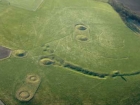
    The back cover image is a reconstruction of prehistoric life based on the English Heritage site Windmill Hill. Such images are of great value to the teacher in bringing the distant past to life, and in deepening pupil understanding of its historical significance. Using these sorts of illustrations can help...

    Click to view
  • Using trade directories: reconstructing life 100 years ago

    Article

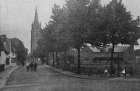
    Alf Wilkinson has previously covered the importance of trade directories as a source that teachers can use in primary history.  Alf develops this into a case study for a Lincolnshire village that can be used as a template for primary teachers.  All communities have distinctive characteristics and Alf outlines these...

    Click to view
  • Victorians

    Article

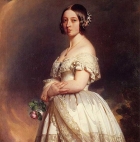
    The Victorians is a much-loved unit of work in many schools and some teachers were disappointed to see it had been removed but there are still ways to continue to teach it under the 2014 National Curriculum. In many localities there will be a huge variety of Victorian buildings - including...

    Click to view
  • Viking and Anglo-Saxon struggle for the kingdom of England

    Article

    The Vikings will be familiar territory to many primary teachers. For many, therefore, this section of the history curriculum should cause fewer headaches than others. This does not mean, however, that it is all straightforward. This article contains a number of elements that teachers might welcome including a timeline of...

    Click to view
  • Visual Literacy: Learning through pictures and images

    Article

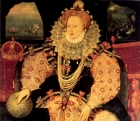
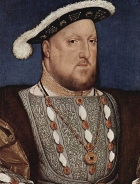
    Please note: this article pre-dates the current National Curriculum and some content and references are outdated. What questions does the portrait raise in your mind? What messages does the artist intend to convey? How does the artist convey those messages to the intended audience? What might have been the circumstances under which the...

    Click to view
  • What can you do with a Victorian Trade Directory…?

    Article

    What is a trade directory? Trade directories are the equivalent of the telephone directory and the Yellow Pages. They were published on a county or city basis every year and contain detailed descriptions of every village and town in the county. They also contain pages and pages of advertisements, for...

    Click to view
  • What can you do with an old postcard?

    Article

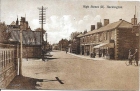
    Whether looking at ‘events in living memory’ at Key Stage 1, or a local history study at Key Stage 2, old postcards are extremely useful. They are also relatively cheap and easy to get hold of. One aspect that can easily be explored using old postcards is evidence - they are an...

    Click to view
  • What do we mean by Big Picture History?

    Article

    Perhaps the best way to start thinking about Big Picture history is to say what it is not - it is not about rote learning dates or remembering ‘famous people and events' - Alfred the Great, The Battle of Hastings, Henry VIII, Florence Nightingale ....and so on! This factual knowledge...

    Click to view
  • What made Cleopatra so special?

    Article

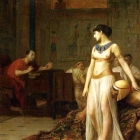
    Ancient Egyptian civilisation is rich and mysterious with distinctive visual imagery and strange animal-headed gods. The exotic differences of the society have always intrigued the western imagination and so they continue to ensure that this is a popular unit with both teachers and children. There are plentiful resources with new...

    Click to view
  • What your local Archive Service can offer to schools

    Article

    Imagine a place where your pupils become detectives working on mysteries from the past such as the tale of Thomas Sargeant, a 15-year-old factory worker who died in a chemical works in 1898. Your local archive is bursting with stories about real people like this which can give children an...

    Click to view
  • What’s important about...? Sources and evidence

    Article

    In this timely article, Ailsa Fidler and Chris Russell explore the use of sources and evidence in the teaching of primary history. Referring to Ofsted’s history subject report (July 2023), Ailsa and Chris explore how sources can be used effectively in the classroom and how children’s understanding of the role...

    Click to view
  • What’s in a road? Local history at Early Years and Key Stage 1

    Article

    One of the many amazing things about History is that it can be found in everything; even the smallest or most mundane objects can provide an insight into how life has changed or provide a greater understanding of a different period in time. Late October last year as the light...

    Click to view
  • What’s in your pocket, Peg?

    Article

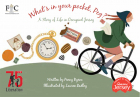
    What’s in your pocket, Peg? is a story book about Jersey which experienced German occupation throughout most of World War II. We wanted to create a book that appealed to children across different primary age groups, helping them to imagine the first-hand life experiences of a child alive at that time. The...

    Click to view
  • Why stories?

    Article

    Please note: this article was written before the 2014 National Curriculum and some content and references may no longer be relevant. During the Early Years and Foundation Stage children should listen to stories, ask how and why and talk about the past (DfE 2012). Young children are comfortable with stories. Through...

    Click to view
  • Written sources and local history at Key Stage 1

    Article

    Please note: this article pre-dates the 2014 National Curriculum and some content may be outdated. Working on written sources is fundamental to historical learning. A document, inscription or sign brings children directly into contact with the past in much the same way as an artefact. It is real and conveys...

    Click to view
  • ‘Not again!’ - an additional viewpoint on using railways

    Article

    ‘Not again!’ I can remember my son muttering as his football thudded against the kitchen wall, ‘I went there in Year 2 and then in Year 4 and now I have to go there again in Year 6.’ He was referring to his school trips to the remains of the gunpowder factories in our village,...

    Click to view
  • ‘So why did they go into hiding?’ Anne Frank in her historical and social context

    Article

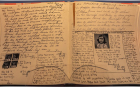
    All too often Anne Frank becomes a symbol, used to show ‘the triumph of hope over evil’, even though she was killed during the Holocaust. Sometimes she is quoted utterly out of context to provide uplifting sentiments, or short phrases with redemptive messages.  What this lesson sets out to do...

    Click to view