

What Have Historians Been Arguing About... Stalin’s final years
Teaching History feature
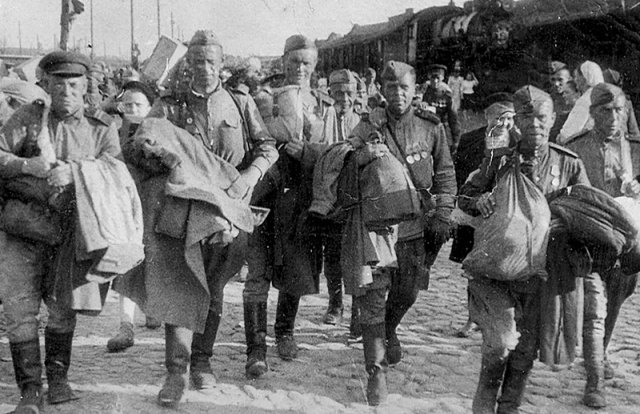
Stalin’s final years: high or late Stalinism?
Stalinism overshadows Soviet history. Few historical subjects are more controversial. Historians have read the years before 1928 as Stalin’s long rise to power, those after 1953 as an extended reckoning with the Stalinist dictatorship. Definitions of Stalinism fix the features, policies, and practices that constituted Stalin’s personal dictatorship between 1928 and 1953. Debates about totalitarianism reinforce Stalinism’s monolithic reputation. Yet, the society over which Stalin presided changed dramatically over twenty-five years, as did Stalin’s own behaviour. As Evgeny Dobrenko writes, ‘Stalinism was not only a page of history; it had its own history.’ Dividing the Stalinist era into different periods allows us to explore the evolution of Soviet politics, economics, society, and culture. The period between the end of the Second World War in 1945 and Stalin’s death in March 1953 is particularly valuable for prompting students and their teachers to explore change over time...
This resource is FREE for Secondary HA Members.
Non HA Members can get instant access for £2.49