
Teaching History articles
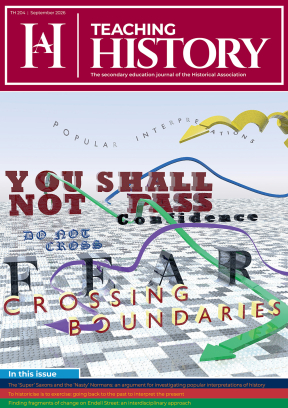
Read Teaching History 204: Crossing Boundaries Boundaries take many shapes and forms, from lines to walls to marks on a map. Some are hard and some are permeable. As history teachers we are used to teaching and raising questions around boundaries, whether geographical borders or delineators of time. We also...

Move Me On is designed to build critical, informed debate about the character of teacher training, teacher education and professional development. It is also designed to offer practical help to all involved in training new history teachers. Each issue presents a situation in initial teacher education/training with an emphasis upon...
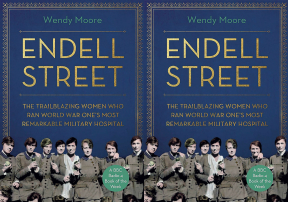
Gemma Hargraves saw a history book recommended on social media and looked it up. Within the first pages she realised this was a book she needed to share with her students due to the positive female role models and other resonant themes. This article outlines a short sequence of lessons...
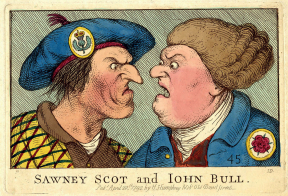
The simple answer is that historians are arguing about what it is that they are arguing about. Linda Colley’s profoundly influential Britons, 1707-1832: forging a nation, published in 1992, illustrates the point. Beginning with the parliamentary union of England and Scotland in 1707, the book links the emergence of British...
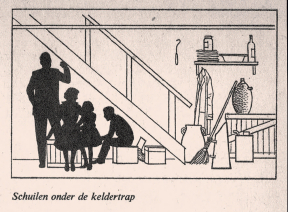
Mila Bammens and Bjorn Wansink were concerned about young people’s reactions to recent nuclear threats. In the second part of this article they set out a series of approaches and resources, used with young people in the Netherlands, to teach about nuclear weapons. The first part of the article sets...
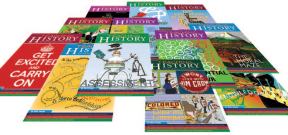
What's the Wisdom On... is a short guide providing new history teachers with an overview of the ‘story so far’ of practice-based professional thinking about a particular aspect of history teaching. It draws on tried and tested approaches arising from teachers with years of experimenting, researching, practising, writing and debating...
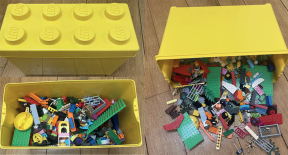
The idea that history is constructed can be a difficult concept for pupils to grasp, yet it is foundational to disciplinary understanding and crucial if pupils are to understand both the relevance of history and the responsibility of the historian. When asked about the nature of history, many of my...
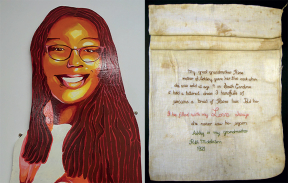
An enslaved mother faces permanent separation from her nine-year-old daughter who is to be sold. She hurriedly places some items in a sack – a lock of her own hair, some pecan nuts, a tattered dress. The daughter, Ashley, keeps the sack and passes on its story to her children....
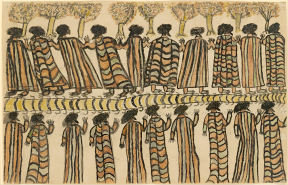
Migration and Empire 1830–1939 is the most popular topic studied for the Scottish Higher qualification. The course specification directs that students should be taught about the impact of Scots emigrants on the British Empire. Marking instructions and classroom practice, however, had historically emphasised the ‘contribution’ of Scots to the empire,...
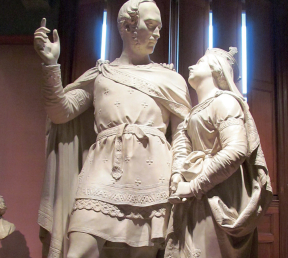
In this article Jane Card outlines the changing popular interpretations of one of the most familiar events in British history, the Norman Conquest. She makes the case for using visual and literary interpretations of the Conquest to engage pupils with thinking about the eleventh century, the subsequent centuries in which...
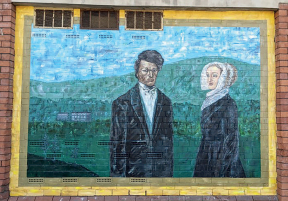
This article summarises the learning from a project that uses local history and geography to support the process of diversifying and decolonising the school curriculum. The project was inspired by a seminar within the University of Sheffield PGCE course, initially taught by Mark Cottingham and intended for history student teachers....
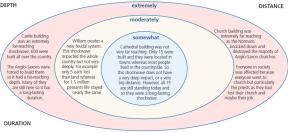
‘You think you’ve found a way to help our Year 7s explain historical consequence?’ My head of department sounded intrigued. ‘View them as shockwaves!’ I exclaimed. ‘Just like Boba Fett’s ship in Star Wars!’ My head of department raised an eyebrow. It was September 2024, and I had just joined...
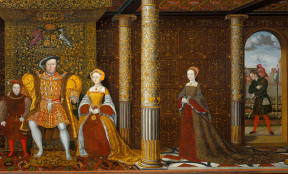
After listening to a talk by historian Phillipa Vincent-Connolly and following this up with reading about disability in history, Alex Fairlamb examined her own department’s teaching to consider how effectively it included narratives of disabled people. This was the beginning of a productive journey. She concluded that much more needed...
How often do you refer to objects in the classroom? When did you last explore with your pupils the materiality of past lives? The ‘material turn’ in historical research and scholarship opens up different lines of enquiry and different kinds of history from those revealed by documentary evidence. It can...
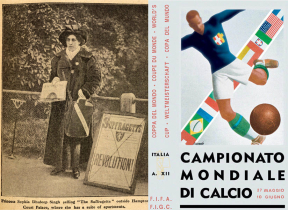
Oliver Scott explains how he fused two goals: planning a new Year 9 history curriculum and finding a way to help Year 9 connect it all together. Inspired by the distinctive style of E.H. Gombrich, Scott decided to have his pupils write a grand narrative at mid- and end-year points....
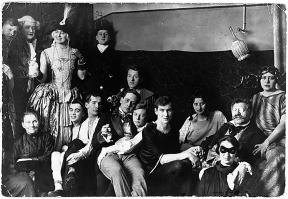
In this article, Jacob Thorpe relates his attempts to humanise the teaching of Nazi persecutions by focusing on individuals’ experiences and identity. Deep immersion in the sources enabled him to find the stories fitting his key themes of love, community, identity and culture. Thorpe built on the work of other...
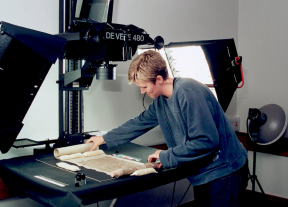
Archives and the use of primary sources sit at the heart of working or studying within the discipline of history. In the twentieth century, digital humanities, and more specifically digital history, emerged as a discipline or sub-discipline alongside the development of computerised library systems, though its roots lie in the...
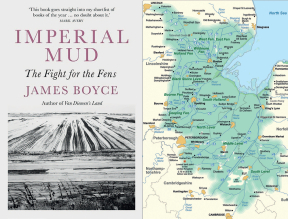
After reading Hawkey’s History and the Climate Crisis and Verity Morgan’s article in Teaching History, 194, I knew that I needed to revisit Boyce's Imperial Mud for my Year 8 curriculum. Morgan had given me the idea that I could simply adjust the focus of some of my enquiries, rather...
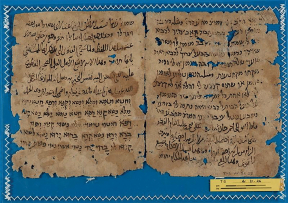
A conversation with some undergraduate students prompted Rob Kanter to explore how his own historical research on Jewish–Muslim relations could be integrated into the history curriculum in secondary schools. Kanter identified two stories of Muslim rescue during the Holocaust which he shares here to empower teachers to challenge misconceptions and...
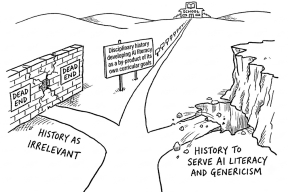
Many young people, aware of the rapid development and widespread use of generative forms of artificial intelligence, assume that the knowledge and skills they will need to navigate their future bear little relationship to those offered by the study of history. In response to these assumptions, Kieran Lavis and Katharine...