

Primary History 102: Out now
The primary education journal of the Historical Association
Editorial
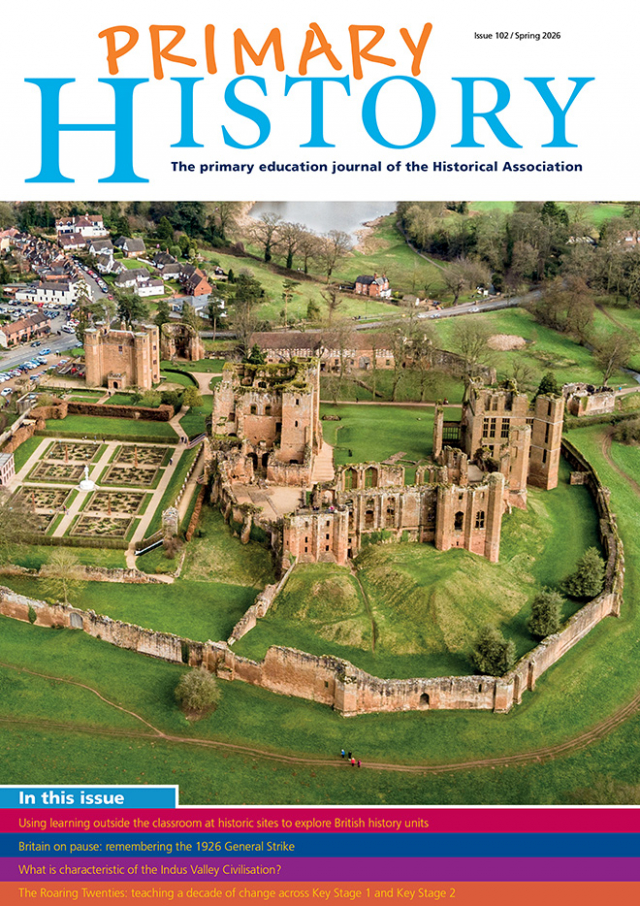
As the days lengthen and the first signs of spring begin to appear, there is a renewed sense of energy in our classrooms. Spring always feels like an invitation: to open the doors, to step outside, and to think differently about where and how history learning can take place. With better weather comes the chance to move beyond the four walls of the classroom, encouraging curiosity, observation and enquiry in the wider world.
In this edition, Paul Bracey explores the powerful possibilities of learning history outside the classroom. From school grounds to local environments, his article considers how outdoor learning can deepen engagement and help pupils make meaningful connections with the past. James Bowen carries on with this theme of outside learning and looks at how historical sources can be used to plan a compelling local history unit, reminding us of the value of the past that exists right on our doorsteps.
As the first publication of Primary History in 2026, anniversaries became a focus for two or our articles. What was happening one hundred years ago? Kate Rigby reflects on the General Strike of 1926, a topic that feels especially resonant in today’s climate of protest and social unrest. This is then widened by Susie Townsend to look at the Roaring Twenties as a decade of change.
In terms of curriculum design and progression, Helen Crawford examines what high-quality history teaching looks like across the Early Years Framework, while Julia Huber focuses on task design in Key Stage 2, helping teachers think carefully about how activities can support genuine historical thinking. Practical classroom inspiration continues with Polly Gillow, who explores how food can be used as a rich and engaging stimulus for historical learning in Key Stage 1. Karin Doull extends subject knowledge with a fascinating exploration of the Indus Valley, supporting us to teach this important ancient society with greater confidence.
As ever, we hope this issue inspires you to step outside, think creatively, and continue to nurture young historians with curiosity and care.