Planning

This section organises material on Key Stage 3 planning into three categories. In KS3 planning: general, you will find general advice on planning in the lower secondary years. This includes examples of how history teachers and other history education experts have planned everything from single activities and lessons to two or three years of work.  You will find examples of planning for local history in KS3 planning: local history.  The third category, KS3 planning: Learning outside the classroom embraces fieldwork of all kinds, from studying landscape and cities, to museums, galleries and memorials, as well as inter-school activities, work with outside organisations and assorted international collaborations, real and virtual. Read more

Sort by: Date (Newest first) | Title A-Z
Show: All | Articles | Podcasts | Multipage Articles
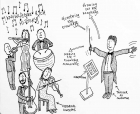
  • Conducting the orchestra to allow our students to hear the symphony

    Article

    Alex Ford and Richard Kennett both welcome the renewed emphasis on knowledge within recent curriculum reforms in England, but are concerned about some of the ways in which the principle of a ‘knowledge-rich’ curriculum has been interpreted and transformed into particular pedagogical prescriptions. In this article they explain their reasons...

    Click to view
  • Film: Making an effective History curriculum

    Article

    Richard Kennett is a senior leader, teacher, blogger, text-book author and member of HA secondary committee. In November 2018, Richard visited the Yorkshire History Forum to talk about his school’s experience of reviewing and re-planning their Key Stage 3 curriculum. This film is of Richard’s keynote speech at the Forum....

    Click to view
  • Questions to help you review your KS3 curriculum

    Article

    This resource is free to everyone. For access to our library of high-quality secondary history materials along with free or discounted CPD and membership of a thriving community of history teachers and subject leaders, join the Historical Association today  With Ofsted incorporating curriculum into inspections from September 2019 and finally...

    Click to view
  • Structuring a history curriculum for powerful revelations

    Article

    When planning a Key Stage 3 curriculum with his department, Will Bailey-Watson began to question some of the commonsense orthodoxies regarding chronological sequencing and curriculum design. Drawing on pre-existing debates about curricular structuring in the history education community both in England and internationally, Bailey-Watson identified cognitive, motivational, and disciplinary justifications...

    Click to view
  • How diverse is your history curriculum?

    Article

    The past was full of diverse people and our students are entitled to learn about this diverse past. History lessons should enable students to see their connection to the past and to understand the world today. Here are a list of questions for history teachers to use to support a...

    Click to view
  • Redesigning the curriculum: a short guide for the new, novice or nervous

    Article

    A short guide to making a start with redesigning the curriculum  We realise that the task of curriculum redesign is huge and these steps are to help you make a start. It's also important to note that Heather Fearn, Ofsted Curriculum and Development lead, has said: that Ofsted is NOT expecting...

    Click to view
  • 'But why then?' Chronological context and historical interpretations

    Article

    When Michael Fordham was introduced to Dr Seuss's Butter Battle Book he immediately recognised its potential value in the classroom as a popular interpretation of the Cold War. Wanting his Year 9 pupils to explain how and why the past has been interpreted in different ways he shows the potential pitfalls...

    Click to view
  • 'Doing justice to history': the learning of African history in a North London secondary school

    Article

    ‘Doing justice to history': the learning of African history in a North London secondary school and teacher development in the spirit of ubuntu The medium is the message, Marshall McLuhan observed many years ago and the ‘form' of what we do carries ‘content' as Hayden White has argued. This article...

    Click to view
  • An attempt to make Year 9 Masters of Learning

    Article

    ‘Much to learn you still have!' An attempt to make Year 9 Masters of Learning How can history teachers structure learning pathways through historical content in ways that engage and challenge all pupils, that enable them to work at an appropriate pace and that also encourage pupils to self-assess and...

    Click to view
  • Animated Guide: Become a Museum Curator

    Multipage Article

    Have you ever visited a museum or exhibition and wondered who puts it all together? Being a museum, library or archive curator is a very responsible job. Not only do they have to look after rare and precious items in their care, but they must also know all about their...

    Click to view
  • Anything but brief: Year 8 students encounter the longue durée

    Article

    Inspired by The History Manifesto, Suzanne Powell describes in this article her rationale for expanding her students’ horizons by asking them to think about change, similarity and difference on a grand scale. She sets ‘big history’ into its curricular context, and shows the way in which her students could, and...

    Click to view
  • Assessing the Battle of Waterloo in the classroom

    Article

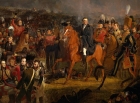
    Defying the Iron Duke: assessing the Battle of Waterloo in the classroom The approaching bicentenary of the Battle of Waterloo has stimulated debate about how it should be commemorated. This article reports a collaboration between the Waterloo200 Committee and Tom Wheeley, history teacher, to create a lesson sequence analysing the...

    Click to view
  • Assessment and planning for progression at Key Stage 3

    Article

    The 2014 National Curriculum does not include an attainment target or any specified level against which you are expected to assess pupils' progress. The new attainment target says simply that: ‘By the end of each key stage, pupils are expected to know, apply and understand the matters, skills and processes...

    Click to view
  • Being historically rigorous with creativity

    Article

    After a Fellowship in Holocaust Education at the Imperial War Museum, Andy Lawrence decided that something was missing in normal approaches to teaching emotive and controversial issues such as genocide, a deficit demonstrated by recent research by the Holocaust Education Development Programme. As part of his fellowship, Lawrence created an...

    Click to view
  • Big Stories and Big Pictures: Making Outlines and Overviews Interesting

    Article

    An examination, with practical strategies, of the teaching of 'outlines and overviews' by Michael Riley. Why teach overviews? One of the problems of the first phase of National Curriculum history was the percieved overload of content. Some teachers felt obliged to race through the Programme of Study, treating issues in...

    Click to view
  • Bob Dylan and the concept of evidence

    Article

    No edition of Teaching History devoted to creativity could be complete without returning to the riches that popular songs offer to historians and history teachers alike. The five Bob Dylan songs that Christopher Edwards explores here are chosen not merely for their ‘literary qualities' and ‘emotional charge'; they also provide...

    Click to view
  • Bringing Rwanda into the classroom

    Article

    A short 20 years: meeting the challenges facing teachers who bring Rwanda into the classroom As the twentieth anniversary of the 1994 genocide in Rwanda approaches, Mark Gudgel argues that we should face the challenges posed by teaching about Rwanda. Drawing on his experience as a history teacher in the...

    Click to view
  • Broadening and deepening narratives of Benin for Year 8

    Article

    Josh Garry describes his effort to refresh his approach to teaching the British transatlantic slave trade. Drawing on reading, lectures and discussions during an Historical Association Teacher Fellowship programme, Garry built a sequence of lessons designed to contextualise the trade while showing African agency and complexity. The result was a sequence...

    Click to view
  • Can we educate Year 9 in genocide prevention?

    Article

    Patterns of genocide: can we educate Year 9 in genocide prevention? Alison Stephen, who has wrestled for many years with the challenges of teaching emotional and controversial history within a multiethnic school setting, relished the opportunity to link her school's teaching of the Holocaust with a comparative study of other genocides....

    Click to view
  • Causation

    Article

    Please note: these links were compiled in 2009. For a more recent resource, please see: What's the Wisdom on: Causation.  These Teaching History Articles on 'Causation' are highly recommended reading to those who would like to get to grips with this key concept: 1. Move Me On 92. Problem page for history mentors. Teaching...

    Click to view