Planning

This section organises material on Key Stage 3 planning into three categories. In KS3 planning: general, you will find general advice on planning in the lower secondary years. This includes examples of how history teachers and other history education experts have planned everything from single activities and lessons to two or three years of work.  You will find examples of planning for local history in KS3 planning: local history.  The third category, KS3 planning: Learning outside the classroom embraces fieldwork of all kinds, from studying landscape and cities, to museums, galleries and memorials, as well as inter-school activities, work with outside organisations and assorted international collaborations, real and virtual. Read more

Sort by: Date (Newest first) | Title A-Z
Show: All | Articles | Podcasts | Multipage Articles
  • Cunning Plan 161: Magna Carta's legacy

    Article

    Both Dawson and Hayes have recently written Cunning Plans that show how exciting Magna Carta is. So why not stop there? Bring the barons to life with a flare of Dawson and send Magna Carta flying across the continent with just a hint of Hayes. Hey, from the same edition,...

    Click to view
  • Cunning Plan 162: Transferring knowledge from Key Stage 3 to 4

    Article

    Planning to deliver the new GCSE specifications presents a challenge and an opportunity to any history department, whatever their previous specification. The sweep of history that students will now study at GCSE is much broader than ‘Modern World’ departments are used to; including a medieval or early modern depth study...

    Click to view
  • Cunning Plan 166: developing an enquiry on the First Crusade

    Article

    "What shall I say next? We were all indeed huddled together like sheep in a fold, trembling and frightened, surrounded on all sides by enemies so that we could not turn in any direction. It was clear to us that this had happened because of our sins. A great clamour rose to the sky, not...

    Click to view
  • Cunning Plan 167: teaching the industrial revolution

    Article

    ‘Disastrous and terrible.’ For Arnold Toynbee, the historian who gave us the phrase ‘industrial revolution’, these three words sum up the period of dramatic technological change that took place in Britain across the eighteenth and nineteenth centuries. We may not habitually use Toynbee’s description in the classroom, but it is...

    Click to view
  • Cunning Plan 173: using Black Tudors as a window into Tudor England

    Article

    On 29 September 2018 I was fortunate enough to get involved with a collaborative project with Dr Miranda Kaufmann, the Historical Association, Schools History Project, and a brilliant group of people from different backgrounds all committed to teaching about black Tudors. In this short piece, I will share how I...

    Click to view
  • Cunning Plan 174: creating a narrative of the interwar years

    Article

    The major aim of this sequence of lessons was to teach Year 8 how to create and refine a narrative. I chose a period I was substantively confident on, which lent itself well to the narrative form, had a number of prominent academic narratives published about it and followed neatly...

    Click to view
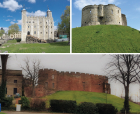
  • Cunning Plan 178: How far did Anglo-Saxon England survive the Norman Conquest?

    Article

    Cunning Plan for using the metaphor of a tree to help students characterise the process of change and engage with a historian’s argument. In this Cunning Plan, Eve Hackett sets out how she used a recent work of history about the Norman Conquest as inspiration for her teaching of Year...

    Click to view
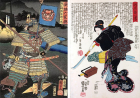
  • Cunning Plan 186: teaching Samurai Japan in Key Stage 3

    Article

    Like many history departments we have been seeking to develop schemes of work that are more outward-looking, and, as the National Curriculum describes, ‘enable pupils to know and understand significant aspects of world history’.  To my mind, Samurai Japan offers students the opportunity to explore a time and place that is...

    Click to view
  • Cunning Plan 96: teaching citizenship through KS3 history

    Article

    Big theme: dissent and the formation of the concept of ‘rights' You can teach citizenship not only without compromising National Curriculum content, processes and concepts, but in such a way as to improve them. Review your department's ‘whole Key Stage' planning. Secure rigour and high levels of challenge by remembering...

    Click to view
  • Deconstructing lazy analogies in Year 9

    Article

    Reflecting on the continuing problem of students holding an impoverished understanding of the value or ‘uses' of history, Steve Rollett turned his attention to the question of analogy. He took the axiom to which students make common appeal (‘we can learn from mistakes in the past') and set about trying...

    Click to view
  • Deepening Year 9’s knowledge for better causation arguments

    Article

    Frustrated by her students’ glib use of catch-all terms such as ‘militarism’ in addressing causation, Alexia Michalaki wanted her Year 9 students to produce mature causal explanations of World War I. To encourage this to happen she went back into decades of pedagogical writing and research, teasing out the ways...

    Click to view
  • Denis Shemilt's four stages of adolescent ideas about historical methods in a nutshell

    Article

    Denis Shemilt's four stages of adolescent ideas about historical methods in a nutshell.

    Click to view
  • Designing an enquiry in a challenging setting

    Article

    The Association for Historical Dialogue and Research (AHDR) is a Cyprus-based organization that works to foster dialogue among history teachers and other educators across the divide in Cyprus. In one of their UN-funded projects, ADHR members worked with UK colleagues to shape a lesson sequence and resources on the Ottoman period...

    Click to view
  • Developing Year 8 students' conceptual thinking about diversity in Victorian society

    Article

    Developing Year 8 students' conceptual thinking about diversity in Victorian society Elizabeth Carr writes here about a new scheme of work she developed to teach students about diversity in Victorian society. When dealing with a concept such as diversity, it can be easy for students to slip into stereotypes based...

    Click to view
  • Developing awareness of the need to select evidence

    Article

    Let's play Supermarket ‘Evidential' Sweep: developing students' awareness of the need to select evidence Despite having built a sustained focus on historical thinking into their planning for progression across Years 7 to 13, Rachel Foster and Sarah Gadd remained frustrated with stubborn weaknesses in the evidential thinking of students in...

    Click to view
  • Developing conceptual understanding through talk mapping

    Article

    As history teachers, we talk about concepts all the time. We know that pupils need to understand them in order to make sense of the past. Precisely what we mean when we talk about concepts is less clear, however. Research into how history teachers talk about their practice suggests that,...

    Click to view
  • Dialogue, engagement and generative interaction in the history classroom

    Article

    Michael Bird has a long-standing interest in the power of classroom dialogue, not only as a means of elicting students’ prior knowledge or checking their understanding of new ideas and information, but also as a powerful tool for generating new knowledge through a collective process of meaning-making. In this article, he...

    Click to view
  • Dickens...Hardy...Jarvis?! A novel take on the Industrial Revolution

    Article

    ‘Empathy with edge' was the editorial description given eight years ago to the kind of historical fiction that Dave Martin and Beth Brooke first argued history students should be writing (TH 108). The winning entries from the annual ‘Write Your Own Historical Story Competition' to which their work gave rise...

    Click to view
  • Direct teaching of paragraph cohesion

    Article

    How do we help pupils to write better paragraphs without actually doing it for them? How do we break down the process of essay writing into smaller steps without taking away pupils’ sense of the essay as a whole? How do we give lower-attaining pupils models, structures and frames without...

    Click to view
  • Do we need another hero? Rorke's Drift

    Article

    Do we need another hero? Year 8 get to grips with the heroic myth of the Defence of Rorke's Drift in 1879 Mike Murray shares a lesson sequence in which his students examined changing interpretations of the Battle of Rorke's Drift in 1879. Building on earlier work on teaching interpretations...

    Click to view