

Planning
This section organises material on Key Stage 3 planning into three categories. In KS3 planning: general, you will find general advice on planning in the lower secondary years. This includes examples of how history teachers and other history education experts have planned everything from single activities and lessons to two or three years of work. You will find examples of planning for local history in KS3 planning: local history. The third category, KS3 planning: Learning outside the classroom embraces fieldwork of all kinds, from studying landscape and cities, to museums, galleries and memorials, as well as inter-school activities, work with outside organisations and assorted international collaborations, real and virtual. Read more
Sort by:
Date (Newest first) | Title A-Z
Show:
All |
Articles |
Podcasts |
Multipage Articles
-

Making reading routine
ArticleClick to view -
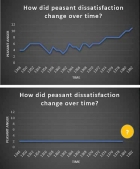
Using diagrammatic representations of counterfactuals to develop causal reasoning
ArticleClick to view -

Cunning Plan 174: creating a narrative of the interwar years
ArticleClick to view -
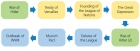
What kinds of feedback help students produce better historical narratives of the interwar years?
ArticleClick to view -
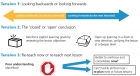
Here ends the lesson: shaping lesson conclusions
ArticleClick to view -

‘I need to know…’: creating the conditions that make students want knowledge
ArticleClick to view -
Cunning Plan 173: using Black Tudors as a window into Tudor England
ArticleClick to view -
‘Its ultimate pattern was greater than its parts’
ArticleClick to view -

New, Novice or Nervous? 172: Curriculum planning
ArticleClick to view -
From flight paths to spiders’ webs: developing a progression model for Key Stage 3
ArticleClick to view -

Move Me On 170: adapting to a second school
ArticleClick to view -
Myths and Monty Python: using the witch-hunts to introduce students to significance
ArticleClick to view -
Polychronicon 170: The Becket Dispute
ArticleClick to view -
Anything but brief: Year 8 students encounter the longue durée
ArticleClick to view -
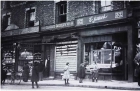
Looking through the keyhole at Birkenhead from 1900 to 1950 with Year 7
ArticleClick to view -
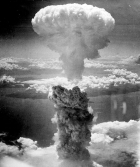
Significance
ArticleClick to view -
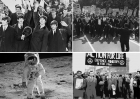
Triumphs Show 167: Keeping the 1960s complicated
ArticleClick to view -
Cunning Plan 167: teaching the industrial revolution
ArticleClick to view -
Why are you wearing a watch? Complicating narratives of economic and social progress
ArticleClick to view -
Putting Catlin in his place?
ArticleClick to view