Planning

This section organises material on Key Stage 3 planning into three categories. In KS3 planning: general, you will find general advice on planning in the lower secondary years. This includes examples of how history teachers and other history education experts have planned everything from single activities and lessons to two or three years of work.  You will find examples of planning for local history in KS3 planning: local history.  The third category, KS3 planning: Learning outside the classroom embraces fieldwork of all kinds, from studying landscape and cities, to museums, galleries and memorials, as well as inter-school activities, work with outside organisations and assorted international collaborations, real and virtual. Read more

Sort by: Date (Newest first) | Title A-Z
Show: All | Articles | Podcasts | Multipage Articles
  • Using diagrammatic representations of counterfactuals to develop causal reasoning

    Article

    Tom Bennett begins his article with a tale of a frustrating afternoon with Year 7. We’ve all been there. In his case, his frustration was caused by his finding a conceptual gap between how well his class wanted to do and the actual quality of their causal thinking. Bennett decided...

    Click to view
  • Here ends the lesson: shaping lesson conclusions

    Article

    Reflecting on her efforts to improve her trainee’s lesson conclusions, Paula Worth decided to brush up her own. A journey of self-evaluation led her to revisit the Cambridge Conclusions Project. Through its lens, she judged her own lesson conclusions wanting. Worth examines the way in which the final episode of...

    Click to view
  • ‘I need to know…’: creating the conditions that make students want knowledge

    Article

    Chloe Bateman recognised the value to her Key Stage 3 pupils of developing rich subject knowledge, but wanted to find a way of encouraging them to value that knowledge for themselves. In this article she explains how she provided that inspiration by setting her Year 7 class the challenge of...

    Click to view
  • Cunning Plan 173: using Black Tudors as a window into Tudor England

    Article

    On 29 September 2018 I was fortunate enough to get involved with a collaborative project with Dr Miranda Kaufmann, the Historical Association, Schools History Project, and a brilliant group of people from different backgrounds all committed to teaching about black Tudors. In this short piece, I will share how I...

    Click to view
  • ‘Its ultimate pattern was greater than its parts’

    Article

    Identifying the challenges his students faced both with recall and analysis of the content they had learned for their GCSE course, Ed Durbin devised a solution which focused not on exam skills and revision lessons, but on using Key Stage 3 to build the ‘hinterland’ of contextual knowledge and causal...

    Click to view
  • New, Novice or Nervous? 172: Curriculum planning

    Article

    This page is for those new to the published writings of history teachers. Each problem you wrestle with, other teachers have wrestled with too. Quick fixes don’t exist. But in others’ writing, you’ll find something better: conversations in which history teachers have debated or tackled your problems – conversations which...

    Click to view
  • From flight paths to spiders’ webs: developing a progression model for Key Stage 3

    Article

    The disapplication of level descriptions in the 2014 National Curriculum has spurred many history departments to rethink their approach not only to assessment but to their models of progression. In this article Rachael Cook builds on the recent work of history teachers such as Ford (TH157), Hawkey et al (TH161),...

    Click to view
  • Move Me On 170: adapting to a second school

    Article

    This feature of Teaching History is designed to build critical, informed debate about the character of teacher training, teacher education and professional development. It is also designed to offer practical help to all involved in training new history teachers. Each issue presents a situation in initial teacher education/training with an...

    Click to view
  • Myths and Monty Python: using the witch-hunts to introduce students to significance

    Article

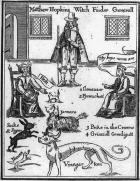
    In this article Kerry Apps introduces students to the significance of the witch-hunts in the modern era, at the time when they occurred, and in the middle of the eighteenth century. She presents her rationale for choosing the witch-hunts as a focus for the study of significance, and shows how her thinking about her teaching has evolved through her evaluation of her students’...

    Click to view
  • Polychronicon 170: The Becket Dispute

    Article

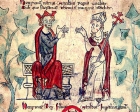
    ‘The Becket Dispute’ (or ‘Controversy’) refers to the quarrel between Henry II and Thomas Becket, Archbishop of Canterbury, which dominated English ecclesiastical politics in the 1160s. It was a conflict with multiple dimensions: a clash of Church and State; a prolonged struggle between two prominent individuals; a close friendship turned...

    Click to view
  • Anything but brief: Year 8 students encounter the longue durée

    Article

    Inspired by The History Manifesto, Suzanne Powell describes in this article her rationale for expanding her students’ horizons by asking them to think about change, similarity and difference on a grand scale. She sets ‘big history’ into its curricular context, and shows the way in which her students could, and...

    Click to view
  • Looking through the keyhole at Birkenhead from 1900 to 1950 with Year 7

    Article

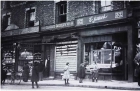
    Matt Jones wanted to harness the power of local history to help his students understand the profound social changes experienced across Britain in the first half of the twentieth century. While he hoped that the personal stories of six families in Birkenhead would help to humanise abstract concepts such as...

    Click to view
  • Significance

    Article

    Please note: these links were compiled in 2009. For a more recent resource, please see: What's the Wisdom on: Historical significance.  This selection of Teaching History articles on 'Significance' are highly recommended reading to anyone who wants to get to grips with this key concept. All Teaching History articles are free to HA Secondary Members...

    Click to view
  • Triumphs Show 167: Keeping the 1960s complicated

    Article

    During her PGCE year, it became evident to Rachel Coleman just how much pupils struggled with the complicated nature of history. They were troubled in particular by the lack of definitive answers, by the range of perspectives that might be held at the time of a particular event or development...

    Click to view
  • Cunning Plan 167: teaching the industrial revolution

    Article

    ‘Disastrous and terrible.’ For Arnold Toynbee, the historian who gave us the phrase ‘industrial revolution’, these three words sum up the period of dramatic technological change that took place in Britain across the eighteenth and nineteenth centuries. We may not habitually use Toynbee’s description in the classroom, but it is...

    Click to view
  • Why are you wearing a watch? Complicating narratives of economic and social progress

    Article

    Frustrated by the traditional narrative of the industrial revolution as a steady march of progress, and disappointed by her students’ dull and deterministic statements about historical change, Hannah Sibona decided to complicate the tidy narrative of continual improvement. Inspired by an article by E.P. Thompson, Sibona reflected that introducing her...

    Click to view
  • Putting Catlin in his place?

    Article

    Jess Landy’s desire to introduce her pupils to a more complex narrative of the American West led her to the life story and work of a remarkable individual, George Catlin.  In this article she shows how she used this unusual micro-narrative in order to challenge pupils’ ideas not just about the bigger narrative of which it is a part, but about the...

    Click to view
  • Of the many significant things that have ever happened, what should we teach?

    Article

    There are three basic strands to our lessons. How should we teach? What skills should we enable our students to build? What content should we use to deliver those skills? In this article Tony McConnell, who has been re-designing the curriculum in his school in response to a changed examination regimen, considers the issue of subject...

    Click to view
  • Cunning Plan 166: developing an enquiry on the First Crusade

    Article

    "What shall I say next? We were all indeed huddled together like sheep in a fold, trembling and frightened, surrounded on all sides by enemies so that we could not turn in any direction. It was clear to us that this had happened because of our sins. A great clamour rose to the sky, not...

    Click to view
  • The Heroine Project Presents: Dorothy Lawrence films

    Article

    In 1915 aspiring journalist Dorothy Lawrence left London for northern France with ambitions to become the first female war correspondent. What happened next defied authority and convention – and challenges traditional depictions of women’s role in World War One. The Historical Association (HA) commissioned Theatre company The Heroine Project Presents to create...

    Click to view