Planning

This section organises material on Key Stage 3 planning into three categories. In KS3 planning: general, you will find general advice on planning in the lower secondary years. This includes examples of how history teachers and other history education experts have planned everything from single activities and lessons to two or three years of work.  You will find examples of planning for local history in KS3 planning: local history.  The third category, KS3 planning: Learning outside the classroom embraces fieldwork of all kinds, from studying landscape and cities, to museums, galleries and memorials, as well as inter-school activities, work with outside organisations and assorted international collaborations, real and virtual. Read more

Sort by: Date (Newest first) | Title A-Z
Show: All | Articles | Podcasts | Multipage Articles
  • Does the linguistic release the conceptual? Helping Year 10 to improve their casual reasoning

    Article

    Please note: this article pre-dates the 2014 National Curriculum and some content may be outdated. Does new vocabulary help students to express existing ideas for which they do not yet have words or does it actually give them new ideas which they did not previously hold? James Woodcock asks whether...

    Click to view
  • Effective essay introductions

    Article

    Struck by the dullness of some of her students’ essay introductions, Paula Worth reflected on the fact that she had never focused specifically on introductions. After surveying existing work by history teachers on essay structure in general and introductions in particular, she turns to the work of historians. Drawing on...

    Click to view
  • Enabling Year 7 to write essays on Magna Carta

    Article

    Setting out to teach Magna Carta to the full attainment range in Year 7, Mark King decided to choose a question that reflected real scholarly debates and also to ensure that pupils held enough knowledge in long-term memory to be able to think about that question meaningfully. As he gradually prepared his pupils to produce their own causation arguments in response to that question, King was startled by...

    Click to view
  • Engaging Year 9 students in party politics

    Article

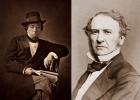
    Sarah Black wanted to remedy Year 9's lack of knowledge about nineteenth-century politics. With just five lessons to work with, she decided to devise a sequence on Gladstone and Disraeli, shaping the sequence with an enquiry question that invited argument about change and continuity. Black analyses the status and function of different layers of knowledge within her sequence, evaluates the interaction...

    Click to view
  • Enquiries to engage Year 7 in medieval anarchy

    Article

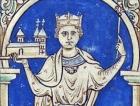
    Wrestling with Stephen and Matilda: planning challenging enquiries to engage Year 7 in medieval anarchy McDougall found learning about Stephen and Matilda fascinating, was sure that her pupils would also and designed an enquiry to engage them in ‘the anarchy' of 1139-1153 AD. Pupils enjoyed exploring ‘the anarchy' and learning...

    Click to view
  • Enquiry questions that both chime and resonate

    Article

    Ruth Lingard (@YorkCLIO) has a lovely way of thinking about enquiry questions. She describes them in terms of church bells. There are those that chime, reverberate and resonate by building intrigue and a lasting impression. However, there are also those that thud and clunk, not quite hitting the mark and...

    Click to view
  • Essay writing for everyone: an investigation into different methods used to teach Year 9 to write an essay

    Article

    Essay writing is at the very heart of school history, yet despite the wide range of developments in this area over the past decade, pupils still struggle. Alex Scott and his department decided to investigate a variety of methods to see what methods worked in enabling pupils to construct essays...

    Click to view
  • Exploring the challenges involved in reading and writing historical narrative

    Article

    ‘English king Frederick I won at Arsuf, then took Acre, then they all went home': exploring the challenges involved in reading and writing historical narrative Paula Worth draws on three professional traditions in history education in order to build a lesson sequence on the Crusades for her Year 7s. First,...

    Click to view
  • Film: Picturing the past (and the future)

    Article

    This film was taken at the HA London History Forum at the Institute of Education, UCL (University of London) in November 2019 and features Michael Riley (Senior Teaching Fellow in History Education, UCL Institute of Education) Michael considers some priorities for taking forward the history curriculum in our primary and secondary...

    Click to view
  • Film: Preparing a history department for the new inspection framework

    Article

    This film was taken at the HA London History Forum at the Institute of Education, UCL (University of London) in November 2019 and features Kath Goudie (Cottenham Village College). Drawing on her experience as a history teacher, teacher trainer and assistant headteacher Kath Goudie shares reflections on how the history...

    Click to view
  • From flight paths to spiders’ webs: developing a progression model for Key Stage 3

    Article

    The disapplication of level descriptions in the 2014 National Curriculum has spurred many history departments to rethink their approach not only to assessment but to their models of progression. In this article Rachael Cook builds on the recent work of history teachers such as Ford (TH157), Hawkey et al (TH161),...

    Click to view
  • From horror to history: teaching pupils to reflect on significance

    Article

    In this detailed account of the first stages of a lesson sequence for Year 9 (13-14 year-olds), Kate Hammond sets out the tensions that must be examined and resolved when planning and teaching this most demanding of topics. How can young teenagers be helped to develop a mature response to...

    Click to view
  • From the history of maths to the history of greatness

    Article

    Readers of Teaching History will be familiar with the benefits and difficulties of cross-curricular planning, and the pages of this journal have often carried analysis of successful collaborations with the English department, or music, or geography. Harry Fletcher-Wood describes in this article a collaboration involving maths, providing for us the...

    Click to view
  • Fundamental British Values and history teaching

    Article

    In this article, Michael Maddison provides an overview of what schools must do in relation to promoting British values, as well as preventing extremism and radicalisation, and why it is so important that opportunities are taken in history to deal with these two pressing issues. It is an updated version...

    Click to view
  • Getting Year 7 to vocalise responses to the murder of Thomas Becket

    Article

    Mary Partridge wanted her pupils not only to become more aware of competing and contrasting voices in the past, but to understand  how historians orchestrate those voices. Using Edward Grim's eye-witness account of Thomas Becket's murder, her Year 7 pupils explored nuances in the word ‘shocking' as a way of...

    Click to view
  • Getting medieval (and global) at Key Stage 3

    Article

    Taking new historical research into the classroom: getting medieval (and global) at Key Stage 3 Although history teachers frequently work with academic historical writing, direct face-to-face encounters with academic historians are rare in secondary history classrooms. This article reports a collaboration between an academic historian and a history teacher that...

    Click to view
  • Harnessing the power of community to expand students’ historical horizons

    Article

    Many history teachers will already be familiar with ‘meanwhile, elsewhere...’, a website offering freely downloadable homework resources on individuals, events and developments in world history. In this article the website’s creators, Richard Kennett and Will Bailey-Watson, set out a curricular rationale for the project. They argue that using homework tasks...

    Click to view
  • Helping Year 7 put some flesh on Roman bones

    Article

    Like many other history departments nationally, Ed Podesta and his colleagues face a daunting practical challenge: redesigning three years' historical learning so that it can fit into a compressed two-year Key Stage 3, whilst enhancing, rather than compromising, the quality of students' historical learning. Podesta's article reports the beginning of...

    Click to view
  • Helping Year 9 debate the purposes of genocide education

    Article

    Connecting the dots: helping Year 9 to debate the purposes of Holocaust and genocide education Why do we teach about the Holocaust and about other genocides? The Holocaust has been a compulsory part of the English National Curriculum since 1991; however, curriculum documents say little about why pupils should learn...

    Click to view
  • Helping Year 9 evaluate explanations for the Holocaust

    Article

    ‘It made my brain hurt, but in a good way': helping Year 9 learn to make and to evaluate explanations for the Holocaust Why genocides occur is a perplexing and complex question. Leanne Judson reports a strategy designed to help students think about perpetration and evaluate and propose explanations for...

    Click to view