Planning

This section organises material on Key Stage 3 planning into three categories. In KS3 planning: general, you will find general advice on planning in the lower secondary years. This includes examples of how history teachers and other history education experts have planned everything from single activities and lessons to two or three years of work.  You will find examples of planning for local history in KS3 planning: local history.  The third category, KS3 planning: Learning outside the classroom embraces fieldwork of all kinds, from studying landscape and cities, to museums, galleries and memorials, as well as inter-school activities, work with outside organisations and assorted international collaborations, real and virtual. Read more

Sort by: Date (Newest first) | Title A-Z
Show: All | Articles | Podcasts | Multipage Articles
  • Effective essay introductions

    Article

    Struck by the dullness of some of her students’ essay introductions, Paula Worth reflected on the fact that she had never focused specifically on introductions. After surveying existing work by history teachers on essay structure in general and introductions in particular, she turns to the work of historians. Drawing on...

    Click to view
  • Making rigour a departmental reality

    Article

    Faced with the introduction of a two-year key stage and a new whole-school assessment policy, Rachel Arscott and Tom Hinks decided to make a virtue out of necessity and reconsider their whole approach to planning, teaching and assessment at Key Stage 3. In this article they give an account of...

    Click to view
  • Taking control of assessment

    Article

    Ian Luff recognised that in a post-levels world efforts to devise new assessment systems risked replicating old problems or creating new ones. Drawing on his many years’ experience of teaching and school leadership Luff argues that for assessment in history to be truly useful to teachers and pupils it needs...

    Click to view
  • Fundamental British Values and history teaching

    Article

    In this article, Michael Maddison provides an overview of what schools must do in relation to promoting British values, as well as preventing extremism and radicalisation, and why it is so important that opportunities are taken in history to deal with these two pressing issues. It is an updated version...

    Click to view
  • From the history of maths to the history of greatness

    Article

    Readers of Teaching History will be familiar with the benefits and difficulties of cross-curricular planning, and the pages of this journal have often carried analysis of successful collaborations with the English department, or music, or geography. Harry Fletcher-Wood describes in this article a collaboration involving maths, providing for us the...

    Click to view
  • Year 8 and interpretations of the First World War

    Article

    Dan Smith was concerned that his pupils were drawing on over-simplified generalisations about different periods of the past when they were considering why interpretations change over time. This led him to consider how pupils’ contextual knowledge and chronological fluency might be used more explicitly in order to avoid weak generalisations...

    Click to view
  • Cunning Plan 162: Transferring knowledge from Key Stage 3 to 4

    Article

    Planning to deliver the new GCSE specifications presents a challenge and an opportunity to any history department, whatever their previous specification. The sweep of history that students will now study at GCSE is much broader than ‘Modern World’ departments are used to; including a medieval or early modern depth study...

    Click to view
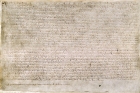
  • Cunning Plan 161: Magna Carta's legacy

    Article

    Both Dawson and Hayes have recently written Cunning Plans that show how exciting Magna Carta is. So why not stop there? Bring the barons to life with a flare of Dawson and send Magna Carta flying across the continent with just a hint of Hayes. Hey, from the same edition,...

    Click to view
  • Interpreting Agincourt: KS3 Scheme of Work

    Article

    2015 was a year of anniversaries. As part of our funded commemoration projects surrounding the 600th anniversary of the Battle of Agincourt, we commissioned this scheme of work looking at interpretations of the battle and period, particularly aimed at pupils in Key Stage 3. It comes with a complete resource...

    Click to view
  • Animated Guide: Become a Museum Curator

    Multipage Article

    Have you ever visited a museum or exhibition and wondered who puts it all together? Being a museum, library or archive curator is a very responsible job. Not only do they have to look after rare and precious items in their care, but they must also know all about their...

    Click to view
  • Remembering Agincourt: Bilingual Enquiry

    Multipage Article

    Do they learn about Agincourt in France? 2015 was a year of anniversaries. As part of our funded commemoration projects surrounding the 600th anniversary of the Battle of Agincourt, we have commissioned an enquiry looking at the battle and how it has been remembered, particularly aimed at pupils in years...

    Click to view
  • Engaging Year 9 students in party politics

    Article

    Sarah Black wanted to remedy Year 9's lack of knowledge about nineteenth-century politics. With just five lessons to work with, she decided to devise a sequence on Gladstone and Disraeli, shaping the sequence with an enquiry question that invited argument about change and continuity. Black analyses the status and function of different layers of knowledge within her sequence, evaluates the interaction...

    Click to view
  • Cunning Plan 159: Putting the people into Magna Carta

    Article

    Does your heart skip with excitement at the prospect of a Year 7 lesson on Magna Carta? No? Magna Carta may be an important part of the long-term story of royal power and individual liberties but it is not a topic that excites many teachers. If it were, teachers would...

    Click to view
  • Enabling Year 7 to write essays on Magna Carta

    Article

    Setting out to teach Magna Carta to the full attainment range in Year 7, Mark King decided to choose a question that reflected real scholarly debates and also to ensure that pupils held enough knowledge in long-term memory to be able to think about that question meaningfully. As he gradually prepared his pupils to produce their own causation arguments in response to that question, King was startled by...

    Click to view
  • Cunning Plan 159: Was King John unlucky with his Barons?

    Article

    Typical teaching of King John and Magna Carta focuses either on the weakness of John or the importance (as Whig historians would see it) of Magna Carta. The first question is a bit boring and the second discussion unhistorical. This enquiry sequence is designed for students aged 11 to 13. It...

    Click to view
  • Assessing the Battle of Waterloo in the classroom

    Article

    Defying the Iron Duke: assessing the Battle of Waterloo in the classroom The approaching bicentenary of the Battle of Waterloo has stimulated debate about how it should be commemorated. This article reports a collaboration between the Waterloo200 Committee and Tom Wheeley, history teacher, to create a lesson sequence analysing the...

    Click to view
  • 'But why then?' Chronological context and historical interpretations

    Article

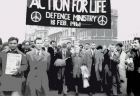
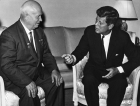
    When Michael Fordham was introduced to Dr Seuss's Butter Battle Book he immediately recognised its potential value in the classroom as a popular interpretation of the Cold War. Wanting his Year 9 pupils to explain how and why the past has been interpreted in different ways he shows the potential pitfalls...

    Click to view
  • Getting medieval (and global) at Key Stage 3

    Article

    Taking new historical research into the classroom: getting medieval (and global) at Key Stage 3 Although history teachers frequently work with academic historical writing, direct face-to-face encounters with academic historians are rare in secondary history classrooms. This article reports a collaboration between an academic historian and a history teacher that...

    Click to view
  • Exploring the challenges involved in reading and writing historical narrative

    Article

    ‘English king Frederick I won at Arsuf, then took Acre, then they all went home': exploring the challenges involved in reading and writing historical narrative Paula Worth draws on three professional traditions in history education in order to build a lesson sequence on the Crusades for her Year 7s. First,...

    Click to view
  • Assessment and planning for progression at Key Stage 3

    Article

    The 2014 National Curriculum does not include an attainment target or any specified level against which you are expected to assess pupils' progress. The new attainment target says simply that: ‘By the end of each key stage, pupils are expected to know, apply and understand the matters, skills and processes...

    Click to view