Planning

This section organises material on Key Stage 3 planning into three categories. In KS3 planning: general, you will find general advice on planning in the lower secondary years. This includes examples of how history teachers and other history education experts have planned everything from single activities and lessons to two or three years of work.  You will find examples of planning for local history in KS3 planning: local history.  The third category, KS3 planning: Learning outside the classroom embraces fieldwork of all kinds, from studying landscape and cities, to museums, galleries and memorials, as well as inter-school activities, work with outside organisations and assorted international collaborations, real and virtual. Read more

Sort by: Date (Newest first) | Title A-Z
Show: All | Articles | Podcasts | Multipage Articles
  • Progression & Assessment without Levels - Guide

    Multipage Article

    In the 2014 national curriculum for primary and secondary history one of the key differences is that, for the first time since 1991, there are no level descriptions against which you can assess pupils' progress.  The new attainment target says simply that: ‘By the end of each key stage, pupils...

    Click to view
  • Using The Wipers Times to build an enquiry on the First World War

    Article

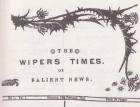
    Teaching ‘the lesson of satire': using The Wipers Times to build an enquiry on the First World War ‘Blackadder for real' is how the British journalist and broadcaster, Ian Hislop, characterised The Wipers Time, the newspaper published on the front line by members of the 12th Battalion Sherwood, and recently brought...

    Click to view
  • Cunning Plan 155: interpreting WW1 events

    Article

    Enquiry Question: What's worth knowing about the First World War? At the end of our scheme of work on the First World War, I asked myself how I might encourage my Year 9 pupils to reflect on the historical significance of the events we had studied. I was particularly interested...

    Click to view
  • Helping Year 9 explore the cultural legacies of WW1

    Article

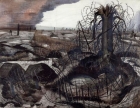
    A world turned molten: helping Year 9 to explore the cultural legacies of the First World War Rachel Foster shows how her own study of cultural history led to a new dimension in her planning. She wanted to show her students not only that historians are interested in many different...

    Click to view
  • Combating a Cook-centric past through co-curricular learning

    Article

    Combating a Cook-centric past through co-curricular learning: Year 9 dig out maps and rulers to challenge generalisations about the Age of Discovery Paula Worth presents in this article a means of challenging students' tendency to generalise even when they know that they should not. How can we encourage our students...

    Click to view
  • Cunning Plan 154: Who is buried in the box?

    Article

    Question: Who is buried in the box? Seeking a new and exciting way to introduce my Year 7 students to history, I looked to a practical solution. Ian Dawson once used a Thinking History exercise where students looked at the idea of ‘layers of history'. It was useful in structuring...

    Click to view
  • Unpacking the suitcase and finding history: doing justice to the teaching of diverse histories in the classroom

    Article

    Unpacking the suitcase and finding history: doing justice to the teaching of diverse histories in the classroom It has become a truism that Britain is a multi-cultural society yet, as Mohamud and Whitburn argue, there is still a great deal of thinking to be done by history teachers in accounting...

    Click to view
  • Bringing Rwanda into the classroom

    Article

    A short 20 years: meeting the challenges facing teachers who bring Rwanda into the classroom As the twentieth anniversary of the 1994 genocide in Rwanda approaches, Mark Gudgel argues that we should face the challenges posed by teaching about Rwanda. Drawing on his experience as a history teacher in the...

    Click to view
  • Helping Year 9 debate the purposes of genocide education

    Article

    Connecting the dots: helping Year 9 to debate the purposes of Holocaust and genocide education Why do we teach about the Holocaust and about other genocides? The Holocaust has been a compulsory part of the English National Curriculum since 1991; however, curriculum documents say little about why pupils should learn...

    Click to view
  • Learning lessons from genocides

    Article

    ‘Never again'? Helping Year 9 think about what happened after the Holocaust and learning lessons from genocides ‘Never again' is the clarion call of much Holocaust and genocide education. There is a danger, however, that it can become an empty, if pious, wish. How can we help pupils reflect seriously on...

    Click to view
  • Can we educate Year 9 in genocide prevention?

    Article

    Patterns of genocide: can we educate Year 9 in genocide prevention? Alison Stephen, who has wrestled for many years with the challenges of teaching emotional and controversial history within a multiethnic school setting, relished the opportunity to link her school's teaching of the Holocaust with a comparative study of other genocides....

    Click to view
  • Move Me On 153: Teaching about genocide

    Article

    This issue's problem: Susie Cook is struggling to sustain an emphasis on developing historical knowledge and understanding in teaching about genocide. Susie Cook worked for nearly ten years as a web designer before deciding to move into teaching. Once she had secured her place on the programme she spent several months...

    Click to view
  • Helping Year 9 evaluate explanations for the Holocaust

    Article

    ‘It made my brain hurt, but in a good way': helping Year 9 learn to make and to evaluate explanations for the Holocaust Why genocides occur is a perplexing and complex question. Leanne Judson reports a strategy designed to help students think about perpetration and evaluate and propose explanations for...

    Click to view
  • Developing awareness of the need to select evidence

    Article

    Let's play Supermarket ‘Evidential' Sweep: developing students' awareness of the need to select evidence Despite having built a sustained focus on historical thinking into their planning for progression across Years 7 to 13, Rachel Foster and Sarah Gadd remained frustrated with stubborn weaknesses in the evidential thinking of students in...

    Click to view
  • Cunning Plan 152.2: using Gillray’s cartoons with Year 8

    Article

    The past 30 years have seen a general revival in scholarly activity relating to ‘all aspects of 18th-century British history'. However, this increase in academic study, which has broadly coincided with the introduction and development of the National Curriculum in England, has not resulted in the period being studied in great...

    Click to view
  • Do we need another hero? Rorke's Drift

    Article

    Do we need another hero? Year 8 get to grips with the heroic myth of the Defence of Rorke's Drift in 1879 Mike Murray shares a lesson sequence in which his students examined changing interpretations of the Battle of Rorke's Drift in 1879. Building on earlier work on teaching interpretations...

    Click to view
  • Cunning Plan 151: When and for whom has 1688 been 'Glorious'?

    Article

    This enquiry is about how interpretations are formed and why they change. It aims to show Year 9, right at the end of their study of British history, the ways in which meanings of 1688 have shifted over time. It will test students' knowledge and strengthen their chronology of 300...

    Click to view
  • Year 9 - Connecting past, present and future

    Article

    Possible futures: using frameworks of knowledge to help Year 9 connect past, present and future How can we help pupils integrate history into coherent ‘Big Pictures' or mental frameworks? Building on traditions of classroom research and theorising reported in earlier editions of Teaching History, Dan Nuttall reports how his department set...

    Click to view
  • Continuity in the treatment of mental health through time

    Article

    Where's the other ‘c'? Year 9 examine continuity in the treatment of mental health through time Helen Murray, Rachel Burney and Andrew Stacey-Chapman show how they strengthened three goals of their practice - secure knowledge, narrative shapes and conceptual analysis - by securing strong connection between them. The curricular focus...

    Click to view
  • Move Me On 151: Getting past a plateau in development

    Article

    This issue's problem: Nancy Astor seems to have reached a plateau in her development as a history teacher. After a difficult start to her training year, Nancy seemed to be making rapid progress, but her development has now slowed and her mentor is concerned that she may not achieve her full...

    Click to view