Planning

This section organises material on Key Stage 3 planning into three categories. In KS3 planning: general, you will find general advice on planning in the lower secondary years. This includes examples of how history teachers and other history education experts have planned everything from single activities and lessons to two or three years of work.  You will find examples of planning for local history in KS3 planning: local history.  The third category, KS3 planning: Learning outside the classroom embraces fieldwork of all kinds, from studying landscape and cities, to museums, galleries and memorials, as well as inter-school activities, work with outside organisations and assorted international collaborations, real and virtual. Read more

Sort by: Date (Newest first) | Title A-Z
Show: All | Articles | Podcasts | Multipage Articles
  • Move Me On 149: how to provide appropriate support for particular students

    Article

    This issue's problem: Helen Troy is uncertain how to provide appropriate support for certain students without restricting what they can achieve. Helen showed considerable determination in securing her teacher training place. Her own education had been within a highly selective school system and her first application was unsuccessful because of...

    Click to view
  • Move Me On 151: Getting past a plateau in development

    Article

    This issue's problem: Nancy Astor seems to have reached a plateau in her development as a history teacher. After a difficult start to her training year, Nancy seemed to be making rapid progress, but her development has now slowed and her mentor is concerned that she may not achieve her full...

    Click to view
  • Move Me On 153: Teaching about genocide

    Article

    This issue's problem: Susie Cook is struggling to sustain an emphasis on developing historical knowledge and understanding in teaching about genocide. Susie Cook worked for nearly ten years as a web designer before deciding to move into teaching. Once she had secured her place on the programme she spent several months...

    Click to view
  • Move Me On 170: adapting to a second school

    Article

    This feature of Teaching History is designed to build critical, informed debate about the character of teacher training, teacher education and professional development. It is also designed to offer practical help to all involved in training new history teachers. Each issue presents a situation in initial teacher education/training with an...

    Click to view
  • Move Me On 182: thinks that substantive knowledge is all that matters

    Article

    Lina Power has interpreted an emphasis on knowledge organisers and factual knowledge tests to mean that substantive knowledge is all that matters. Move Me On is designed to build critical, informed debate about the character of teacher training, teacher education and professional development. It is also designed to offer practical...

    Click to view
  • My essays could go on forever: using Key Stage 3 to improve performance at GCSE

    Article

    History teachers are waking up to the fact that you cannot raise standards in GCSE by very much if you leave this work until Year 10. To leave it that late is to resort to surface, tactical moves rather than to address the deep reasons why so many pupils find...

    Click to view
  • Myths and Monty Python: using the witch-hunts to introduce students to significance

    Article

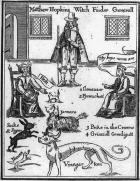
    In this article Kerry Apps introduces students to the significance of the witch-hunts in the modern era, at the time when they occurred, and in the middle of the eighteenth century. She presents her rationale for choosing the witch-hunts as a focus for the study of significance, and shows how her thinking about her teaching has evolved through her evaluation of her students’...

    Click to view
  • New approaches to teaching the History of Appeasement in the classroom

    Multipage Article

    This project has been created on the initiative of Professor Julie. V. Gottlieb, Dept. of History, University of Sheffield. British political history, political conflict, appeasement and the Munich Crisis (1938) itself is the focus of her research and publications. Rather than approach these topics from ‘traditional’, elite and history from...

    Click to view
  • New, Novice or Nervous? 172: Curriculum planning

    Article

    This page is for those new to the published writings of history teachers. Each problem you wrestle with, other teachers have wrestled with too. Quick fixes don’t exist. But in others’ writing, you’ll find something better: conversations in which history teachers have debated or tackled your problems – conversations which...

    Click to view
  • No more ‘doing’ diversity

    Article

    Catherine Priggs and her history department colleagues were increasingly concerned that their curriculum was too narrow. They feared that major areas of history were being left out and that many of their own pupils were not seeing themselves, in their various ethnic, cultural and world identities, in the past. Priggs...

    Click to view
  • Nutshell 129: Arguing the case for keeping history at Key Stage 3

    Article

    Nutshell, HELP. My head wants to abandon separate subjects at Key Stage 3 and do projects linked only by content, such as ‘India', ‘Industry' or ‘Indigo' instead. SMT already stop 50% of pupils from choosing history at 13 as apparently they can't ‘achieve' in it (or can't achieve a C),...

    Click to view
  • Of the many significant things that have ever happened, what should we teach?

    Article

    There are three basic strands to our lessons. How should we teach? What skills should we enable our students to build? What content should we use to deliver those skills? In this article Tony McConnell, who has been re-designing the curriculum in his school in response to a changed examination regimen, considers the issue of subject...

    Click to view
  • Planning a more diverse and coherent Year 7 curriculum

    Article

    In this article, Jacob Olivey describes his department’s efforts to both diversify their Key Stage 3 curriculum and secure greater curricular coherence. Building on a large body of research and practice, Olivey sought new forms of curricular coherence through the selection and sequencing of substantive content across the curriculum. He...

    Click to view
  • Planning increasingly complex causal models at Key Stage 3

    Article

    While weighing up the relative merits of the competing narratives of the Battle of Hastings that his department might present to Year 7, Matthew Stanford began to consider how the causal models that teachers introduce influence the causal arguments that students later go on to write. In this article, Stanford...

    Click to view
  • Polychronicon 142: 'instructive reversals' - (re)interpreting the 1857 events in Northern India

    Article

    The dramatic, chaotic and violent events that took place in Northern India in 1857/8 have been interpreted in many ways, as, for example, the ‘Indian Mutiny', the ‘Sepoy War' and the ‘First Indian War of Independence'. The tales that have been told about these events have been profoundly shaped, however,...

    Click to view
  • Polychronicon 170: The Becket Dispute

    Article

    ‘The Becket Dispute’ (or ‘Controversy’) refers to the quarrel between Henry II and Thomas Becket, Archbishop of Canterbury, which dominated English ecclesiastical politics in the 1160s. It was a conflict with multiple dimensions: a clash of Church and State; a prolonged struggle between two prominent individuals; a close friendship turned...

    Click to view
  • Professional wrestling in the history department: a case study in planning the teaching of the British Empire at Key Stage 3

    Article

    Three years ago ( TH 99, Curriculum Planning Edition), Michael Riley illustrated ways in which history departments could exploit the increased flexibility of the revised National Curriculum.1 He showed that precisely-worded enquiry questions, positioned thoughtfully across the Key Stage, help to ensure progression, challenge and coherence. His picturesque image for...

    Click to view
  • Professional wrestling in the history department: a case study in planning the teaching of the British Empire at key stage 3

    Article

    Three years ago (TH 99, Curriculum Planning Edition), Michael Riley illustrated ways in which history departments could exploit the increased flexibility of the revised National Curriculum. He showed that precisely-worded enquiry questions, positioned thoughtfully across the Key Stage, help to ensure progression, challenge and coherence. His picturesque image for this...

    Click to view
  • Progression & Assessment without Levels - Guide

    Multipage Article

    In the 2014 national curriculum for primary and secondary history one of the key differences is that, for the first time since 1991, there are no level descriptions against which you can assess pupils' progress.  The new attainment target says simply that: ‘By the end of each key stage, pupils...

    Click to view
  • Pupil-led historical enquiry: what might this actually be?

    Article

    The current National Curriculum for history requires pupils to ‘identify and investigate specific historical questions, making and testing hypotheses for themselves'. While Kate Hammond relished the encouragement that this gave to her pupils to engage in the process of historical enquiry, she was keen to develop a much clearer sense...

    Click to view