Planning

This section organises material on Key Stage 3 planning into three categories. In KS3 planning: general, you will find general advice on planning in the lower secondary years. This includes examples of how history teachers and other history education experts have planned everything from single activities and lessons to two or three years of work.  You will find examples of planning for local history in KS3 planning: local history.  The third category, KS3 planning: Learning outside the classroom embraces fieldwork of all kinds, from studying landscape and cities, to museums, galleries and memorials, as well as inter-school activities, work with outside organisations and assorted international collaborations, real and virtual. Read more

Sort by: Date (Newest first) | Title A-Z
Show: All | Articles | Podcasts | Multipage Articles
  • Seeing the historical world

    Article

    In this article, Lindsay Cassedy, Catherine Flaherty and Michael Fordham draw upon their empirical research to assess what understandings their students had of historical interpretations at the end of their compulsory education in history. They found that most students operated with an underlying epistemological model that did not reflect the...

    Click to view
  • Polychronicon 142: 'instructive reversals' - (re)interpreting the 1857 events in Northern India

    Article

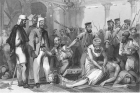
    The dramatic, chaotic and violent events that took place in Northern India in 1857/8 have been interpreted in many ways, as, for example, the ‘Indian Mutiny', the ‘Sepoy War' and the ‘First Indian War of Independence'. The tales that have been told about these events have been profoundly shaped, however,...

    Click to view
  • Cunning Plan 142: Why do historical interpretations change over time?

    Article

    History teachers have been talking about the need to teach broad narratives, overview and chronology for a long time. They have also recognised how essential it is for students to have an opportunity to study the ways in which the past has been interpreted, and the reasons why these interpretations...

    Click to view
  • Bob Dylan and the concept of evidence

    Article

    No edition of Teaching History devoted to creativity could be complete without returning to the riches that popular songs offer to historians and history teachers alike. The five Bob Dylan songs that Christopher Edwards explores here are chosen not merely for their ‘literary qualities' and ‘emotional charge'; they also provide...

    Click to view
  • Being historically rigorous with creativity

    Article

    After a Fellowship in Holocaust Education at the Imperial War Museum, Andy Lawrence decided that something was missing in normal approaches to teaching emotive and controversial issues such as genocide, a deficit demonstrated by recent research by the Holocaust Education Development Programme. As part of his fellowship, Lawrence created an...

    Click to view
  • Dickens...Hardy...Jarvis?! A novel take on the Industrial Revolution

    Article

    ‘Empathy with edge' was the editorial description given eight years ago to the kind of historical fiction that Dave Martin and Beth Brooke first argued history students should be writing (TH 108). The winning entries from the annual ‘Write Your Own Historical Story Competition' to which their work gave rise...

    Click to view
  • Counterfactual Reasoning: Comparing British and French History

    Article

    Year 8 use counterfactual reasoning to explore place and social upheaval in eighteenth-century France and Britain Two linked motivations inspired Ellen Buxton's research study: she wanted pupils to make connections between British and French history and she wanted to explore the potential of counter-factual reasoning within a causation enquiry. It...

    Click to view
  • Deconstructing lazy analogies in Year 9

    Article

    Reflecting on the continuing problem of students holding an impoverished understanding of the value or ‘uses' of history, Steve Rollett turned his attention to the question of analogy. He took the axiom to which students make common appeal (‘we can learn from mistakes in the past') and set about trying...

    Click to view
  • Approaches to the History Curriculum: skills based curriculum

    Article

    In 2010 many schools were adopting thematic or skills based curricula in England. This is one way of organising a curriculum. Some of the pros and cons of this approach are elaborated here.  There are an increasing number of schools now adopting a thematic or skills based curriculum for year...

    Click to view
  • Telling tales: Developing students' own thematic and synoptic understandings at Key Stage 3

    Article

    Please note: this article pre-dates the 2014 National Curriculum and some content may be outdated. Ed Brooker is as concerned as the other authors within this edition that students should be able to see and make meaning out of ‘big pictures' of the past. He is acutely aware, however, that...

    Click to view
  • Interpretations

    Article

    Please note: these links were compiled in 2009. For a more recent resource, please see: What's the Wisdom on: Interpretations of the past.  A selection of useful Teaching History Articles on 'Interpretations' and are highly recommended reading to those who would like to get to grips with this key concept: 1....

    Click to view
  • Causation

    Article

    Please note: these links were compiled in 2009. For a more recent resource, please see: What's the Wisdom on: Causation.  These Teaching History Articles on 'Causation' are highly recommended reading to those who would like to get to grips with this key concept: 1. Move Me On 92. Problem page for history mentors. Teaching...

    Click to view
  • Nutshell 129: Arguing the case for keeping history at Key Stage 3

    Article

    Nutshell, HELP. My head wants to abandon separate subjects at Key Stage 3 and do projects linked only by content, such as ‘India', ‘Industry' or ‘Indigo' instead. SMT already stop 50% of pupils from choosing history at 13 as apparently they can't ‘achieve' in it (or can't achieve a C),...

    Click to view
  • Approaches to the History Curriculum: Project based learning

    Article

    Rationale/Origins Project based learning has been around for decades; it is not a new idea. When we think back to the curriculum of the 1970s and early 80s, integrated Humanities was once again all the rage. As the Nuffield review of 2008 highlights "between 1975 and 1983, HMI tried to...

    Click to view
  • Raising the bar: developing meaningful historical consciousness at Key Stage 3

    Article

    Please note: this article pre-dates the 2014 National Curriculum and some content may be outdated. How can we help pupils make sense of the history that they learn so that the whole adds up to more than the sum of its parts? How can we help pupils develop and sophisticate...

    Click to view
  • Challenging not balancing: developing Year 7's grasp of historical argument through online discussion and a virtual book

    Article

    Please note: this article pre-dates the 2014 National Curriculum and some content may be outdated. This article is about using story to construct a learning journey for a Year 7 class. It reports an innovative use of a virtual learning environment to construct a narrative e-book into which argument tasks...

    Click to view
  • Making pupils want to explain: using Movie Maker to foster thoroughness and self-monitoring

    Article

    Please note: this article pre-dates the 2014 National Curriculum and some content may be outdated. Sally Burnham shares her practice and reflections on the value of the software, ‘Movie Maker', for developing particular aspects of historical thinking and learning. In Teaching History 130, in the context of her Key Stage...

    Click to view
  • Professional wrestling in the history department: a case study in planning the teaching of the British Empire at key stage 3

    Article

    Three years ago (TH 99, Curriculum Planning Edition), Michael Riley illustrated ways in which history departments could exploit the increased flexibility of the revised National Curriculum. He showed that precisely-worded enquiry questions, positioned thoughtfully across the Key Stage, help to ensure progression, challenge and coherence. His picturesque image for this...

    Click to view
  • Into the Key Stage 3 history garden: choosing and planting your enquiry questions

    Article

    Drawing upon a range of practice, Michael Riley analyses the characteristics of a good enquiry question. He explores the importance of careful wording of the question if it is genuinely to help the teacher to integrate areas of content into a purposeful learning journey and without distortion.He then moves on...

    Click to view
  • Understanding Key Concepts: Diversity

    Article

    Please note: this resource pre-dates the 2014 National Curriculum. For more recent resources, see How diverse is your history curriculum? and Diversity links and resources for Secondary history. This material enables history teachers to explore the concept of diversity. Section 1 discusses the concept of diversity and its importance in the...

    Click to view