Planning

This section organises material on Key Stage 3 planning into three categories. In KS3 planning: general, you will find general advice on planning in the lower secondary years. This includes examples of how history teachers and other history education experts have planned everything from single activities and lessons to two or three years of work.  You will find examples of planning for local history in KS3 planning: local history.  The third category, KS3 planning: Learning outside the classroom embraces fieldwork of all kinds, from studying landscape and cities, to museums, galleries and memorials, as well as inter-school activities, work with outside organisations and assorted international collaborations, real and virtual. Read more

Sort by: Date (Newest first) | Title A-Z
Show: All | Articles | Podcasts | Multipage Articles
  • Using diagrammatic representations of counterfactuals to develop causal reasoning

    Article

    Tom Bennett begins his article with a tale of a frustrating afternoon with Year 7. We’ve all been there. In his case, his frustration was caused by his finding a conceptual gap between how well his class wanted to do and the actual quality of their causal thinking. Bennett decided...

    Click to view
  • Using narratives and big pictures to address the challenges of a 2-year KS3 curriculum

    Article

    Faced with cutting her Key Stage 3 curriculum to two years, Natalie Kesterton and her department were determined to do more with less. Not only did they want to ensure that their pupils developed a secure, wide-ranging knowledge of British and world history, they also wanted to address deficits in pupils’...

    Click to view
  • Using oral history in the classroom

    Multipage Article

    The Oral History Society has kindly agreed to produce two new films aimed at history teachers who are new to carrying out or using oral histories either in their teaching or with students. These two films will equip teachers with the essential tools and knowledge for using and devising effective...

    Click to view
  • Using ‘Assessment for Learning' to help students assume responsibility

    Article

    Robin Conway's interest in student led enquiry derived from a concern to encourage his students to take much more responsibility for their own learning. Here he explains how his department gradually learned to entrust students with defining the enquiry questions and planning the kinds of teaching and learning activities to be...

    Click to view
  • What kinds of feedback help students produce better historical narratives of the interwar years?

    Article

    Narrative has begun to take its place alongside the essay, for so long the stereotypical currency of the history teacher and student. In this work, based on his experiences as a PGCE student, Alex Rodker argues powerfully that it is time now to consider how to help students to produce...

    Click to view
  • Where are we? The place of women in history curricula

    Article

    Joanne Pearson reflects on her experiences as a history teacher and teacher educator, considering the ways in which she has seen women represented in the history curricula of different schools in England. She makes the case that greater attention needs to be paid by history teachers to the criteria against...

    Click to view
  • Why are you wearing a watch? Complicating narratives of economic and social progress

    Article

    Frustrated by the traditional narrative of the industrial revolution as a steady march of progress, and disappointed by her students’ dull and deterministic statements about historical change, Hannah Sibona decided to complicate the tidy narrative of continual improvement. Inspired by an article by E.P. Thompson, Sibona reflected that introducing her...

    Click to view
  • Widening the early modern world to create a more connected KS3 curriculum

    Article

    Readers of this journal will be familiar with a number of ways of approaching the Tudors. Kerry Apps provides here an article detailing her concerns about the differences between what she had been delivering at Key Stage 3 and the broader, connected experience she had as an undergraduate historian. How...

    Click to view
  • Year 8 and interpretations of the First World War

    Article

    Dan Smith was concerned that his pupils were drawing on over-simplified generalisations about different periods of the past when they were considering why interpretations change over time. This led him to consider how pupils’ contextual knowledge and chronological fluency might be used more explicitly in order to avoid weak generalisations...

    Click to view
  • Year 9 - Connecting past, present and future

    Article

    Possible futures: using frameworks of knowledge to help Year 9 connect past, present and future How can we help pupils integrate history into coherent ‘Big Pictures' or mental frameworks? Building on traditions of classroom research and theorising reported in earlier editions of Teaching History, Dan Nuttall reports how his department set...

    Click to view
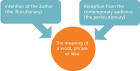
  • Year 9 use sources to explore contemporary meanings and understandings of appeasement

    Article

    After reflecting on the difference between his study of source extracts at university and how he was using source extracts in the classroom, Jonathan Sellin went in search of a new way to help his pupils to situate sources in context. Finding inspiration in the work of intellectual historian Quentin...

    Click to view
  • ‘I need to know…’: creating the conditions that make students want knowledge

    Article

    Chloe Bateman recognised the value to her Key Stage 3 pupils of developing rich subject knowledge, but wanted to find a way of encouraging them to value that knowledge for themselves. In this article she explains how she provided that inspiration by setting her Year 7 class the challenge of...

    Click to view
  • ‘Its ultimate pattern was greater than its parts’

    Article

    Identifying the challenges his students faced both with recall and analysis of the content they had learned for their GCSE course, Ed Durbin devised a solution which focused not on exam skills and revision lessons, but on using Key Stage 3 to build the ‘hinterland’ of contextual knowledge and causal...

    Click to view
  • ‘One big cake’: substantive knowledge of the mid-Tudor crisis in Year 7 students’ writing

    Article

    While looking to revamp his department’s Year 7 enquiry on the Tudors, Jack Mills turned to historiographical debates regarding the ‘mid-Tudor crisis’ to inform his curricular decision making. In doing so, Mills noted that the debate hinged on interpretations of substantive concepts such as ‘crisis’. He therefore also drew on previous...

    Click to view
  • ‘Weaving’ knowledge

    Article

    Diane Relf was concerned by what felt like an unbridgeable gulf between Year 7’s vocabulary and comprehension, and her aspirations both for their inclusion in history and their later academic success. As a subject leader without the benefit of any history-specific training at the start of her career, she embarked on...

    Click to view