Women

The role and input of women is undeniably central to human existence and to the story of human society. They are generally 50% of the population but rarely the centre of a story; women have often been pushed to the side lines for historical content. The role of women through history and the pressures and behaviours that have pushed their input aside are all explored within this theme. Powerful, influential and significant female characters are explored in detail across the time periods, including queens, and campaigners, while the stories of ordinary women are also explored through themes such as social change, war and religion.

Sort by: Date (Newest first) | Title A-Z
  • Film: Proto-feminism in Britain and Ireland – 1714 to 1785

    Article

    In Episode 11, Dr Mary Jo MacDonald of the University of Jyväskylä explores how the end of the Licensing Act, sweeping political change, and a revolution in intellectual culture opened unprecedented opportunities for women to shape political, social, and intellectual life in Britain and Ireland. The film highlights major proto‑feminist thinkers...

    Click to view
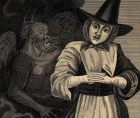
  • Witchcraft, Werewolves and Magic in European History: on-demand short course

    Multipage Article

    This self-guided short course provides an introduction to European witchcraft history from the fifteenth century to the present. Using a range of primary sources, the course explores important themes and questions relating to witchcraft history, examining how witchcraft has been imagined and understood at different times and in different places, and why...

    Click to view
  • Report on Reclaiming Women’s Place in the History Curriculum

    News Item

    Congratulations to the team behind the new report The Great History Heist: Reclaiming Women’s Place in the History Curriculum. The publication of some of the outcomes from the report in The Guardian has brought to public attention the important evidence that despite being at least 50% of the population, women are...

    Click to view
  • Historical anniversaries calendar

    Article

    Historical anniversaries can be a great way to get children and young people interested in a subject or to raise awareness about a particular issue. This resource is free to everyone. For access to hundreds of other high-quality history and education resources along with free or discounted CPD and membership of a thriving community of...

    Click to view
  • Tracing the popular memory of Rosa Parks with Year 9

    Article

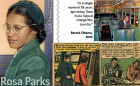
    Inspired by Jeanne Theoharis’s biography of Rosa Parks, Ed Durbin initially planned to challenge the ‘fable’ that had been constructed around her life. He soon realised, however, that he wanted to take the opportunity to get ‘behind’ the fable and help his students understand how and why it had been constructed. Drawing...

    Click to view
  • How representing women can convey a more complex narrative of the Russian Revolution to Year 9

    Article

    Barbara Trapani was troubled by the oversimplified judgements her students were making about the Russian Revolution. Could the women of the revolution help her students overcome their tendency to focus on success and failure? Trapani revised her enquiry, selecting stories of women who could ‘illuminate’ a longer, more complex history of...

    Click to view
  • What Have Historians Been Arguing About... gender and sexuality

    Article

    Although they overlap, gender and sexuality are each a distinctive field of historical research. Researching in these fields involves cross-disciplinary work and a range of media and methods. One of the greatest challenges is that of terminology: how to refer to the gender identity or sexuality of a subject in...

    Click to view
  • ‘Compressing and rendering’: using biography to teach big stories

    Article

    In principle, Rachel Foster had long been aware of the value of creating an interplay between depth and overview across the history curriculum. But in practice, as she acknowledges here, she had tended to shy away from telling outline stories that encompassed a big chronological or geographical range. Recognising the...

    Click to view
  • Recorded Webinar: Female slave-ownership in 18th- and 19th-century Britain

    Article

    There is a great deal of discussion at the moment about how we engage with and confront the history and legacies of slavery in twenty-first century Britain. A lot of attention has been placed on men like slave trader Edward Colston or merchant and slave-owner Robert Milligan, both of whom were memorialised...

    Click to view
  • Women and power

    Information

    Echoing the theme of the autumn issue of The Historian, this resource highlight examines aspects of the broad theme of women and power. We start by looking at some of the most overtly powerful women in history, from well-known Tudor monarchs to lesser-examined figures such as Æthelflæd. Power can be wielded in other...

    Click to view
  • Inclusive approaches to teaching Elizabeth I at GCSE

    Multipage Article

    The events of recent years led many to reflect upon the diversity of representation of their history curricula, what they teach and how they teach it. In the autumn of 2020 the Historical Association convened a diversity steering group of key stakeholders in history education. Over the course of the...

    Click to view
  • Film: The ladies-in-waiting who served the six wives of Henry VIII

    Article

    Every queen had ladies-in-waiting. Her confidantes and chaperones, they are the forgotten agents of the Tudor court. Experts at survival, negotiating the competing demands of their families and their queen, the ladies-in-waiting of Henry VIII’s wives were far more than decorative ‘extras’: they were serious political players who changed the...

    Click to view
  • (Un)exceptional women: queenship and power in medieval Europe

    Article

    How was the power of a Queen described and how far did It extend? In this article some of the most important queens of the Medieval period are examined for the authority they were able to wield. When we think of queens, the idea that they are extraordinary women, elevated to the highest status...

    Click to view
  • Reimagining the ‘Aba Riots’

    Article

    As an Early Career Teacher, Eleri Hedley-Carter set out to make the history she teaches in school more reflective of her undergraduate study of history – a discipline that strives to uncover a diverse past through various lenses and historical methods. In addition to expanding her school’s curriculum to include an...

    Click to view
  • Power, authority and geography

    Article

    Dissatisfied by her previous enquiries on medieval kingship and inspired by Helen Castor’s 'She-Wolves', Elizabeth Carr sought to incorporate the stories of powerful medieval women such as Empress Matilda and Eleanor of Aquitaine into her Key Stage 3 curriculum. Carr used these stories to highlight to her pupils the crucial...

    Click to view
  • Cunning Plan 183: Teaching a broader Britain, 1625–1714

    Article

    ‘Gruesome!’ was how we decided to describe our teaching of seventeenth-century British history, although ‘inadequate’ was probably more accurate. Oh, how much was wrong!  We had… Incoherence. The Civil War and Protectorate years plonked in between the Elizabethan Age and the origins of the industrial revolution. We had lost years! A...

    Click to view
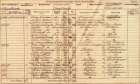
  • Census 2021: using the census in the history classroom

    Article

    As we approach the next census in March 2021, we are reminded of what a rich historical source the census is. For historians, using the census can shine a light on particular people and places – a snapshot in time. Big stories can be told through a sharp local lens...

    Click to view
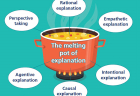
  • Why does anyone do anything? Attempts to improve agentive explanations with Year 12

    Article

    In this article Sophie Harley-McKeown identifies and addresses her Year 12 students’ blind spot over agentive explanation. Noticing that the examination board to which she teaches uses ‘motivations’ rather than ‘aims’ prompted her to consider whether her students really knew what that meant. Finding that her students’ causal explanations tended...

    Click to view
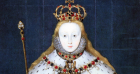
  • Film: Elizabeth I and Tudor Royal Authority

    Article

    In this film, Professor Sue Doran, Jesus College, University of Oxford, looks at the two main challenges to Elizabeth I's authority: gender and religion. Professor Doran looks at the power of Elizabeth's personality, her relationship with her advisers plus the significance of religion and domestics politics to shaping her reign and...

    Click to view
  • Film: Mary I and Tudor Royal Authority

    Article

    In this film Dr Anna Whitelock from Royal Holloway, University of London, discusses the life of Mary I, the first crowned Queen of England. Dr Whitelock looks at Mary's difficult early life, her submission to Henry VIII and the rise of a warrior princess. Dr Whitelock explores Mary as a courageous...

    Click to view