
Search results
Found 488 results matching “revolutions”
Not found what you’re looking for? Try using double quote marks to search for a specific whole word or phrase, try different search filters, or see our search tips.

This pamphlet provides an interesting approach to a historical topic which has been too frequently covered from a single viewpoint. The pamphlet delivers a thoroughly Scottish approach to the nature of the 1707 Union and the changing nature of Scotland in the following centuries. It highlights the disparity of the...
M
Member Resource
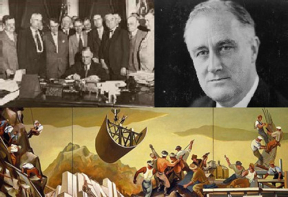
Jonathan Bell: Senior Lecturer and Head of the Department of History at the University of Reading.What historians have come to term ‘liberalism' in an American context has taken on numerous meanings that provide a lens through which to examine broad trends in US history across the twentieth century. From the...
S
Secondary Resource
H
Historian Resource

The last three months have provided me with some wonderful opportunities to catch up with HA members. In April I got as far as Carlisle, one of my favourite places, to talk to the Cumbria branch and in May I went to Grimsby, where the branch was celebrating its 50th...
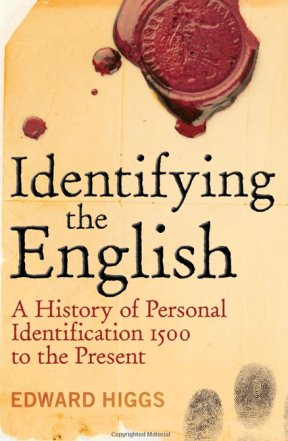
Identifying the English: A History of Personal Identification, 1500 to the Present by Edward Higgs (Continuum), 2011 286pp., £25 hard, ISBN 978-1-4411-8203-6 Who we are is increasingly seen as an important issue in British politics and is an integral part of the increasingly pervasive and intrusive ‘information and security state'....
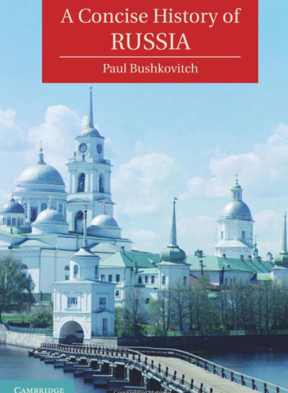
A Concise History of Russia by Paul Bushkovitch (Cambridge Concise Histories, Cambridge University Press), 2012 491pp., £19.99 paper, ISBN 978-0-521-54323-1This book is accessible to students and general readers and provides a broad overview of Russian history since the ninth century. The author emphasises the enormous changes in the understanding of...
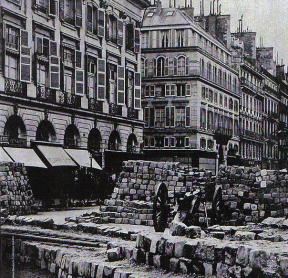
Although a century has passed since the red flag flew for 72 days over the twenty town halls of Paris, the 1871 Commune de Paris cannot be said to belong primarily to historians. The picture of the Communards 'storming the gates of heaven' continues to serve both as a model...
M
Member Resource
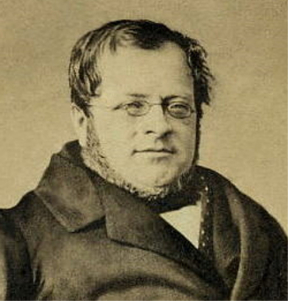
It may seem a little perverse to write a pamphlet on Cavour in 1972, the centenary year of the death of Mazzini, but no doubt there will be more than one publication on Mazzini to mark the occasion. To pretend that the two men had much in common would be...
M
Member Resource
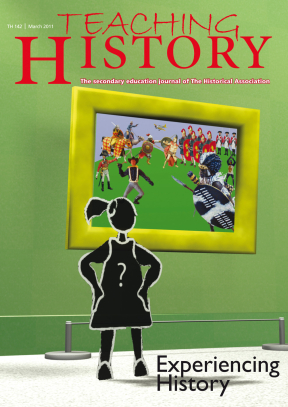
02 Editorial 03 HA Secondary News 04 Rachel Foster - Passive receivers or constructive readers? Pupils' experiences of an encounter with academic history (Read article) 14 Lindsay Cassedy, Catherine Flaherty and Michael Fordham - Seeing the historical world: exploring how students perceive the relationship between historical interpretations (Read article) 22...
S
Secondary Resource
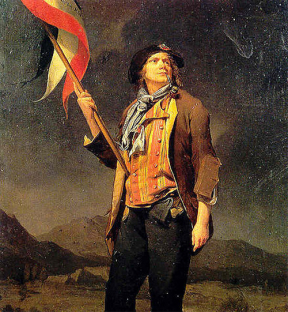
Year 8 use counterfactual reasoning to explore place and social upheaval in eighteenth-century France and Britain Two linked motivations inspired Ellen Buxton's research study: she wanted pupils to make connections between British and French history and she wanted to explore the potential of counter-factual reasoning within a causation enquiry. It...
S
Secondary Resource
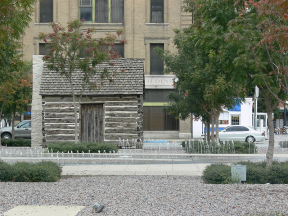
The viewer of the internationally popular television show Dallas was routinely treated to an aerial tour that skimmed across the open prairie over the distinctive skyscrapers across the fifty-yard line of Texas Stadium and up the manicured pastures of South Fork. This façade of larger-than-life Texana reflects an urban reality...
Sc
Secondary Corporate Resource
St
Student Resource
H
Historian Resource
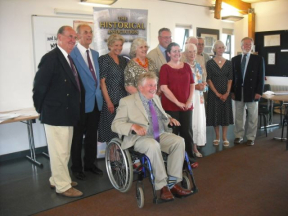
Sixty Years On Although the Historical Association was formed in 1906 sixteen years elapsed before a branch was established on the Isle of Wight. From the HA's archives, stored at Nottingham University, the annual reports indicate the Branch was formed in June 1922 and by the end of the first...
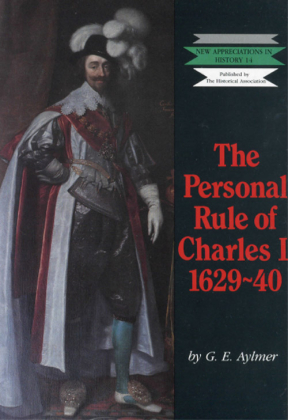
Historians are often accused of viewing the past with hindsight, or of being wise after the event. Not being prophets or soothsayers, we have to look backwards in time because we cannot look forwards. The real question is from what vantage point or perspective we view a particular part of...
M
Member Resource
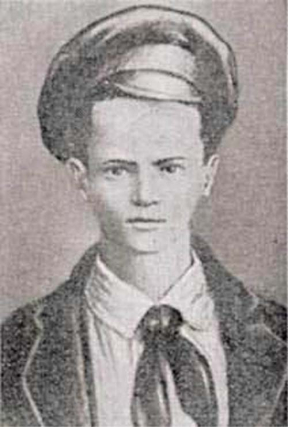
Germaine Greer (in the context of the Pirelli Calendar) once commented that the defining feature of a legend was that almost nothing said and believed about it was true. Pavlik Morozov, notorious both inside Russia and internationally for having denounced his father, almost certainly never did so. In September 1932,...
Sc
Secondary Corporate Resource
St
Student Resource

What is History? History, the study of the past, is all around us; we are continually making history through our thoughts, words and actions. History is personal and global; it is everyday life and momentous occasions. History is about people. Through our study of the past, we can understand how...

Ever since I started teaching, homework has been something of a bugbear. Administration alone is a hassle: not only remembering when to set and collect it in, but keeping track of the various students who fail to deliver anything on time (except highly creative excuses) and of the follow-up action...
S
Secondary Resource
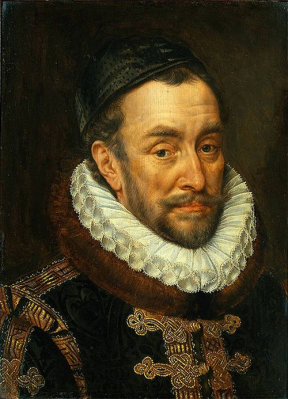
The Revolt of the Netherlands was the most successful of all uprisings in early modern Europe and had far reaching effects on the course of Dutch and European history. In accounting for its outcome recent research has emphasized the significance of impersonal forces of political, economic or religious nature rather...
M
Member Resource
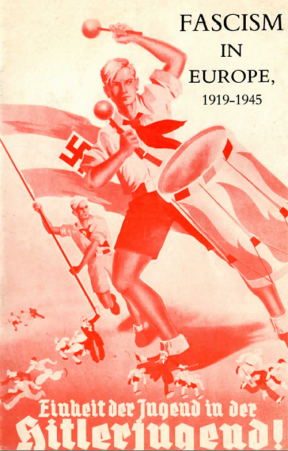
The importance of fascism in 20th Century Europe is beyond question. But what was - or is - fascism?It is synonymous with authoritarian rule or the totalitarian state, or with both? In political terms, is fascism ‘right-wing' or ‘left-wing', revolutionary or reactionary? Why did it develop? Was it truly only...
M
Member Resource

Although the Historical Association was formed in 1906, sixteen years elapsed before a branch was established on the Isle of Wight. From the HA's archives, stored at Nottingham University, the annual reports indicate the Branch was formed in June 1922 and by the end of the first year there was...
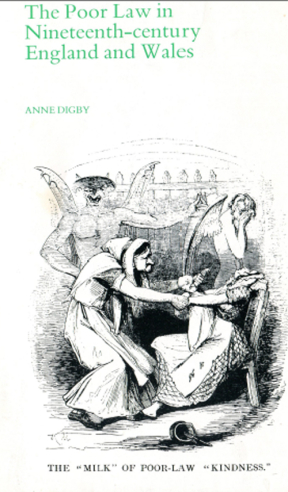
Variety rather than uniformity characterised the administration of poor relief in England and Wales, and at no period was this more apparent than in the decades before the national reform of the poor law in 1834. Unprecedented economic and social changes produced severe problems for those responsible for social welfare,...
M
Member Resource

Christopher Hill, the eminent historian of seventeenth century England, was a convinced Marxist throughout most of his long and productive life (1912-2003). He embraced this secular world-view when he was a young History student at Oxford in the polemical 1930s and never lost his ideological commitment, even though he resigned...
Sc
Secondary Corporate Resource
St
Student Resource
H
Historian Resource
Please note: this article pre-dates the current National Curriculum and some content and references are outdated. The history of primary history in state schools is a chequered one. Until the National Curriculum the quality of history teaching in primary schools depended largely on the enthusiasm and interest of individual teachers....
P
Primary Resource
Despite Britain’s longstanding membership of the European Union, the question of ‘Europe’ continues to loom large in the nation’s politics. Whilst the economic pros and cons of Britain ‘joining’ the euro might be understood by only a select few, that issue provides for the many an opportunity to debate Britain’s...
Sc
Secondary Corporate Resource
St
Student Resource
H
Historian Resource
All aspects of Hungarian nationalism – with one exception, which I shall consider later – had more or less similar counterparts elsewhere in Europe; but the blending of those elements yielded a unique constellation. Moreover, the ingredients of this mixture proved highly disruptive for central Europe, indeed at times for...
Sc
Secondary Corporate Resource
St
Student Resource
H
Historian Resource
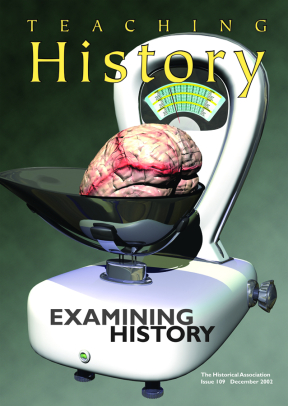
This edition asks the question: how do we create worthwhile examination courses that stimulate all pupils and strengthens the gold standard of rigour at the same time? Why we must change history at GCSE, Getting Year 10 to understand the value of precise factual knowledge, Ensuring progression continues into GCSE,...
S
Secondary Resource
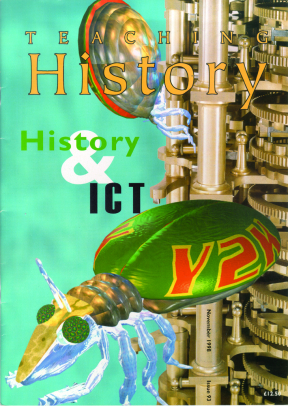
Why Gerry likes history now: the power of the word processor - Ben Walsh (Read article) History using information technology: past, present and future - Alaric Dickinson (Read article) The Hopi is different from the Pawnee: using a datafile to explore pattern and diversity - Dave Martin (Read article) Maps,...
S
Secondary Resource