Europe

From the fall of Napoleon to Revolution in Russia and from the rise of Hitler to the fall of the Berlin Wall this period is one of major upheaval in Europe. We see the collapse of monarchies and empires and the changing status of women and working men. This is a time that witnesses the mass displacement of peoples and genocide on a scale never seen before it is also a time that sees changes in medicine and technology that make fundamental changes to our everyday lives. Read more

Sort by: Date (Newest first) | Title A-Z
Show: All | Articles | Podcasts | Multipage Articles
  • Film: The Two German Economies

    Article

    The speed at which both sides in Germany recovered economically is re-examined in this film. Professor Matthew Stibbe describes how the West Germany economy recovered and became a magnet for migrants as well as East Germans. However, he also examines how East Germany’s economy compared more successfully to some of...

    Click to view
  • Film: The Weimar Republic

    Article

    Professor Tim Grady takes us back to the final days of the First World War to examine the developing splits in German society that turned into revolutionary chasms following the country’s defeat. From this he reassesses some of the factors that led to the Weimar Republic’s collapse while also allowing...

    Click to view
  • Football and British-Soviet Relations

    Article

    Following the recent ‘Euro 96’ championship, Jim Phillips looks at two earlier international football tours which had major political and ideological connotations. In November 1945 Moscow Dynamo became the first Soviet football team to visit Britain, playing in Cardiff, Glasgow and twice in London. With English, Welsh and Scottish crowds...

    Click to view
  • Four faces of nursing and the First World War

    Article

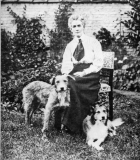
    With the centenary approaching, article after article will appear on battles, the men who fought, those who refused, those that died, those who returned and those that made the decisions. There will be articles on the home front and the women that stepped into the men's shoes often to be...

    Click to view
  • Franz Ferdinand

    Article

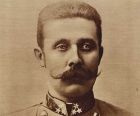
    The Kapuzinerkirche (Church of the Capuchins) in Vienna's Neue Markt is one of the more curious attractions of the city, housing as it does the Kaisergruft crypt in which the Habsburgs are entombed, or rather in which their bodies are entombed: the hearts are usually kept in the Loreto Chapel...

    Click to view
  • Gary Sheffield: Origins of the First World War

    Article

    Gary Sheffield, Professor of War studies, the University of Wolverhampton, is one of the UK's foremost historians on the First World War.  He is the author of numerous books and previously held posts at the University of Birmingham and the Royal Military Academy Sandhurst. In April 2014 he spoke at an HA event for teachers...

    Click to view
  • Germany 1914-1929: Discussion

    Article

    Professors Tim Grady and Matthew Stibbe consider changing interpretations of Germany in 1914-1929, from a negative continuum of authoritarianism culminating in Hitler's regime to a modern approach of seeing the Weimar Republic through a sociocultural lens. If you're unable to see the film below, please use the link for your Membership...

    Click to view
  • How Sweden almost became a nuclear-armed state – and why it didn’t

    Article

    This article examines the conditions under which Sweden considered and subsequently pursued nuclear weapons. After failing to secure the establishment of a Scandinavian defence union, the Swedish government initially viewed nuclear arms as an effective means to safeguard the country’s neutrality. Owing to technical limitations, reassessments on the value of such...

    Click to view
  • How damaging to the Nazis was the Shetland Bus between 1940 and 1944?

    Article

    The Shetland Bus operation may be considered successful in that it supplied Norwegian resistance movements with weapons and took many refugees from Norway to Shetland, and that it managed to bind just shy of 300,000 German troops in Norway. However, because of this operation, forty-four men lost their lives, and...

    Click to view
  • Hungarian Nationalism in International Context

    Article

    All aspects of Hungarian nationalism – with one exception, which I shall consider later – had more or less similar counterparts elsewhere in Europe; but the blending of those elements yielded a unique constellation. Moreover, the ingredients of this mixture proved highly disruptive for central Europe, indeed at times for...

    Click to view
  • Immigration and the making of British food

    Article

    Panikos Panayi explores the way in which immigration has transformed British eating habits over the last two centuries, whether through the rise of the restaurant and the development of eating out, or the culinary revolution at home. Those people who voted to leave the European Union in 2016 because of...

    Click to view
  • Imperialism resurgent: European attempts to 'recolonise' South East Asia after 1945

    Article

    ‘To think that the people of Indochina would be content to settle for less [from the French] than Indonesia has gained from the Dutch or India from the British is to underestimate the power of the forces that are sweeping Asia today'. An American adviser in 1949 cited: Robin Jeffrey...

    Click to view
  • Interpretations of the French Revolution

    Article

    The French Revolution raises many questions not least: What sort of Revolution was it - one of "poverty" or "prosperity" ? a bourgeois revolution that overthrew feudalism?  A national struggle for liberty, democracy, or "eternal Justice" ? or, again, a criminal conspiracy against the old social order? What did it...

    Click to view
  • Introductory film: Brezhnev - Interpretations

    Article

    Log in below to preview the introductory film - available to all registered users of the website. This open access introductory film forms part of our ongoing film series on Power and authority in Russia and the Soviet Union. All the films are available through the Student Zone with corporate secondary membership. ...

    Click to view
  • Introductory film: Khrushchev - Interpretations

    Article

    Log in below to preview the introductory film - available to all registered users of the website. This open access introductory film forms part of our ongoing film series on Power and authority in Russia and the Soviet Union. All the films are available through the Student Zone with corporate secondary...

    Click to view
  • Introductory film: Lenin - Interpretations

    Article

    Log in below to preview the introductory film - available to all registered users of the website. This open access introductory film forms part of our ongoing film series on Power and authority in Russia and the Soviet Union. All the films are available through the Student Zone with corporate secondary membership. ...

    Click to view
  • It's Murder On The Orient Express

    Article

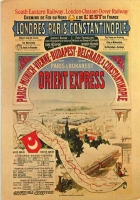
    It was the most luxurious long distance rail journey in the history of travel. Royalty, aristocracy, the rich and the famous travelled regularly on the Orient Express. Gourmet chefs prepared exquisite meals, chandeliers, luxury compartments, staterooms and dining rooms on a par with famous hotels like the Ritz were all...

    Click to view
  • Kristallnacht

    Article

    Why Reichskristallnacht? In The Third Reich Michael Burleigh writes: ‘We should be cautious in seeing spontaneity where frequency suggests instigation from a central source.' He comments on ‘a dialectic between "spontaneous" grassroot actions and "followup" state sponsored measures.' These remarks relate to 1935, the time of the Nuremberg Laws [the...

    Click to view
  • Leopold von Ranke - Pamphlet

    Article

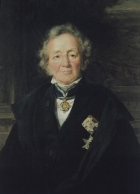
    Leopold von Ranke (21 December 1795 - 23 May 1886) was a German historian and a founder of modern source-based history. According to Caroline Hoefferle, "Ranke was probably the most important historian to shape historical profession as it emerged in Europe and the United States in the late 19th century." ...

    Click to view
  • Liberalism in Nineteenth-Century Europe

    Article

    Irene Collins explores the origins of Liberalism within a turbulent nineteenth century Europe. From the beginnings of its use for Spanish rebels in 1820 and the insult it became when used by French royalists, to the growth of political Liberalism in Marxism and Russia in the turn of the century....

    Click to view