World

The modern world cannot be studied without examining the course, impact and legacy of two world wars, the resources in this section set out to look at both the First and Second World Wars in their global context. The section also includes the Cold War and its impact in Latin America, South-East Asia and parts of Africa. This period also sees the rise and fall of European imperialism and the changing nature of global politics and economics as technology brings different stories from so many parts of the world directly to us. Read more

Sort by: Date (Newest first) | Title A-Z
Show: All | Articles | Podcasts | Multipage Articles
  • Introductory film: Khrushchev - Interpretations

    Article

    Log in below to preview the introductory film - available to all registered users of the website. This open access introductory film forms part of our ongoing film series on Power and authority in Russia and the Soviet Union. All the films are available through the Student Zone with corporate secondary...

    Click to view
  • Film: Khrushchev - De-Stalinization

    Article

    In this film, Dr Alexander Titov (Queen's University of Belfast), discusses how and why Khrushchev opened up discussions about Stalin and his legacy, the risk that people would blame the current leadership once the scale of repressions became known. Dr Titov examines the both the content of the secret speech (Stalin’s...

    Click to view
  • Film: Khrushchev - After Stalin

    Article

    In this film, Dr Alexander Titov (Queen's University of Belfast), discusses the leading figures jockeying for power after Stalin died, the short period of collective leadership, growing calls for reform within the Soviet Union and how Khrushchev gradually sidelined all of his rivals on his way to becoming Premiere of...

    Click to view
  • Film: Khrushchev - Downfall and Legacy

    Article

    In this film, Dr Alexander Titov (Queen's University of Belfast), discusses how Khruschev went from initially being a highly popular ‘man of the people’, to becoming an authoritarian, who alienated his colleagues through rudeness and constant unexplained policy shifts, and whose predilection for risk taking and gambles brought the world perilously...

    Click to view
  • Film: Khrushchev - Foreign Policy

    Article

    In this film, Dr Alexander Titov (Queen's University of Belfast), looks at the early thaw in relations between the Soviet Union and the West after the death of Stalin, the resolution of outstanding issues such as the Korean War, the division of Austria, and Khruschev's resetting of relations with China and...

    Click to view
  • The Olympics - politics, impact and legacy - its not just about the sport

    Article

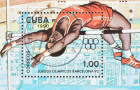
    2024 is an Olympic Games year. Held every four years (with the exception of during the World Wars and Covid-19 restrictions), the modern Olympics is the largest international sporting event in the world. However, historically it has not always been just the sports that are played and the athletes’ performances...

    Click to view
  • Recorded webinar series: The Olympic Games

    Multipage Article

    2024 was an Olympic Games year. Held every four years (with the exception of during the World Wars and Covid-19 restrictions), the modern Olympics is the largest international sporting event in the world. However, historically it has not always been just the sports that are played and the athletes’ performances...

    Click to view
  • Film: Yeltsin and the West

    Article

    In this film, Dr Edwin Bacon (University of Lincoln), looks how the positive relationship established between Mikhail Gorbachev and President Reagan and his successor President Bush continued with the ascension of Yeltsin to the presidency of Russia. Dr Bacon discusses how Russian perceptions of the West changed with the expansion...

    Click to view
  • Film: Yeltsin's second term and legacy

    Article

    In this final film on Yeltsin, Dr Edwin Bacon (University of Lincoln), discusses Yeltin’s second term and how his public profile went from hero to growing embarrassment. Importantly he examines how Yeltin’s search for a successor that would secure his family’s security led to rapid changes in Prime Ministers in...

    Click to view
  • Film: Yeltsin and the Oligarchs

    Article

    If you're unable to see the film below, please use the link for your Membership type:Historian members | Primary members | Secondary members | Student members

    Click to view
  • Film: Yeltsin's agenda

    Article

    In this film, Dr Edwin Bacon (University of Lincoln), discusses the emergence of Russia as a democratic country and its nascent capitalist economy. He outlines how the issues Yeltsin faced in government such as the 1993 constitutional crisis, followed by the shelling by tanks in Moscow led to Yeltsin rewriting...

    Click to view
  • Film: Yeltsin and the fall of the Soviet Union

    Article

    In this film, Dr Edwin Bacon (University of Lincoln), explores the role Yeltsin played in the dissolution of the Soviet Union. Dr Bacon takes us from the fall of the Berlin Wall, the rise of nationalism in the new republics, and how Yeltsin became Russia’s first elected head of state....

    Click to view
  • Film: Yeltsin and Russia in the late 1980s

    Article

    In this film, Dr Edwin Bacon (University of Lincoln), examines the political and economic repercussions of Gorbachev’s reforms. Dr Bacon reflects upon the dire state of the Soviet economy in the late 1980s/early 1990s and how that led to change but also unrest. In particular he addresses the way that...

    Click to view
  • Film: Stalin - The Early Soviet Economy & the preparation for war

    Article

    In this film, Professor James Harris (University of Leeds) examines how the New Economic Policy transformed the Soviet economy after the civil war, and looks at Stalin’s central role in that recovery. Key during that period was Stalin’s dispute with Nikolai Bukharin and the Great Break, and the drive to...

    Click to view
  • Film: Stalin - Early Life

    Article

    Joseph Stalin was born Joseph Besarionis dze Jughashvili in 1878 into a poor family in Gori, Georgia, part of the then Russian Empire. Stalin attended the Tbilisi Spiritual Seminary while his own radicalism grew, before joining the Marxist Russian Social Democratic Labour Party. He edited the party's newspaper, Pravda, and raised funds for Vladimir Lenin's Bolshevik faction through...

    Click to view
  • Film: Stalin - Rise to Power

    Article

    In this film, Professor James Harris (University of Leeds) discusses how interpretations have changed over the years regarding Stalin’s rise to power, and his transformation from rural Georgian to the ‘Man of Steel’ – Stalin. For many years, western interpretations were strongly influenced by his rival Trotsky, who defined Stalin...

    Click to view
  • Film: Stalin - World War II

    Article

    In this film, Professor James Harris (University of Leeds) examines Stalin and the Soviet preparations for global war. The reasons why Stalin agreed the Nazi-Soviet pact are explored as are Stalin’s response to invasion in 1941. Professor Harris addresses the impact the war had on the USSR and how that...

    Click to view
  • Film: Stalin & the Great Terror

    Article

    Why was the Soviet Union so violent in the 1930s? In this film, Professor James Harris (University of Leeds) looks at differing interpretations of the origins of the Great Terror; was it the story of one man trying to obtain total control, was it a result of collective frustration against...

    Click to view
  • Film: Stalin - Interpretations and Legacy

    Article

    In this film, Professor James Harris (University of Leeds) reflects upon how historical interpretations of Stalin have changed over time. Stalin’s legacy and influence continues to materialise in all subsequent Soviet and Russian administrations. The Man of Steel is used by politicians when they are looking for arguments to open...

    Click to view
  • Film: Gorbachev - Interpretations

    Article

    Mikhail Gorbachev’s leadership and period in office is remembered differently in different parts of the world. Professor Archie Brown discusses the different interpretations the have developed in the West and in Russia to Gorbachev and his legacy. He describes the impact and development of Post-Soviet Russia and how this has influenced...

    Click to view