Europe

From the fall of Napoleon to Revolution in Russia and from the rise of Hitler to the fall of the Berlin Wall this period is one of major upheaval in Europe. We see the collapse of monarchies and empires and the changing status of women and working men. This is a time that witnesses the mass displacement of peoples and genocide on a scale never seen before it is also a time that sees changes in medicine and technology that make fundamental changes to our everyday lives. Read more

Sort by: Date (Newest first) | Title A-Z
Show: All | Articles | Podcasts | Multipage Articles
  • Art and ecology

    Article

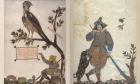
    Artworks and objects from the past provide us with a compelling record of human interaction with the natural world. In this article, art historians Carla Benzan and Samuel Shaw explain how they are using collections from galleries and museums to bring environmental history to new audiences and to increase awareness...

    Click to view
  • Father of the Free French Navy: Thierry d’Argenlieu

    Article

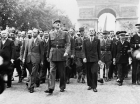
    Thierry d’Argenlieu played a crucial role in the French Resistance during World War Two, but he does not fit the mould of the typical resister. Adrian Smith brings to light d’Argenlieu’s wartime experiences, and follows his career after 1945 as High Commissioner in Indo-China and member of the Carmelite order...

    Click to view
  • The Battle of Monte Cassino and the D-Day Landings

    Article

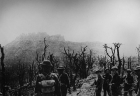
    The Second World War is no longer a recent war. Very soon, there will be no veterans left to tell us how they saw things and what it was really like for them. While some eyewitnesses who were children at the time might be with us to see the centenary...

    Click to view
  • Political and social attitudes underpinning the 1924 Olympics

    Article

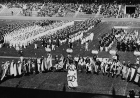
    The 1924 Olympics in Paris are best known to many British people through the ‘Chariots of Fire’ film from the early 1980s. The film touches on some of the political and social attitudes prevalent in the 1920s and Steve Illingworth explores these issues further in this article. It is argued...

    Click to view
  • The Importance of Truth, Quality and Objectivity in the BBC German Service from 1938 to 1945

    Article

    Throughout the Second World War the BBC produced and transmitted regular broadcasts in German to Germany and other European countries occupied by the Germans. In this article Hattie Simpson evaluates the style and success of the BBC German Service. The article is based on her winning entry in the senior...

    Click to view
  • Crowdsourcing the heritage of the Second World War

    Article

    Stuart Lee, Ylva Berglund Prytz and Matthew Kidd introduce an innovative project to capture objects and the memories they hold.

    Click to view
  • Bonapartism after Napoleon III: the Prince Imperial and Eugene Loudun

    Article

    Emperor Napoleon III of France was deposed in 1870 and then died three years later. His son, known as the Prince Imperial, lived in exile in south-east England. There he and his supporters kept alive ambitions for a triumphant return of the Empire. In this article, Ian Sygrave assesses the...

    Click to view
  • Forbidden friendships: taverns, nightclubs, bottle bars and emancipation

    Article

    The modern gay-rights movement has its origins in a 1960s New York ‘bottle bar’, but as Ben Jerrit explains, drinking establishments have been centres of gay culture and social resistance for centuries. 

    Click to view
  • The United Nations Convention on the Prevention and Punishment of the Crime of Genocide

    Article

    The Nazis came to power in 1933 with an openly racist and antisemitic set of policies. In the years leading up to the start of the Second World War, those policies were carried out through legislation and governmental actions, with the support of many members of German society. Once the war started,...

    Click to view
  • Building new futures by rewriting the past: how operas have recreated history

    Article

    Simon Banks investigates how the past has been presented in European opera, revealing intriguing insights into the development of the modern world. The way a civilisation views its past shapes the way it acts in the present. Over the 400-year history of opera, opera plots have re-told, re-invented and re-evaluated...

    Click to view
  • Women and the French Revolution: the start of the modern feminist movement

    Article

    Luke Rimmo Loyi Lego explores the role of women in the French Revolution, and how their challenges to traditional gender roles laid the foundations for the modern feminist movement.  The study of the French Revolution is often restricted to its impact on the Enlightenment ideas of influential men such as Rousseau,...

    Click to view
  • Film: Ideas and Ideology

    Article

    Professor Matthew Stibbe assesses some of the contradictory factors at play in East Germany and how that related to the wider Soviet system. He contrasts this with the development of the capitalist system that was being developed in West Germany. If you're unable to see the film below, please use...

    Click to view
  • Film: The Two German Economies

    Article

    The speed at which both sides in Germany recovered economically is re-examined in this film. Professor Matthew Stibbe describes how the West Germany economy recovered and became a magnet for migrants as well as East Germans. However, he also examines how East Germany’s economy compared more successfully to some of...

    Click to view
  • Film: Germany 1945-1991: Introduction

    Article

    Germany as a divided and defeated nation is explored through the lens of how the two new Germanys rebuilt their States politically and culturally. Professor Anna Saunders reflects on the different inequalities that existed between the two states and how stability was established between political leaders, even when political dissent...

    Click to view
  • Film: Key Personalities and Opposition

    Article

    Professor Matthew Stibbe examines the key political leaders of West and East Germany and how their decisions and responses to political events shaped their international relationships and the lives of the divided German population under their control. He also looks at the opposition and resistance these governments faced domestically during...

    Click to view
  • Film: Social & Cultural Change

    Article

    How did a new Germany rebuild itself from the legacy of the Second World War both physically, emotionally and culturally? Professor Stibbe explores the silences of many households and how that influenced the student rebellion of the late 1960s. He also puts into perspective the cultural impact that the war...

    Click to view
  • Film series: Power and authority in Germany, 1871-1991

    Article

    The rise and fall of Germany in the 20th Century is one of the major political arcs of the modern period, and one that many feel familiar with – from the unification of the Germanic states, the defeat of the Kaiser in 1918, revolution, a weak Weimar Republic all the...

    Click to view
  • Berlin and the Berlin Wall: on-demand short course

    Multipage Article

    The Berlin Wall became a symbol of a time in history, and a physical defining point in an otherwise covert series of battles. To study and explore the Berlin Wall is to explore how the Cold War manifested itself in Central Europe and the impact it had on one nation...

    Click to view
  • Film: The Weimar Republic

    Article

    Professor Tim Grady takes us back to the final days of the First World War to examine the developing splits in German society that turned into revolutionary chasms following the country’s defeat. From this he reassesses some of the factors that led to the Weimar Republic’s collapse while also allowing...

    Click to view
  • Germany 1914-1929: Discussion

    Article

    Professors Tim Grady and Matthew Stibbe consider changing interpretations of Germany in 1914-1929, from a negative continuum of authoritarianism culminating in Hitler's regime to a modern approach of seeing the Weimar Republic through a sociocultural lens. If you're unable to see the film below, please use the link for your Membership...

    Click to view