Britain since 1930

A popular topic in the past has been Britain since 1930, which usually provides a focus upon World War II. It is possible to retain a study of World War II in Key Stage II provided that the unit of study either links to the locality, or shows how this was a turning point and draws links to knowledge that children have already developed. In this section you will find podcasts, articles and resources to help you plan to teach World War II as a local study or turning point in history.

Sort by: Date (Newest first) | Title A-Z
Show: All | Articles | Podcasts | Multipage Articles
  • Animals who help us: teaching past and present in EYFS

    Article

    Remembrance Day is a useful time to explore with EYFS pupils the people who help us. But of course animals also play a part in human conflicts. This article explores animals who have helped us in wartime now and in the past. The article includes useful teaching ideas and picture...

    Click to view
  • When your parents were young…

    Article

    This article is free to everyone. For access to hundreds of other high-quality resources by primary history experts along with free or discounted CPD and membership of a thriving community of teachers and subject leaders, join the Historical Association today Susie Townsend explores the theme of life in the 1990s,...

    Click to view
  • ‘Nothing was easy’: Viewing war, empire and racism through the eyes of a local Windrush migrant

    Article

    This article is free to everyone. For access to hundreds of other high-quality resources by primary history experts along with free or discounted CPD and membership of a thriving community of teachers and subject leaders, join the Historical Association today Andrew Wrenn shares examples from a fascinating project with which...

    Click to view
  • Pull-out posters: Primary History 100

    Article

    These resources are free to everyone. For access to hundreds of other high-quality resources by primary history experts along with free or discounted CPD and membership of a thriving community of teachers and subject leaders, join the Historical Association today   Poster 1: Exploring the early 1990s Poster 2: Train travel has...

    Click to view
  • Musings and misconceptions about Remembrance Day

    Article

    Very few primary schools do not address Remembrance Day in some form or another.  We assume a broad awareness of what it stands for but Susie Townsend suggests that this may not always have been the case. We may be making assumptions about children’s awareness that are not justified. This...

    Click to view
  • Four objects in search of a story: why artefacts matter in history

    Article

    The well-known children’s historical fiction author Tom Palmer relates how he uses artefacts as an important element in encouraging children to read and engage with history. The examples are from the First and Second World Wars, but artefacts from any period can make an excellent stimulus as well as an...

    Click to view
  • Olympics, past and present

    Article

    This article will consider how to use the Olympics as a ‘past event’. It will provide material that will allow children to compare and contrast Olympic Games that have been hosted in Paris. They will be encouraged to look at what has changed in relation to the sports, medals and...

    Click to view
  • Exploring the story of elections and voting with your primary students

    Article

    David Carr introduces us to some of the educational resources and opportunities linked to the Houses of Parliament. With the prospect of a general election, it provides some interesting background information as well as suggestions for engaging children with the democratic process... 

    Click to view
  • Dig for sustainability!

    Article

    Paul Spear uses World War II government advertising strategies such as ‘Make do and Mend’ to consider how to promote modern campaigns related to sustainability. He investigates what the wartime government did to engage with the population as a whole and generate national action. By analysing how images were used...

    Click to view
  • Exploring sustainability in the Early Years

    Article

    Lucy Hawker has thought about how we might begin to explore the idea of sustainability with very young children. She suggests focussing on why we might save or reuse materials and objects. She presents a loose structure that could be used to develop talk. She also considers how we might...

    Click to view
  • Trees

    Article

    This article includes a compilation of a series of articles about significant trees around Britain. It is hoped that this will prompt readers to explore their own environments, helping children to engage with and enjoy nature. Some of the trees in the article are designated as Great Trees. These were significant...

    Click to view
  • A Significant Local Event: Carlisle floods

    Article

    Sue Temple has used her personal experience of flooding around Carlisle as a basis for exploring local history. She suggests strategies for how we can explore events that have occurred in our own environments by making use of photos and oral history to link to the personal and immediate. As extreme...

    Click to view
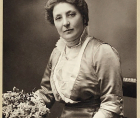
  • Earth heroes: Etta Lemon, ‘The Mother of Birds’

    Article

    In this article Ailsa Fidler considers Etta Lemon and her role in halting the plume boom, which saw many bird species driven to the edge of extinction, all in the name of fashion. Linking a study of Etta to the government’s policy on Climate Education, the article shows how Etta’s...

    Click to view
  • Significant anniversaries: The Bristol Bus Boycott, 1963

    Article

    It is sixty years since the Bristol Bus Boycott highlighted race inequalities and discrimination in the workplace. In this article, Stuart Boydell revisits this watershed moment and considers how the Bristol Bus Boycott could be incorporated into the curriculum today. Sixty years ago, Bristol was at the centre of a...

    Click to view
  • Significant anniversaries: Windrush 75

    Article

    It is 75 years since the ship called the Empire Windrush brought people from the Caribbean to begin a new life in the United Kingdom. Those who also arrived in the years leading up to 1971 are often referred to as ‘the Windrush generation’. Their contribution to Britain socially, culturally...

    Click to view
  • World War II: breathing life into a local history enquiry

    Article

    Debbie Doolan explores how the locality of her school, Worle School in North Somerset, was impacted by a significant event, World War II. What is particularly pertinent is not just the range of activities in this topic but the way the theme was refined over a number of years. It...

    Click to view
  • What do children think about the the royal family and the coronation of King Charles III? 

    Article

    Recently, Princess Anne, the Princess Royal, was interviewed for American television about the future of the monarchy and thoughts about a slimmed down royal family in line with how some European royal families operate. At a recent event in partnership with City, University of London and Southampton University about the...

    Click to view
  • The Coronation of King Charles III

    Article

    2023 will see the first coronation of a British monarch for 70 years. Only those now in their 70s or above will remember the last one. The UK is the only country in Europe still to carry out a coronation, a ceremony that has its roots in traditions over a...

    Click to view
  • Teaching about ‘these islands’ since 1066

    Article

    This article builds on an earlier publication in Primary History Issue 89 which considered the history of ‘these islands’ before 1066 in the primary history curriculum. Both articles address the first aim of the National Curriculum which indicates that children should:  know and understand the history of these islands as...

    Click to view
  • Significant anniversaries: the infamous Beeching Report 1963

    Article

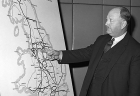
    March 2023 sees the anniversary of a report that had profound significance on social history and which affected many parts of the United Kingdom. There is every chance that it had an effect close to your school especially if you are in a more rural or coastal area. The Beeching...

    Click to view