Britain since 1930

A popular topic in the past has been Britain since 1930, which usually provides a focus upon World War II. It is possible to retain a study of World War II in Key Stage II provided that the unit of study either links to the locality, or shows how this was a turning point and draws links to knowledge that children have already developed. In this section you will find podcasts, articles and resources to help you plan to teach World War II as a local study or turning point in history.

Sort by: Date (Newest first) | Title A-Z
Show: All | Articles | Podcasts | Multipage Articles
  • Exploring sustainability in the Early Years

    Article

    Lucy Hawker has thought about how we might begin to explore the idea of sustainability with very young children. She suggests focussing on why we might save or reuse materials and objects. She presents a loose structure that could be used to develop talk. She also considers how we might...

    Click to view
  • Exploring the story of elections and voting with your primary students

    Article

    David Carr introduces us to some of the educational resources and opportunities linked to the Houses of Parliament. With the prospect of a general election, it provides some interesting background information as well as suggestions for engaging children with the democratic process... 

    Click to view
  • Fifty years ago we lost the need to know our twelve times tables

    Article

    In the first year of junior school, I was in Mrs Phillip’s class. She was one of those teachers who you remember, but, sadly not for good reasons. I was very frightened of Mrs Phillips and the worst part of every week was the tables test… forwards, backwards and questions...

    Click to view
  • Four objects in search of a story: why artefacts matter in history

    Article

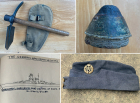
    The well-known children’s historical fiction author Tom Palmer relates how he uses artefacts as an important element in encouraging children to read and engage with history. The examples are from the First and Second World Wars, but artefacts from any period can make an excellent stimulus as well as an...

    Click to view
  • Happy and Glorious: exploring and celebrating the Platinum Jubilee

    Article

    History is full of significant royals, yet few seem quite so remarkable as Her Majesty the Queen. Since her birth in 1926, she has witnessed the tragedy of a world war, the decline of the British Empire and the birth of the Commonwealth of Nations. Not only is she the...

    Click to view
  • How to make a toy museum

    Article

    Making a museum in your setting or classroom is easy and children can learn all kinds of historical skills as well as developing their mark making and writing. Tees Valley Museums are a consortium of seven venues across the Tees Valley. Together they have created online support to develop a museum...

    Click to view
  • Ideas for assemblies: LGBT History Month

    Article

    LGBT History Month was established in 2004. It not only raises awareness of discrimination still faced by the LGBT+ community but also celebrates LGBT+ people and their achievements. February is LGBT History Month and its theme this year was ‘History: Peace, Reconciliation, and Activism’. 

    Click to view
  • Ideas for assemblies: significant women in history

    Article

    For this edition we have chosen an overarching theme of significant women in history to link your assemblies. We have also looked for a link between the women to the month in which your assembly is being delivered. A common approach when introducing each of the women could be to...

    Click to view
  • Jarrow Crusade

    Article

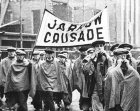
    1930s Depression: a case study Bringing this decade of economic depression and hardship to life for the children, using the story of the 1936 Jarrow march. (These resources are attached below) As an introduction to the 1930s the class had already watched the How We Used to Live video. The...

    Click to view
  • Jubilee medals: celebration and creation

    Article

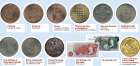
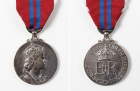
    The Queen’s jubilee is a great opportunity to explore a huge range of concepts with EYFS children, and what better way to celebrate the experience than by creating your own celebration medals and to wear them in your own celebrations, as a continuation of the celebrations of so many years past....

    Click to view
  • Local significant individuals

    Multipage Article

    The National Curriculum specifies a local study both at Key Stages 1 and 2. Basing your local study around an individual is a great way to bring the heritage of your locality to life. Many of these individuals are part of larger national events and changes and seeing these changes at...

    Click to view
  • Magdalen Road

    Article

    We focused on changes in one local set of shops (in Magdalen Road) and looked at the impact of the World War II Exeter blitz on the area. The topic was a local study incorporating history and geography, developing children's historical understanding. To develop as fully as possible the children's...

    Click to view
  • Musings and misconceptions about Remembrance Day

    Article

    Very few primary schools do not address Remembrance Day in some form or another.  We assume a broad awareness of what it stands for but Susie Townsend suggests that this may not always have been the case. We may be making assumptions about children’s awareness that are not justified. This...

    Click to view
  • Muslim soldiers in World War I

    Article

    The objective of this lesson plan was to enable pupils to develop a greater understanding and appreciation of the input of Muslim soldiers in World War I and to do so through empathy and creative discussion. I very much enjoyed teaching this session with a group of Year 6s, all...

    Click to view
  • Northamptonshire in a Global Context

    Article

    Produced by the Northamptonshire Black History Association and originally published in 2008, this is one of a set of resources for schools offering a more inclusive map of the past that includes an appreciation of Black History within the local, national and global context. The resources provide a range of opportunities to promote diversity within the curriculum....

    Click to view
  • Olympics, past and present

    Article

    This article will consider how to use the Olympics as a ‘past event’. It will provide material that will allow children to compare and contrast Olympic Games that have been hosted in Paris. They will be encouraged to look at what has changed in relation to the sports, medals and...

    Click to view
  • One of my favourite history places: Meldon Viaduct

    Article

    'One of my favourite history places' is a regular feature in Primary History – see all favourite history places here. In this edition, Tim Lomas explores Meldon Viaduct and its surroundings: Visiting places you have read about or seen pictures of can sometimes prove an anticlimax. Others far exceed expectations. One such is...

    Click to view
  • One of my favourite history places: Studland Village

    Article

    Studland village is situated in the Isle of Purbeck in Dorset. Purbeck is not an island in the normal sense of being surrounded by sea. However, it is surrounded by large hills to its north and has a coastline to its south, both of which cut it off from the...

    Click to view
  • One of my favourite history places: the Italian Chapel in Orkney

    Article

    One of my favourite places is the Italian Chapel on the tiny island of Lamb Holm on Orkney. It stands alone beside a concrete statue of St George, facing mainland Orkney across a stretch of water called Kirk Sound. It is approached from a road on a causeway which provides...

    Click to view
  • Podcast Series: British LGBTQ+ History

    Multipage Article

    In Part 4 of our series on Social and Political Change in the UK since 1800 we focus on UK LGBTQ+ History. This series of podcasts features Dr Matt Cook and Dr Sean Brady of Birkbeck, University of London, Professor Sally R Munt of the University of Sussex and Dr Emma Vickers...

    Click to view