Britain since 1930

A popular topic in the past has been Britain since 1930, which usually provides a focus upon World War II. It is possible to retain a study of World War II in Key Stage II provided that the unit of study either links to the locality, or shows how this was a turning point and draws links to knowledge that children have already developed. In this section you will find podcasts, articles and resources to help you plan to teach World War II as a local study or turning point in history.

Sort by: Date (Newest first) | Title A-Z
Show: All | Articles | Podcasts | Multipage Articles
  • Podcast Series: The Women's Movement

    Multipage Article

    In Part 2 of our series on Social and Political Change in the UK 1800-present we look at the Women's Movement in the UK from its early origins through to the end of the 20th century Part 2 features Dr Anne Logan, Professor June Hannam and Ms Jean Spence. Also...

    Click to view
  • Primary Scheme of Work: Remembrance

    Article

    In this unit pupils will be introduced to the concept of Remembrance Day and will learn why people in this country wear poppies in November. Through learning about Remembrance, pupils will understand that there are events beyond living memory that are significant nationally and globally, and that these are commemorated...

    Click to view
  • Promoting Gypsy, Roma and Traveller heritage in your primary history curriculum

    Article

    It goes without saying that the events of Black Lives Matter have prompted many leaders and teachers to take a step back and reflect on their curriculum content and how effectively it reflects the diverse story of our islands. However, it is not just Black History that is requiring more prominence...

    Click to view
  • Propaganda and its power

    Article

    My Year 6 class were studying Britain since 1930. I wanted the class to understand the power of propaganda, and of how convincing it could be. The values that underpin democracy were at the heart of the lessons featuring a fictional politician with controversial views, Mr Busterbank. There was throughout...

    Click to view
  • Pull-out posters: Primary History 100

    Article

    These resources are free to everyone. For access to hundreds of other high-quality resources by primary history experts along with free or discounted CPD and membership of a thriving community of teachers and subject leaders, join the Historical Association today   Poster 1: Exploring the early 1990s Poster 2: Train travel has...

    Click to view
  • Pull-out posters: Primary History 87

    Article

    ‘Twelve pennies make a shilling; twenty shillings make a pound’ - Could you manage old money? Examples of picture books

    Click to view
  • Pull-out posters: Primary History 90

    Article

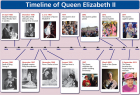
    Timeline of Queen Elizabeth II Queen and Commonwealth

    Click to view
  • Rhyd-y-Car cottages at St Fagans Museum of Welsh Life

    Article

    Please note: this article pre-dates the 2014 National Curriculum. The miner’s cottage is part of a project at The Museum of Welsh Life, St Fagans, to preserve folk history. Since its founding in 1948, over 40 buildings, including a row of six original miners’ cottages from Rhyd-y-Car, have been dismantled and...

    Click to view
  • Scheme of Work: The Blitz: all we need to know about World War II?

    Article

    This unit provides children with the opportunity to look at the Second World War as an aspect of British history that extends pupils’ chronological knowledge beyond 1066. This 8-part enquiry is useable in full or to use sections of as stand alone shorter enquiries. Pupils will be encouraged to examine different...

    Click to view
  • Scheme of work: Local history – the story of our High Street

    Article

    Teaching a unit that considers ‘changes within living times’ requires a focus that provides clear evidence of those changes. Children need to be able to identify specific differences as well as recognise relevant similarities. While we all still undertake shopping on a daily or weekly basis the processes involved in...

    Click to view
  • Scheme of work: Queen Elizabeth II

    Article

    Prior to completing this unit of work, it would be useful for the children to have started to develop an understanding of the substantive concepts of monarchy and royalty through their prior learning. Direct links can be made between studies of specific monarchs and their roles, as well as stories...

    Click to view
  • Scheme of work: Significant historical events, people and places in their own locality

    Article

    Children can be introduced to the idea that schools have been in the locality for some time but they have not always been the same. They can look at similarities and differences, as well as be introduced to some of the events that affected the schools. The theme allows children...

    Click to view
  • Scheme of work: The Platinum Jubilee

    Article

    In this unit, children will learn about the significance of the 2022 Platinum Jubilee. They will look at the life of Queen Elizabeth II, from her role as Princess Elizabeth to her coronation and through to 2022, as a great-grandmother and the longest-reigning British monarch. The unit will help children...

    Click to view
  • Significant anniversaries: The Bristol Bus Boycott, 1963

    Article

    It is sixty years since the Bristol Bus Boycott highlighted race inequalities and discrimination in the workplace. In this article, Stuart Boydell revisits this watershed moment and considers how the Bristol Bus Boycott could be incorporated into the curriculum today. Sixty years ago, Bristol was at the centre of a...

    Click to view
  • Significant anniversaries: Windrush 75

    Article

    It is 75 years since the ship called the Empire Windrush brought people from the Caribbean to begin a new life in the United Kingdom. Those who also arrived in the years leading up to 1971 are often referred to as ‘the Windrush generation’. Their contribution to Britain socially, culturally...

    Click to view
  • Significant anniversaries: the infamous Beeching Report 1963

    Article

    March 2023 sees the anniversary of a report that had profound significance on social history and which affected many parts of the United Kingdom. There is every chance that it had an effect close to your school especially if you are in a more rural or coastal area. The Beeching...

    Click to view
  • Sporting legacy: the history of endeavour

    Article

    One of the highlights of 2021 for many people was getting up early over the summer and avidly watching events at the Tokyo 2020 Olympics unfold: feats of bravery and endurance, heartbreak and celebration. It will, of course, enter the history books and the pub quiz questions, not least because...

    Click to view
  • Take one day: undertaking an in-depth local enquiry

    Article

    Local history units of study provide teachers with valuable opportunities, but these can also seem daunting. Potential challenges for teachers include the perceived overwhelming scope of the topic, difficulties in developing subject knowledge and knowing where to find resources. However, none of these is insurmountable, if teachers identify a clear learning...

    Click to view
  • Teaching about Remembrance Day in EYFS

    Article

    Remembrance Day (11 November) is an important time for children to learn about how we choose to both represent and remember significant events in the past. Within EYFS, learning about remembrance most obviously lends itself to Understanding the World – with a focus on children making connections between past and present,...

    Click to view
  • Teaching about the German Occupation of Jersey through the Occupation Tapestry

    Article

    The German Occupation and subsequent liberation of Jersey is particularly significant for schools in Jersey and is included in a new history curriculum being trialled for Key Stage 1 and 2 to be implemented in 2023. For children in Jersey, it relates to a significant event at Key Stage 1...

    Click to view