Change and continuity

This particular concept is more appropriate for fourth stage Key Stage 1 than Key Stage 2. It is about developing an understanding of the idea that some things change while others old and new stay the same. A house for example will both have doors and windows (continuity) but what those doors are made of and how they work will be different (change) this is about comparing and contrasting in particular to your students own experiences and lives. This should become a process that children can apply in a less explicit manner across Key Stage 2. Read more

Sort by: Date (Newest first) | Title A-Z
Show: All | Articles | Podcasts | Multipage Articles
  • Little coins, big histories

    Article

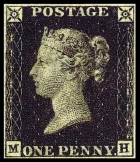
    In this article, Damienne Clarke examines how coins can be used as a focus for history teaching and learning in Key Stage One. She describes the emergence of coins from older systems of bartering, as well as their role as tokens of commemoration for significant people and events. This article provides...

    Click to view
  • Local History and the 2012 Olympics

    Article

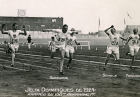
    Please note: this article pre-dates the 2014 National Curriculum and some content may be outdated. With the 2012 London Olympics rapidly approaching, you are probably marvelling at what a once-in-a-lifetime opportunity this is and what amazing classroom teaching opportunities it might bring. You have probably already been inundated with ideas for...

    Click to view
  • Making the most of a census

    Article

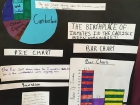
    This article looks at how children can utilise and manipulate mathematical data to make sense of a historic past. The focus is on helping children see the numbers as a resource for understanding the experiences of those that lived in this place. Aim: Understand historical concepts such as continuity and...

    Click to view
  • Migration to Britain through time

    Article

    Migration is rarely absent from the news and arouses political, social cultural and emotional responses which range from compassion to hostility, racism and anti-racism. By exploring migration in the past, it is possible for children to go beyond current issues and appreciate that, rather than being a recent characteristic of...

    Click to view
  • OFSTED, primary history and creativity

    Article

    Co-ordinators concerns: OFSTED, primary history and creativity I'm told the emphasis in schools now is for a rigorous approach to history where the children are taught the main facts and features of history. I recall a time not so long ago when the whole curriculum was about creativity but surely...

    Click to view
  • Our Iron Age challenge

    Article

    The University of Chichester’s three-year BA (Hons) Degree for Primary Education and Teaching involves learning how to provide rigorous and creative educational opportunities for children. The course involves one creativity module each year. The final one involves the development of skills and confidence in creating problem-solving. Four of us were...

    Click to view
  • Overground, underground and across the sea

    Article

    Communication is at the heart of what it is to be human, and the British postal service has helped to shape the modern world as we know it today. From cryptic Victorian Valentine cards to a lion encountered on Salisbury Plain, there is nothing ordinary about the story of the post! The British postal service...

    Click to view
  • Place-names and the National Curriculum for History

    Article

    Place-names, such as house or school names, are infinite in number and all around us. Every place-name may convey a message about the place. Often place-names record and celebrate local and national people, events and incidents, define what a place looked like in the past and how we used to...

    Click to view
  • Poverty in Britain: A development study for Key Stage 2

    Article

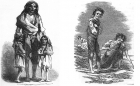
    One of the requirements for Key Stage 2 history is for some history that extends beyond 1066. Various suggestions have been made including an examination of change within a social theme. The example given is Crime and Punishment but the opportunities for something interesting are vast. This article focuses on...

    Click to view
  • Primary History and planning for teaching the Olympics - four curricular models

    Article

    Please note: this article pre-dates the 2014 National Curriculum and some content may be outdated. Three curricular editions of Primary History, PH 50, Autumn 2008 , PH 53, Autumn 2009 and PH 57, Spring 2011 are directly relevant to teaching the Olympics. PH 50, Autumn 2008 History Education in the 21st...

    Click to view
  • So was everyone an ancient Egyptian?

    Article

    I will be honest – no child has actually asked me if the world was ever full of Ancient Egyptians! Having said that, by focusing on one part of the world, children are left with either this impression or the idea that nothing was happening elsewhere in the world. Clearly,...

    Click to view
  • Stone Age to Iron Age - overview and depth

    Article

    Stone Age to Iron Age covers around 10,000 years, between the last Ice Age and the coming of the Romans. Such a long period is difficult for children to imagine, but putting the children into a living time-line across the classroom might help. In one sense not a lot happens...

    Click to view
  • Teaching about the German Occupation of Jersey through the Occupation Tapestry

    Article

    The German Occupation and subsequent liberation of Jersey is particularly significant for schools in Jersey and is included in a new history curriculum being trialled for Key Stage 1 and 2 to be implemented in 2023. For children in Jersey, it relates to a significant event at Key Stage 1...

    Click to view
  • Teaching crime and punishment as a post-1066 theme

    Article

    The most recent HA survey suggests that crime and punishment is a popular theme as a Key Stage 2 development study covering the period after 1066. It is easy to see why. Crime, criminals and punishment have a fascination for many and herein lies its appeal as well as a...

    Click to view
  • Teaching history and geography together in a meaningful way

    Article

    This article explores some of the  ways history and geography can be taught side by side, so that the sum of the parts adds up to more than the original. How can we teach history with geography and vice  versa, to the benefit of both, while fulfilling the aims of...

    Click to view
  • Teaching ‘changes within living memory’: making the most of your school

    Article

    The Key Stage 1 curriculum requires an exploration of changes within living memory, and what better way to do this than discovering the history of your own school! In this article, Helen Crawford and Sandra Kirkland provide guidance and suggested activities to explore change and continuity in your own locality. ...

    Click to view
  • The Early Years Foundation Stage Curriculum

    Article

    At this stage children should listen to stories, ask how and why; use the past, present and future tense; talk about the past and present in their own lives and the lives of family members; recognise similarities and differences between families and traditions, objects and materials; and role play and...

    Click to view
  • The Elizabeth cake

    Article

    Hidden away on top of a dusty, battered cupboard in a local primary school were two equally dusty and battered log books. Each has seen better days and each could provide a range of links to local and national history. The log book was one of two found in one...

    Click to view
  • The Great Fire of London and the National Curriculum

    Article

    The Great Fire of London is a favourite National Curriculum teaching topic. This paper draws on the latest resources and teaching ideas to suggest how you can meet both the NC history requirements and the wider ones of the National Curriculum, particularly in integrated programmes that include teaching about the Great...

    Click to view
  • The Maya: a 4,000-year-old civilisation in the Americas

    Article

    Obscured by the fame of the Aztec empire or shrouded by a veil of mystery, the cultural history of the Maya has generally been misunderstood by the British public. Maya civilisation developed in a territory the size of Germany and Denmark together (nearly 400,000 km2). This vast territory shows three...

    Click to view