Individuals & Events

Of course, individuals and events permeate history. However, the Key Stage 1 units of study particularly require the study of significant individuals and events. What makes an individual significant? What might be considered a significant event? The emphasis is upon a comparison of individuals and events that can be used to make links across time, themes and geographical space. In this section you will find resources and articles to help you to plan innovative units of work based around individuals and events that can either be used to reveal a local, national and international picture, or that can be used to illustrate themes over time or geographical space.

Sort by: Date (Newest first) | Title A-Z
Show: All | Articles | Podcasts | Multipage Articles
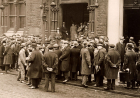
  • Britain on pause: remembering the 1926 General Strike

    Article

    In this article, Kate Rigby looks back at the 1926 General Strike and considers how this could be used to explore significance, cause and consequence in Key Stage 2...

    Click to view
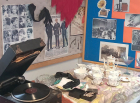
  • The Roaring Twenties: teaching a decade of change across Key Stages 1 and 2

    Article

    This article explores how one topic can be used in different ways to support historical understanding at Key Stage 1 or Key Stage 2. The themes highlighted could link into possible golden threads to enable connections to be made across a school’s curriculum. The ‘Roaring Twenties’ also provide a real...

    Click to view
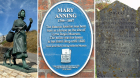
  • She sells seashells by the seashore: teaching Mary Anning at Key Stage 1

    Article

    Mary Anning was a fascinating individual who would be a purposeful addition to a history curriculum. This article outlines the rationale behind including her as a significant individual but also offers ideas for developing young children’s understanding of historical interpretations.

    Click to view
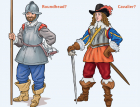
  • An approach to teaching the British Civil Wars in the primary classroom

    Article

    Denise Greany and Andrew Hopper show how to make the British Civil Wars of the mid-seventeenth century readily accessible to primary-aged children by focusing on the experiences of people who lived through these tumultuous times. 

    Click to view
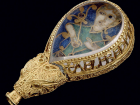
  • Who was King Alfred? And was he really ‘Great’?

    Article

    Gaining the depth and richness of subject knowledge needed to teach different aspects of history effectively can prove challenging for busy primary school teachers. In this article Francis Leneghan presents key subject knowledge and suggested enquiry questions to inform and structure a depth study of King Alfred. The article focuses...

    Click to view
  • Films: Lenin – Interpretations

    31st January 2025

    (Student and corporate secondary members can view these films in our Student Zone) Two men – Trotsky and Lenin – symbolise the Russian Revolution for most people. While Trotsky came to an icy end in Mexico, Lenin remains an enduring figure in the history of Russia and the history of Communism...

    Click to view
  • Historical anniversaries calendar

    Article

    Historical anniversaries can be a great way to get children and young people interested in a subject or to raise awareness about a particular issue. This resource is free to everyone. For access to hundreds of other high-quality history and education resources along with free or discounted CPD and membership of a thriving community of...

    Click to view
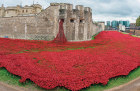
  • Musings and misconceptions about Remembrance Day

    Article

    Very few primary schools do not address Remembrance Day in some form or another.  We assume a broad awareness of what it stands for but Susie Townsend suggests that this may not always have been the case. We may be making assumptions about children’s awareness that are not justified. This...

    Click to view
  • Different ways of teaching local history through significant individuals

    Article

    It is commonplace to include significant people when looking at the history of a given locality. The Historical Association has a series of case studies of significant local individuals organised by counties or regions. In this article Tim Lomas builds on that resource by looking at the way such individuals...

    Click to view
  • Pull-out posters: Primary History 97

    Article

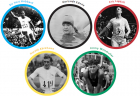
    Poster 1: Paris Olympics 1924 Poster 2: Parks and gardens in Britain since 1066

    Click to view
  • Time travel to the Early Modern period...

    Article

    This article describes how children in a German primary school explored some documents from the early modern period (seventeenth and eighteenth centuries) relating to the capture of merchant vessels. It makes use of a digital resource ‘The Prize Papers’ linked to the National Archives and found here: www.prizepapers.de The article also explains how...

    Click to view
  • The year without a summer and other cautionary tales

    Article

    Susie Townsend explores the story of the Tambora volcanic explosion of 1815 and the catastrophic effect that this had on climate around the world. She uses contemporary accounts and images to set the scene. She demonstrates how this one event far away in Indonesia affected climate across the whole world....

    Click to view
  • Earth heroes: Etta Lemon, ‘The Mother of Birds’

    Article

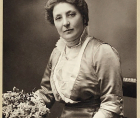
    In this article Ailsa Fidler considers Etta Lemon and her role in halting the plume boom, which saw many bird species driven to the edge of extinction, all in the name of fashion. Linking a study of Etta to the government’s policy on Climate Education, the article shows how Etta’s...

    Click to view
  • A Significant Local Event: Carlisle floods

    Article

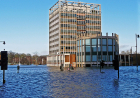
    Sue Temple has used her personal experience of flooding around Carlisle as a basis for exploring local history. She suggests strategies for how we can explore events that have occurred in our own environments by making use of photos and oral history to link to the personal and immediate. As extreme...

    Click to view
  • How much has the weather mattered in British history?

    Article

    Tim Lomas has considered the effect that weather has had on shaping Britain. He explores how weather conditions and human actions have affected these islands and the communities living here. He suggests three potential areas of investigation. First, he looks at how weather changes might affect crop failure and so...

    Click to view
  • Pull-out posters: Primary History 95

    Article

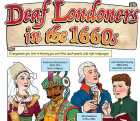
    Everywhere you look in history you can find deaf people and sign languages.

    Click to view
  • Significant anniversaries: The Bristol Bus Boycott, 1963

    Article

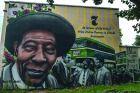
    It is sixty years since the Bristol Bus Boycott highlighted race inequalities and discrimination in the workplace. In this article, Stuart Boydell revisits this watershed moment and considers how the Bristol Bus Boycott could be incorporated into the curriculum today. Sixty years ago, Bristol was at the centre of a...

    Click to view
  • Exploring the Great Fire of London and Deaf history

    Article

    Kate Loveman and James Harrod offer new insights into the Great Fire of London by focussing on the inclusion of Deaf history in this popular topic. They shares the online teaching resources created in their joint partnership between the University of Leicester and the Museum of London. Each year thousands...

    Click to view
  • Significant people: Mary Wollstonecraft

    Article

    ‘I do not wish women to have power over men; but over themselves’ – Mary Wollstonecraft The National Curriculum gives the freedom to select any significant individual and many schools have already chosen those outside the commonly-used ones such as Florence Nightingale, Christopher Columbus and Queen Victoria. There is also...

    Click to view
  • World War II: breathing life into a local history enquiry

    Article

    Debbie Doolan explores how the locality of her school, Worle School in North Somerset, was impacted by a significant event, World War II. What is particularly pertinent is not just the range of activities in this topic but the way the theme was refined over a number of years. It...

    Click to view