
Indus
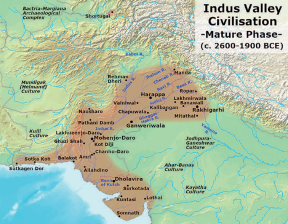
In this article, Karin Doull examines some characteristic features of the Indus Valley Civilisation and considers what these might tell us about this fascinating, less well-known empire...
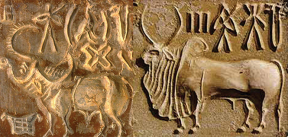
The past as represented in school history textbooks and websites is adapted to meet the needs of primary-aged children, but the knowledge on which this depends derives from detailed academic research. Engaging children with historians and archaeologists can show them how we learn about and construct our understanding of history...
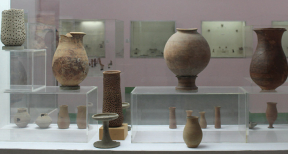
Since the great brick-built cities of Mohenjodaro and Harappa were first excavated in the early twentieth century, other large and thousands of small sites have been discovered. Clay was the raw material (bricks) for Indus architecture and everyday objects. Pottery was produced in industrial quantities on the foot wheel, an...
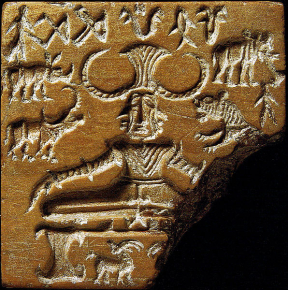
This unit on the Indus Valley Civilisation (2600-1900) BCE gives children the opportunity to study an ancient, 'lost' urban civilisation discovered by archaeologists in the Indian subcontinent, early 20th Century. The story of its discovery and the surviving evidence – architecture and artefacts – helps children understand how we can...
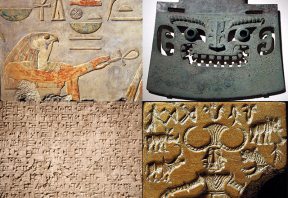
What do all the Ancient Civilisations have in common? This enquiry provides an overview of the Ancient Civilisations of Egypt, Sumer, Indus Valley and Shang, showing where and when they developed, the similarities between them and how they relate to a broadly based chronological understanding of the past. It provides...
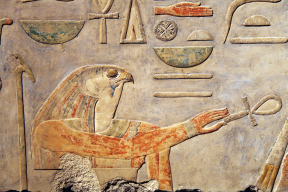
I will be honest – no child has actually asked me if the world was ever full of Ancient Egyptians! Having said that, by focusing on one part of the world, children are left with either this impression or the idea that nothing was happening elsewhere in the world. Clearly,...
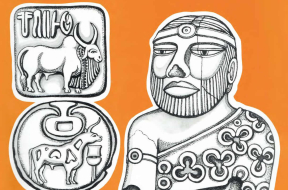
When the Indus Valley was first included in the English National Curriculum, the Commonwealth Institute, London, commissioned a teaching & activity pack, published 1995. Its' sections covered key questions and aspects of the topic, offering a choice of activities andapproaches. It was recommended by QCA (QCDA) in the 1998 non-statutory...
In 1924 The Illustrated London News broke the story of a sensational discovery in the Indian subcontinent. Ruined mounds at Mohenjodaro and Harappa, 600 km apart, were forgotten cities of a lost civilisation. Nearly all we know about the Indus Civilisation comes from archaeology. What survives leaves many unanswered questions,...

In this set of podcasts Dr Mark Manuel of the University of Durham looks at the Indus Valley Civilisation.
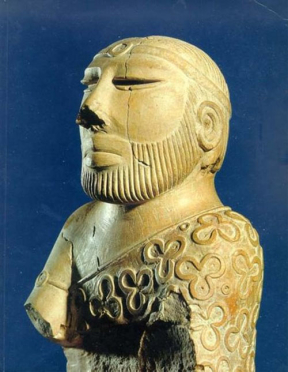
Please note: this article pre-dates the 2014 National Curriculum. Since the advent of animation software for schools, I wanted to trial an animation project, inspired by the quirky human and animal figurines, model wheeled carts and toys, all of terracotta, from the Bronze Age Indus Valley civilisation which clamour for...

This article discusses how mathematical concepts, literacy requirements and other areas of the curriculum can be harnessed to promote meaningful historical enquiry and understanding. This is especially so for a history topic which lends itself to enquiry based learning, scrutiny of every little clue, and speculation about the very many...