
Roman Britain

Place-names, such as house or school names, are infinite in number and all around us. Every place-name may convey a message about the place. Often place-names record and celebrate local and national people, events and incidents, define what a place looked like in the past and how we used to...
‘...if children are to ever fully appreciate history the development of historical time has to be central to our teaching methodologies' This lesson aims to provide an overview of this period, developing pupils' sense of chronology and their understanding of cause and consequence. The context for these ideas comes from...
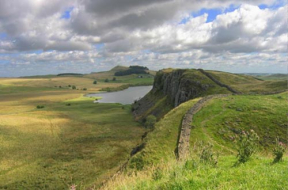
Built in AD 122 by the order of the Emperor Hadrian, the 73 mile (80 Roman miles) long frontier goes from Bownesson-Solway in Cumbria to Wallsend on the River Tyne. Since 1987, the area has been inscribed as a United Nations Educational, Scientific and Cultural Organisation (UNESCO) World Heritage Site....
Hilary Claire raised fundamental issues about the relationship between History and Citizenship for the development of a sense of identity. Her paper stresses the importance of sceptical thinking, perspective, sequence and progression - the essential chronology that underpins pupil's education for citizenship in the timeframe that history provides...
This classic pamphlet provides an introduction to Roman Britain, examines the political history, the institutions of Roman Britain, the economic background and the end of Roman Britain. IntroductionThe Roman conquest and occupation of Britain has long been taken as the conventional starting point of English History, and there is a...
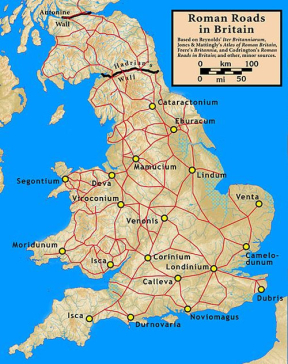
Using key questionsThe Romans in Britain was a lesson introducing Roman Britain to a Year 5 class.We started with the key question: 'What was Roman Britain like?' We had prepared group sets of pictures of aspects of Roman Britain. The images showed a range of scenes, e.g. cooking in a...
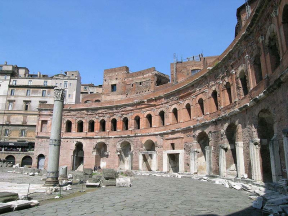
Please note: this lesson was produced as part of the Nuffield Primary History project (1991-2009) and pre-dates the 2014 National Curriculum. It is part of a full sequence of lessons available here. Shopping in a Roman townPart of 'The way of life of people who lived in the more distant...
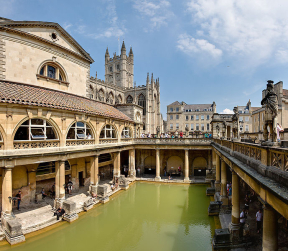
Please note: this lesson was produced as part of the Nuffield Primary History project (1991-2009) and pre-dates the 2014 National Curriculum. It is part of a full sequence of lessons available here. The account tells how we recreated a Roman bath house in the Reception/Year 1 classroom during a ten-week...
Please note: this lesson was produced as part of the Nuffield Primary History project (1991-2009) and pre-dates the 2014 National Curriculum. It is part of a full sequence of lessons available here. Writing poems in the KS2 literacy hour about the Saxon destruction of a Roman town. (These resources are...
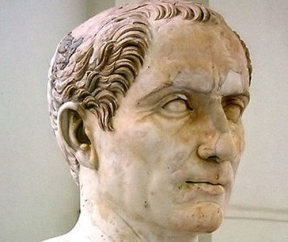
Please note: this lesson was produced as part of the Nuffield Primary History project (1991-2009) and pre-dates the 2014 National Curriculum. It is part of a full sequence of lessons available here. The class had a clear objective - an understanding of Julius Caesar's landing in Britain, using Caesar's own...
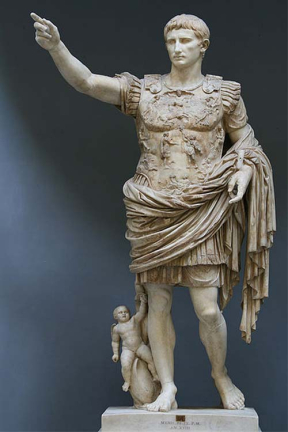
Please note: this lesson was produced as part of the Nuffield Primary History project (1991-2009) and pre-dates the 2014 National Curriculum. It is part of a full sequence of lessons available here. The year 5/6 class visited Julius Caesar's camp before he invaded Britain in 55 BC. I wanted the...
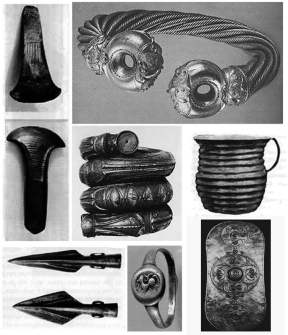
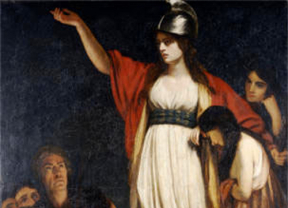
Please note: this article pre-dates the current National Curriculum and some content and links are outdated. The story of Boudicca lends itself equally well to both history and drama. As a key part of work on ‘The Romans', it is an example of how history and drama when used together...
The english government has identified History in the national curriculum as one of the main vehicles for citizenship education. However, even if various issues in History exemplify citizenship concepts, learning about them during history lessons will not be sufficient to make the learning ‘citizenship education’. We have to move on...
04 Editorial 05 2006-2007 Historical Association History and ICT project — Alf Wilkinson 08 Citizenship: Citizenship through the English National Curriculum’s The Romans In Britain Study Unit — Hilary Claire 10 In my view: consigning history to the history books — Denis Hayes 11 Introducing history into the KS1 curriculum...
Please note: this article was written before the the 2014 National Curriculum and some content may now be outdated. Robert Guyver describes a model for teaching Boudicca’s rebellion to pupils aged 7 to 13. Drawing on the tradition of critical source evaluation, he nonetheless shuns aspects of that tradition in...