
Roman Britain
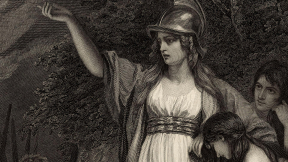
In this fascinating talk from our recent Britain and the Romans course, Professor William Bowden examines the evidence for the life of Boudicca, exploring what archaeology and classical sources can – and cannot – tell us about one of Roman Britain's most iconic figures. By separating evidence from conjecture, the...
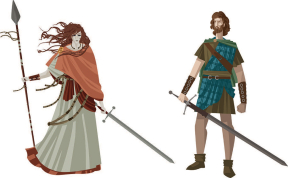
This article considers how to help children to understand about the layered process of change by considering transition points between the Iron Age, Roman settlement of Britain, and the arrival of the Anglo-Saxons. It suggests activities that will encourage children to explore the idea of long-term change. These could be...
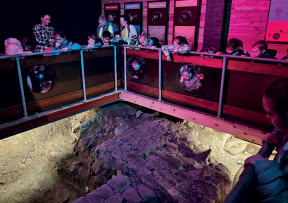
Lindsay Marshall is a primary school teacher and subject leader for history in a primary school on the Wirral. She has embedded the use of artefacts throughout her school’s curriculum. In this article Lindsay outlines the importance of allowing children to ‘get up close and personal’ with history in order...
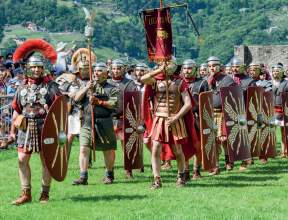
Jo Pearson uses the example of The Greetland Academy in Halifax to address the thorny issue of planning for progression and sequence. She recognises the problems of simplistic and formulaic definitions about progression. In planning the curriculum, four lenses are identified and considered to determine what is taught and when....
What comes into your mind when you imagine the Romans in Britain? Is it a soldier? Where did they come from? Your first thoughts – from looking at textbooks and re-enactments – might be that they came from Italy. Alf Wilkinson challenges this image and shows that they included men...
The Ofsted Research Review: History highlights the importance of developing children’s understanding of key substantive concepts, ideas that are woven through historical content such as settlement, invasion, power. Children’s understanding grows more complex as they encounter these ideas in different contexts, enabling children to grow increasingly sophisticated schemas that support...
The first aim in the National Curriculum indicates that children should: Know and understand the history of these islands as a coherent, chronological narrative, from the earliest times to the present day: how people’s lives have shaped this nation and how Britain has influenced and been influenced by the wider...
‘I have got to stop Mrs Jackson’s family arguing’: These were the words of a Year 3 pupil to her headteacher in reply to a simple question about what she was learning in history. What this pupil was doing was getting ‘a big picture’ of the Romans, Anglo-Saxons and Vikings...
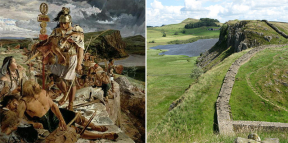
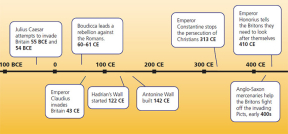
The Roman Empire and its impact on Britain is a unit of work in the Key Stage 2 history curriculum – and focusing on Hadrian’s Wall is one of the optional aspects suggested for study; although I would argue that the ‘successful invasion and conquest by Claudius’ aspect should be...
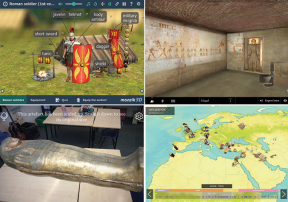
There are a lot of apps out there on multiple platforms and searching for ‘History’ does not really narrow anything down. Knowing which ones are useful, usable and worth paying for is often a case of trial and error. However, this list will save you trawling through the myriad of...
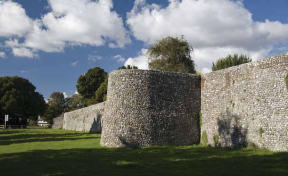
One of my favourite places to explore are the Roman walls that encircle the city of Chichester. The walls help to offer glimpses into the distant past and act as a constant reminder of the legacy left by the Roman Empire.
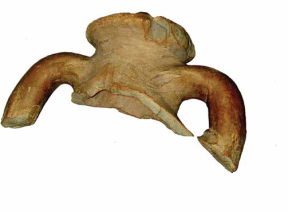
How do we make connections with past lives through authentic artefacts? My research evidence suggests that pupils do not really like having to imagine they are an evacuee or a Roman (for example), but do like engaging with and thinking about the reality of past lives. It has been surprising...
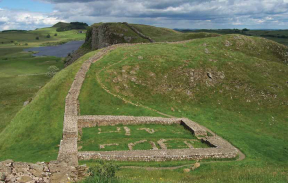
Choosing Hadrian’s Wall as one of my favourite places is a bit of a cheat really as it is a 73-mile-long (80 Roman miles) wall punctuated with a whole range of 20 individual sites each worth a visit; from mile castles and forts to desolate sections with fabulous views or...
This special Primary History summer resource for our members will equip you to teach the Roman Britain National Curriculum unit of study. Please note that it is not a resourced scheme of work. The unit includes the following enquiries: Enquiry 1: When did the Romans invade and why? Enquiry 2:...

Young children who automatically see shiny things as new no matter what their age, those who mix up technology from one age with another, those who dismiss people in the past as stupid because they did not have the possessions we have today, those who equate the age of a...
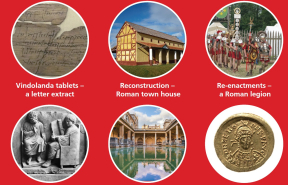
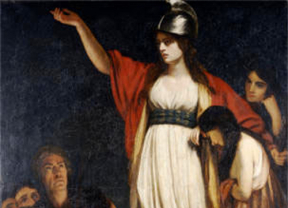
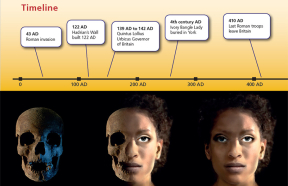
About 2,000 years ago, a baby was born. No, not that baby. Not Jesus. This baby was a girl. Where she was born and what she was called we don't know but I'll call her Helena - it feels rude to go on just calling her ‘she'. When Helena grew...
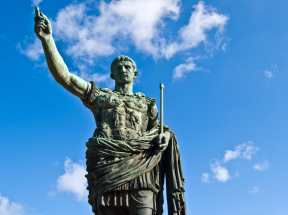
Before the Romans arrived the islands which now make up Britain were populated with a variety of relatively large and small fortified or defended settlements. The people living here were usually part of tribes or clans and they probably raided each other's territory for cattle and other animals. The majority...
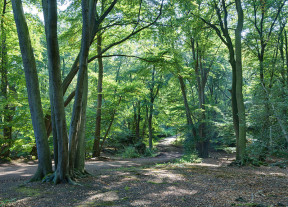
Since the nineteenth century there has been a rich heritage of outdoor learning pedagogy in Europe, and today in Scandinavia the open air culture (frulitsliv) permeates Early Years education. In 1993 Bridgewater College nursery nurses returned from a visit to Denmark enthused by the outdoor educational settings and started their...
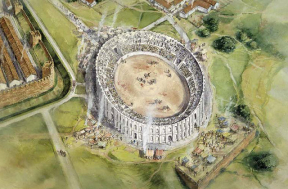
Reconstruction drawings, diagrams and models are vital examples of interpretation that we can use to help pupils understand the past. On one level they help to fire imagination, while on another they offer a way of presenting important historical facts. The image overleaf is a reconstruction drawing of Chester's Roman...