
Teaching History articles

My GCSE students were about to embark on their controlled assessment, which asked them to weigh up conflicting views on the British military’s contribution to the D-Day landings. Students were asked to engage with a range of historians’ views and textbooks as well as some contemporary source material to assess...
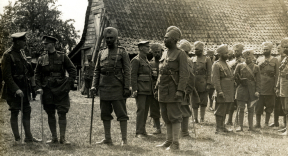
Nick Dennis shows how a ‘multidirectional memory’ approach to teaching history can move history teachers beyond seeing black history as separate or distracting from the history that must be aught at examination level. He gives examples of ways in which a diverse history can be built into examination courses, strengthening...
In her introduction to this piece, Carolyn Massey describes history teachers as professionals who pride themselves on ‘a sophisticated understanding of change and continuity’. How often, though, do we bemoan change when it comes, as it so often has recently? Massey’s article provides an example of how to embrace change,...

A quarter-century on from 1989-91, with a large amount of archive and media material available, these epic years are ripe for historical analysis. Yet their proximity to our time also throws up challenging questions about the practice of ‘contemporary history’, and the complexity of events raises larger issues about how...

Struck by the dullness of some of her students’ essay introductions, Paula Worth reflected on the fact that she had never focused specifically on introductions. After surveying existing work by history teachers on essay structure in general and introductions in particular, she turns to the work of historians. Drawing on...

The emphasis on the power of secure substantive knowledge reflected in recent curriculum reforms has prompted considerable interest in strategies to help students retain and deploy such knowledge effectively. One strategy that has been strongly endorsed by some cognitive psychologists is regular testing; an idea that Nick Dennis set out...
Julia Huber and Katherine Turner found that their A-level students struggled to identify the line of argument in a passage of historical scholarship, an essential prerequisite for answering their coursework question. They devised an activity that helped students to unpick and visually contrast historians’ interpretations of the relative importance of...

This issue’s problem: Sam Holberry is getting very confused about the concept of similarity and difference Sam Holberry has returned to his main training school after a short placement in another school. Although he found it challenging to work with students he didn’t know, he enjoyed seeing a wider range...

Narrative is shedding its status as the ‘underrated skill’, re-emerging as a requirement of the new GCSE in England. As Counsell has argued, constructing a narrative is ‘no easy option’, however, and asking students to ‘Write an account…’ lacks the comfortable familiarity of ‘Explain why…’ or ‘How far…’. Fortunately, many...

Ian Luff recognised that in a post-levels world efforts to devise new assessment systems risked replicating old problems or creating new ones. Drawing on his many years’ experience of teaching and school leadership Luff argues that for assessment in history to be truly useful to teachers and pupils it needs...
Faced with the introduction of a two-year key stage and a new whole-school assessment policy, Rachel Arscott and Tom Hinks decided to make a virtue out of necessity and reconsider their whole approach to planning, teaching and assessment at Key Stage 3. In this article they give an account of...

Jim Carroll noticed basic literacy errors in his Year 13s’ writing, but on closer examination decided that these were not best addressed purely as literacy issues. Through an intervention based on clauses, Carroll managed to enable his students to write better, but he did this by teasing out principles of...
The question of how to prepare students to succeed in the examination while also ensuring that they are taught rigorous history remains as relevant as ever. Faced with preparing students to answer a question that seemingly precluded argument, Rachel Foster and Kath Goudie demonstrate how they used historical scholarship both...
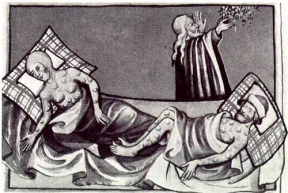
I started teaching ‘crime and punishment through time’ thematically a few years ago. I was teaching it as a Schools History Project ‘study in development’. We had moved from ‘medicine through time’ in order to keep things fresh. After six times through the content, much as I loved it, crime,...

The history department at Cottenham Village College has one more member than you might expect. Ruth Brown is a teaching assistant (TA) and one of the longest-standing members of the department, and this article is about how her work has an impact on specific pupils, whole classes and teachers. The...

Disappointed that the use of the ‘PEEL’ writing scaffold had led her Year 11 students to write some rather dreary essays, Claire Simmonds reflected that a lack of specific training on historical writing might be to blame. Drawing on genre theory and the work of the history teaching community, Simmonds...

On 23 June, electors in the United Kingdom will vote on whether they wish to remain part of the European Union. The passionate debate around the question has seen the spectre of Hitler and the example of Churchill invoked, with varying plausibility, by both sides. It has also drawn on...
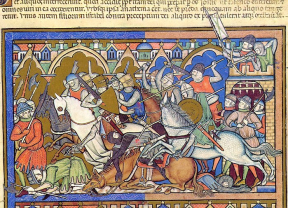
Medieval history has always been a Cinderella era for post-16 students. Some schools offer A-levels in classical civilisation, but most A-level history courses focus on the early-modern and modern periods. A few schools teach an A-level medieval module, with the Crusades being a popular choice. I was therefore excited at...

In 2009 the Historical Association conducted the first of what has become an annual survey of history teachers in England. Its aim was to get beyond bare statistics relating to subject uptake and examination success to examine the reality of history teaching across all kinds of schools and to map...

Historical significance first appeared in England’s National Curriculum for history in 1995. It entered the assessment framework (Level Descriptions) in 2008. In 2014, it became part of the History NC ‘Aims’. One thing never changes, however: it is hard. But history teachers have written a great deal about historical significance...