
Teaching History articles

Was your diet of school history mostly modern? Are you more comfortable debating the industrial revolution than the feudal revolution? And do you now find yourself teaching more medieval history, particularly at GCSE and A-level? Recent changes to the examination specifications in England have made the medieval mainstream, and as...
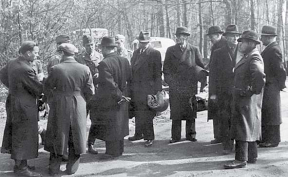
The nature of policing in Nazi Germany is a subject which continues to fascinate historians. The Gestapo (Geheime Staatspolizei) was an integral part of the Nazi terror system but historians have been and still are at odds as to how it actually functioned. Areas of debate have focused on the...
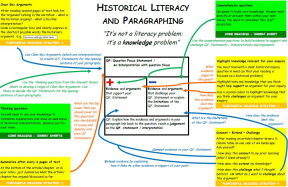
The first question my A-level students always used to ask when receiving back an essay was, ‘What mark did I get?’ The second question I used to hope they would ask was ‘How could I improve my work?’ I stress ‘used to’ because increasingly I do not give marks when...
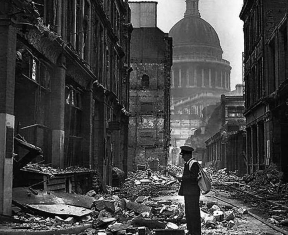
Frustrated by his pupils’ tendency to compartmentalise source analysis into two discrete parts of ‘source’ and ‘own knowledge’, Jonathan Sellin reflected that his use of scaffolds might be to blame. Inspired by recent work by teacher-researchers Hammond and King on the importance of secure substantive knowledge in the area of...
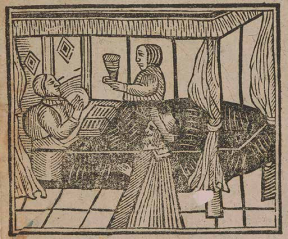
History teachers frequently show pupils visual images and often expect pupils to interrogate such images as evidence. But confusions arise and opportunities are missed when pupils do this without guidance on how to ‘read’ the image systematically and how to place it in context. Barbara Ormond gives a detailed account...
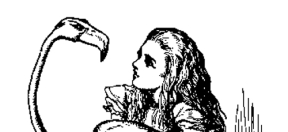
Danielle Donaldson began to notice the verbs that her pupils used to express their ideas. She noticed that more successful pupils were using carefully chosen verbs to express their conceptual thinking about causation or change, and wondered how this might relate to, and reflect, the breadth and security of their...
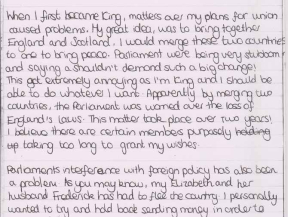
When your pupils use terms such as ‘king’ and ‘Parliament,’ what image do they have in their head? Do they know what they are talking about at all? Do they have a nuanced, period-specific vision of what these terms mean in the context of their current historical studies, and of...
This page is for those new to the published writings of history teachers. Each problem you wrestle with, other teachers have wrestled with too. Quick fixes don’t exist. But in others’ writing, you’ll soon find something better: conversations in which other history teachers have debated or tackled your problems –...
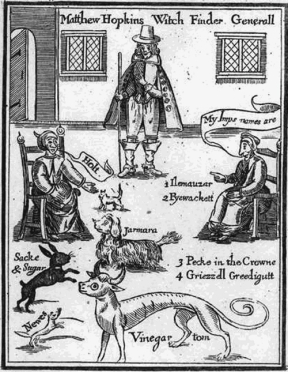
In this article Kerry Apps introduces students to the significance of the witch-hunts in the modern era, at the time when they occurred, and in the middle of the eighteenth century. She presents her rationale for choosing the witch-hunts as a focus for the study of significance, and shows how...
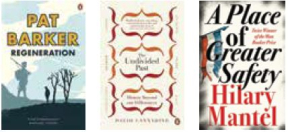
Discussions with sixth-form students about reading led Carolyn Massey and Paul Wiggin to start a sixth-formreading group. They describe here the series of themed sessions that they planned, and the student discussion and reflections that resulted. Listening to their students discuss their reading led Massey and Wiggin to reflect on...

Frustrated that her A-level students were being overly dismissive when asked to judge the convincingness of academic historians’ arguments, Paula Worth drew on previous history-teacher research and theories of history for inspiration. After noting that her students would unjustly reject esteemed historians’ accounts for lack of comprehensiveness, Worth explains here...
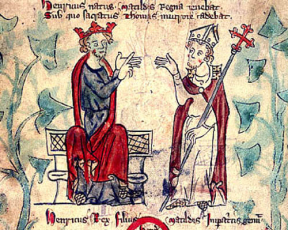
‘The Becket Dispute’ (or ‘Controversy’) refers to the quarrel between Henry II and Thomas Becket, Archbishop of Canterbury, which dominated English ecclesiastical politics in the 1160s. It was a conflict with multiple dimensions: a clash of Church and State; a prolonged struggle between two prominent individuals; a close friendship turned...
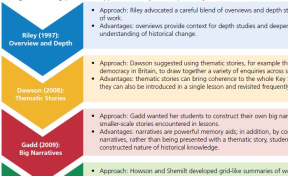
Inspired by The History Manifesto, Suzanne Powell describes in this article her rationale for expanding her students’ horizons by asking them to think about change, similarity and difference on a grand scale. She sets ‘big history’ into its curricular context, and shows the way in which her students could, and...

This feature of Teaching History is designed to build critical, informed debate about the character of teacher training, teacher education and professional development. It is also designed to offer practical help to all involved in training new history teachers. Each issue presents a situation in initial teacher education/training with an...
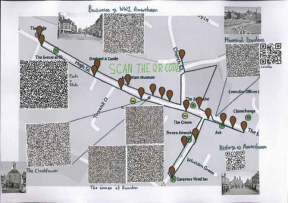
Why ‘do’ local history? The new (grades 9–1) GCSE specifications place a lot of importance on the local environment. The rationale for this is to get students to situate a site in its historical context, and to examine the relationship between local and national developments. Initially this change was the...
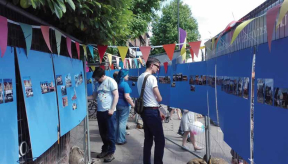
Inspired by the claim that local history can be taught effectively ‘Any time, any place, anywhere’, Katharine Burn and Jason Todd took up the challenge of planning Key Stage 3 enquiries related to an unusual and diverse, but frequently neglected and often despised, corner of Oxford. They sought not merely...
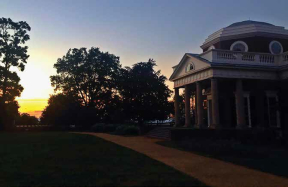
Many previous contributors to Teaching History have demonstrated the power of site visits to stimulate young people’s engagement and enrich their understanding of history. It is usually assumed, however, that the young people themselves will have the opportunity to visit the site in question – an assumption that cannot always...

History teachers have frequently made recourse to character cards as a device to help young people, each assigned specific roles, to understand how different kinds of people responded in different ways to particular situations in the past. Edward FitzGerald builds on this tradition, demonstrating the value of using rich historical...
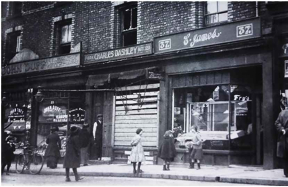
Matt Jones wanted to harness the power of local history to help his students understand the profound social changes experienced across Britain in the first half of the twentieth century. While he hoped that the personal stories of six families in Birkenhead would help to humanise abstract concepts such as...
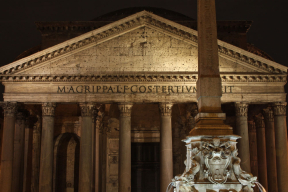
Across the globe, the centenary of World War I has prompted the creation of new exhibitions devoted to its commemoration. In New Zealand, Michael Harcourt wanted to explore whether teaching strategies intended to help students to engage critically with such exhibitions would have any lasting impact on the young people’s...