
Teaching History articles
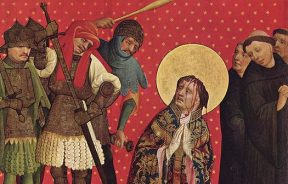
Tim Jenner was working on a causation enquiry with his Year 7 students when he noticed that weak conceptions of change were limiting their ability to produce powerful and period-sensitive arguments. He therefore decided to digress into a temporary but explicit focus on analysing historical change. He created a deceptively...
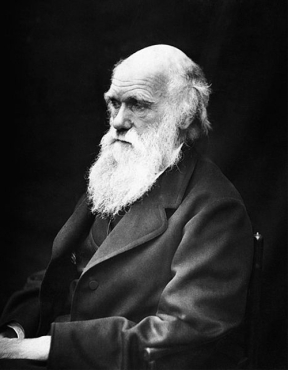
Jonathan White wanted to fill a gap in his students' knowledge of the history of ideas. Despite the appearance of Marx, Smith, Darwin and Malthus in the department's workscheme for Year 9, his Year 13 students appeared to lack any meaningful grasp of these nineteenth-century intellectual reference points. White therefore...
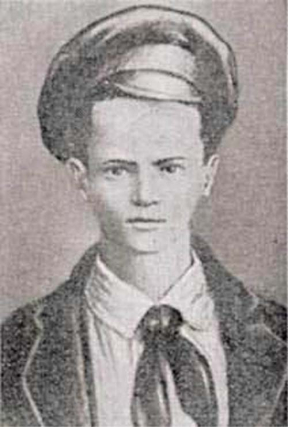
Germaine Greer (in the context of the Pirelli Calendar) once commented that the defining feature of a legend was that almost nothing said and believed about it was true. Pavlik Morozov, notorious both inside Russia and internationally for having denounced his father, almost certainly never did so. In September 1932,...

Reflecting on the continuing problem of students holding an impoverished understanding of the value or ‘uses' of history, Steve Rollett turned his attention to the question of analogy. He took the axiom to which students make common appeal (‘we can learn from mistakes in the past') and set about trying...

Whodunnit? The Felling mining disaster, 1812 The room buzzes as pathologists swap stories about injuries on the latest bodies. Some have virtually all limbs missing, others have been crushed by rockfall. Others have been found seemingly asleep with not a mark on their bodies. You have stepped into a Year...
Studying cartoons can be an engaging experience for students but it can also present students with considerable difficulties. Cartoons are typically highly complex texts that are often very hard to interpret and students need to develop appropriate reading strategies to interpret cartoons effectively. In this article Ulrich Schnakenberg explores ways...

Please note: this article pre-dates the 2014 National Curriculum and some content may be outdated. What role does knowledge play in the interpretation of documentary materials? How do history students use what they know? What kind of knowledge really ‘makes the difference' and which ways of using knowledge make the...
This issue's problem: Debbie Samson is finding it difficult to teach about change and continuity in meaningful ways.

Please note: this article pre-dates the 2014 National Curriculum and some content may be outdated. Alf Wilkinson has been working as ‘National Subject Lead' for History, co-ordinating a programme of support for schools, funded by the DCSF and delivered in partnership with the Historical Association and the CfBT. Here he...

Please note: this article pre-dates the 2014 National Curriculum and some content may be outdated. Why should we think in inter-disciplinary rather than cross-curricular terms when planning collaborative work with colleagues in other subjects? What scope is there for working in inter-disciplinary ways and what is the value of such...
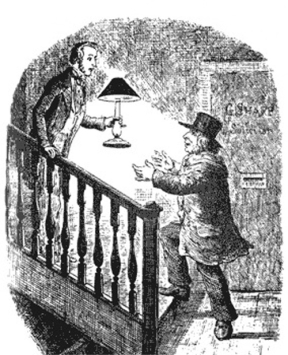
Please note: this article pre-dates the 2014 National Curriculum and some content may be outdated. What scope does studying a classic novel in both English and history provide for meaningful cross-curricular work and how might engaging with historical fiction help pupils engage more effectively with the realities of the past?...
Licking the stones: a kinaesthetic interpretation of Dover castle in 360 degrees This is the story of one history department that, in collaboration with a local historical site, embarked on a ‘curriculum co-development project' with the art department. The aim was to use learning experiences outside the classroom to bring...
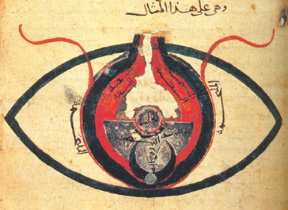
Please note: this article pre-dates the 2014 National Curriculum and some content may be outdated. Jamie Byrom is well-known to readers of Teaching History, not least for introducing us to the concept ‘professional wrestling' in the history department (Teaching History,133, Empire Edition). That article, authored with Michael Riley, focused on...
Please note: this article pre-dates the 2014 National Curriculum and some content may be outdated. Some history departments find themselves under pressure to incorporate skills and competences from alternative curricula. Others find that with the pressure to ease transition issues in Year 7, history can almost disappear into an amalgam...
Please note: this article pre-dates the 2014 National Curriculum and some content may be outdated. Alternative curriculum models can take many forms. Some seem to be imposed on reluctant history teachers with little opportunity for planning. Other teachers are given the opportunity to really embed and revise models that might...
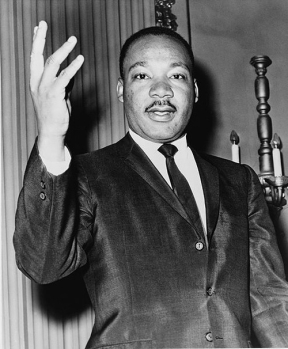
"He was The One, The Hero, The One Fearless Person for whom we had waited. I hadn't even realized before that we had been waiting for Martin Luther King, Jr, but we had." So spoke the novelist Alice Walker in 1972, looking back on her teenage years. And so wrote...
This issue's problem: Amir Timur is very uncertain about his Year 7 teaching within a competency-based curriculum. Amir has just returned from the induction day at his second placement school and is very worried about the Year 7 curriculum he has to teach. The history, geography and RE departments are...
Please note: this article pre-dates the 2014 National Curriculum and some content may be outdated. As a local authority adviser, Andrew Wrenn's advice has often been sought by history departments, both those seeking to resist ill-conceived and potentially damaging cross-curricular initiatives and those keen to exploit new opportunities for meaningful...
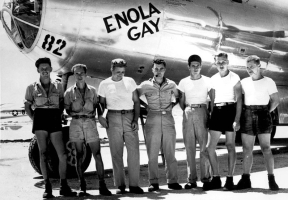
‘Thinking Skills' have been much discussed in England since, at least, the revision of the National Curriculum in 2000 and have recently morphed, with the 2008 revisions to the curriculum, into ‘Personal, Learning and Thinking Skills'. Often, however, such ‘skills' are discussed in abstract and cross-curricular ways, outside the context...
How can we interest students in the world of ideas? How can we help them to see how important ideas were in shaping and reflecting the world of the Victorians? Working with the overarching enquiry question, ‘Why did some Victorians believe in progress in the nineteenth century and others did...