
Teaching History articles

Rachel Foster reports here on research that she conducted into how students engage with academic texts. Unhappy with the usual range of texts that students encounter, often truncated and ‘simplified' in the name of accessibility, she designed a scheme of work which sought to find out how her students responded...
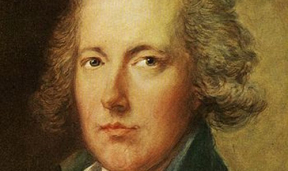
How can we help pupils learn to read historically? Gary Howells explores this question by explaining how he builds reading challenges into the course of his pupils' post-16 studies and by describing some of the tasks that pupils are set and the principles that underpin them. Howells argues that over...
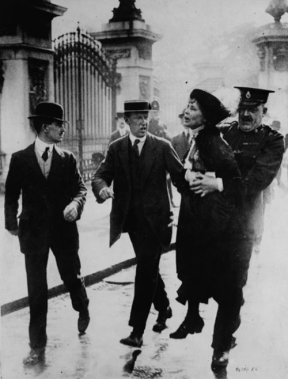
Visual sources, Jane Card argues, are a powerful resource for historical learning but using them in the classroom requires careful thought and planning. Card here shares how she has used visual source material in order to teach her students about the women's suffrage movement. In particular, Card shows how a...
I wanted to give my Year 8 students ownership of their work on the British Empire by allowing them to suggest our ‘enquiry question'. In order to introduce the Empire, I brought in sugar, spices, bananas, chilli peppers and cotton. I then showed maps demonstrating the Empire at its height....
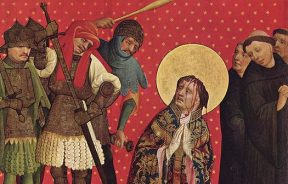
Mary Partridge wanted her pupils not only to become more aware of competing and contrasting voices in the past, but to understand how historians orchestrate those voices. Using Edward Grim's eye-witness account of Thomas Becket's murder, her Year 7 pupils explored nuances in the word ‘shocking' as a way of...
Arthur Chapman presents a task-specific scaffold - a ‘dart' board - designed to teach students how to interrogate sources of information so that these become sources of evidence for particular claims about past actions, beliefs and aims. Chapman also uses his ‘dart' board to foster students' reflection on the degrees...
What is historical empathy and why is it important? What has gone wrong and what had gone right in past attempts to develop students' empathetic understanding? What does progression look like in this area of historical thinking and what are the preconceptions that can act as barriers to progression? Lee...
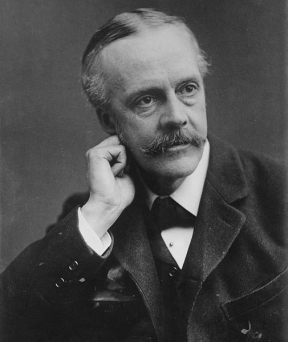
In a letter from the British Foreign Secretary, A.J. Balfour, to Lord Rothschild, the Anglo-Jewish leader, on 2 November 1917, the British Government declared its intention to ‘facilitate' the ‘establishment in Palestine of a national home for the Jewish people'. The Balfour Declaration, as it became known, was endorsed by...
Drawing on her research into students' evidential reasoning, Elisabeth Pickles explores the possibilities for how such reasoning might be assessed. Existing exam mark schemes focus too heavily on generic processes involved in the analysis of source material and insufficiently on the historical validity of reasoning and conclusions produced. Approaching the...
This issue's problem: Emily Hobhouse seems to feel obliged to implement all the new ideas she is learning about at once. Emily Hobhouse has made an impressive start to her PGCE course. She switched to teaching after several years' work in legal practice which meant that she was already used...

In this article, Lindsay Cassedy, Catherine Flaherty and Michael Fordham draw upon their empirical research to assess what understandings their students had of historical interpretations at the end of their compulsory education in history. They found that most students operated with an underlying epistemological model that did not reflect the...
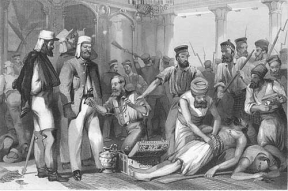
The dramatic, chaotic and violent events that took place in Northern India in 1857/8 have been interpreted in many ways, as, for example, the ‘Indian Mutiny', the ‘Sepoy War' and the ‘First Indian War of Independence'. The tales that have been told about these events have been profoundly shaped, however,...

Understanding historical interpretation involves understanding how historical knowledge is constructed. How do sixth formers model historical epistemology? In this article Arthur Chapman examines a small sample of data relating to sixth form students' ideas about why historians construct differing interpretations of the past. He argues that understanding interpretation requires students...
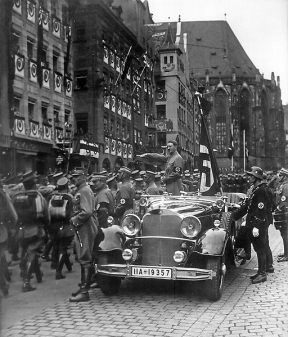
What do our students make of the history that we teach them? As part of an introductory module on historiography, Marcus Collins asked his undergraduate students to analyse the history that they had been taught at school and college using historiographic concepts. The results make for interesting reading. What do...
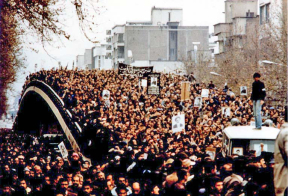
Although the curriculum changes of 2008 brought with them new GCSE specifications, Jonathan White was disappointed by the dated feel of some ‘Modern World' options, particularly the depth studies on offer. Drawing on his experience of teaching comparative history within the International Baccalaureate, and building on previous arguments in Teaching...

History teachers have been talking about the need to teach broad narratives, overview and chronology for a long time. They have also recognised how essential it is for students to have an opportunity to study the ways in which the past has been interpreted, and the reasons why these interpretations...
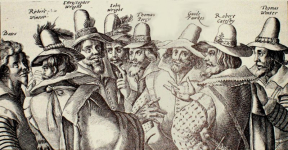
Analogies for teaching about causation abound. Rick Rogers is alert, however, to the risks inherent in drawing on everyday ideas to explain historical processes. What most often gets lost is the importance of the chronological dimension; both the length of time during which some contributory causes may have been present,...
This issue's problem: Rob Collingwood keeps just making assumptions about his students' thinking. Rob Collingwood seemed to make a very promising start to his first school placement, but as time goes on his mentor is becoming concerned about the lack of connection between Rob's thinking and that of his students....
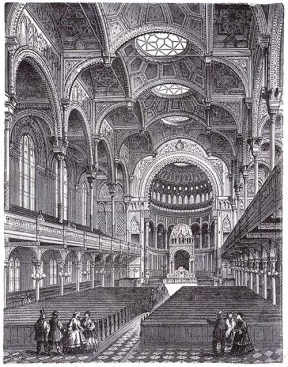
As more and more schools take students on visits to locations associated with the history of the Holocaust, history teachers have to find ways to make these places historically meaningful for their students. David Waters shows here how he introduced his students to the multiple narratives associated with the history...
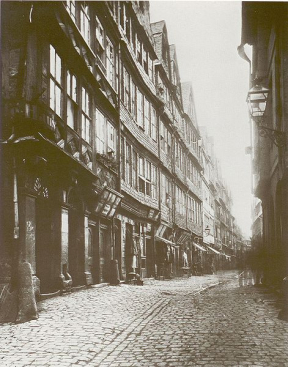
Holocaust imagery is very familiar, clichéd even. How can we get pupils thinking about it in novel ways and seeing differently? Phillips reports work completed with his PGCE students, proposes a scaffold of questions with which to deconstruct images and applies it to archive images and to Hollywood representations. Images...