
Historian articles
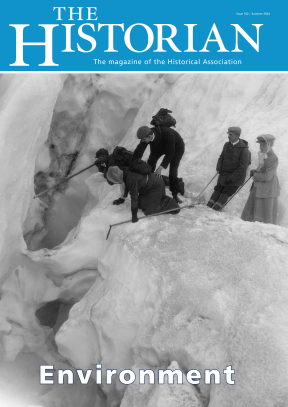
Read The Historian 162: Environment Environment, broadly defined as the surroundings in which one lives, is an essential component of the study of past societies. Its importance has given rise to a number of fields of study. In Britain, landscape history was pioneered by W.G. Hoskins in the 1950s, and...
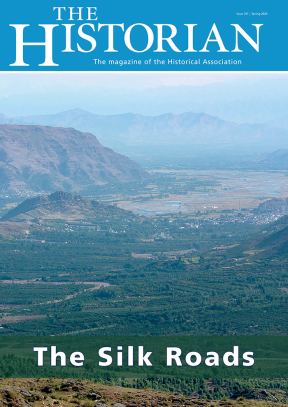
Read The Historian 161: The Silk Roads Although the term ‘the Silk Roads’ was coined over 150 years ago, it has found new resonance with historians interested in a broader, international history, part of the ‘global turn’ in the discipline. The contributions to this issue arise from a research collaboration...
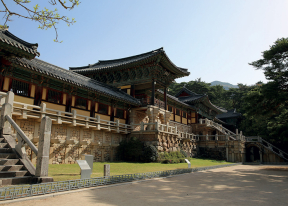
Set among the forested Toham mountains in southeast Korea, Bulguksa (Bulguk Temple, the Temple of the Buddha Land), was founded during the Silla Dynasty (57 BC–AD 935). The history of this 1,300 year old sacred site reflects the long and sometimes turbulent history of Buddhism and its heritage in Korea,...
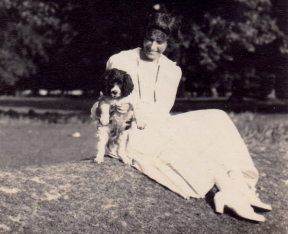
Our series ‘Real Lives’ seeks to put the story of the ordinary person into our great historical narrative. We are all part of the rich fabric of the communities in which we live and we are affected to greater and lesser degrees by the big events that happen on a...
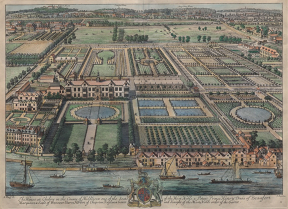
Chelsea has an unusually large number of veteran mulberry trees for a London borough (around 25 at the last count). And, while they are not all as old as they look, many have direct links to Chelsea’s history, including the Tudor estates of Thomas More and Henry VIII, a short-lived...
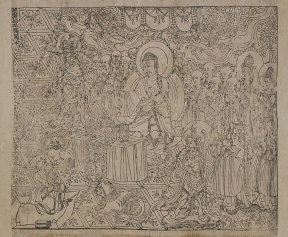
In Autumn 2024, the British Library will mount an exhibition exploring the stories of the people who inhabited or passed through the oasis town of Dunhuang during the first millennium. Located in modern-day Gansu province, in northwest China, Dunhuang was originally established as a garrison town and became an important...
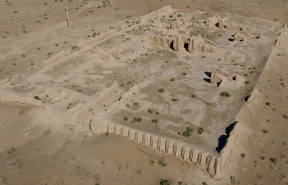
Paul Wordsworth traces the route ways across the Karakum Desert, Turkmenistan, going in search of the wells and watering places essential to desert travel. There are many risks when arriving at a well in the middle of the Karakum (black sand) desert in the modern Republic of Turkmenistan, not least...
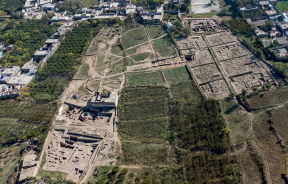
The presence of an apse was a common architectural feature in early Buddhism. An apsidal temple associated with an Indian-style Buddhist stupa was recently discovered at Barikot in Pakistan’s Swat Valley, dating to the time of the great promoter of Buddhism, the Mauryan Emperor Aśoka (r. 268–232 BC). The monument...
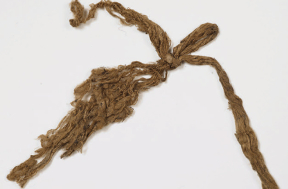
This article explores precious fragments of silk, manufactured in the Byzantine Empire and Central Asia, discovered in archaeological excavations in Dublin. Dublin, situated on the east coast of Ireland, grew out of a fortified riverside camp (longphort) for overwintering marauding Vikings or ‘northmen’, who were plundering wealthy ecclesiastical establishments from...
This article explores precious fragments of silk, manufactured in the Byzantine Empire and Central Asia, discovered in archaeological excavations in Dublin. Dublin, situated on the east coast of Ireland, grew out of a fortified riverside camp (longphort) for overwintering marauding Vikings or ‘northmen’, who were plundering wealthy ecclesiastical establishments from...
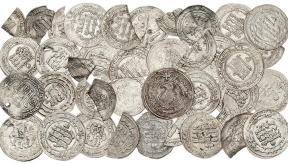
Both public and scholarly perceptions of the Viking Age (c.AD 750–1050) have long been dominated by a western outlook, emphasising raiding and trading in Europe and the North Atlantic, with only limited attention paid to Scandinavian contacts to the east. In recent years, this viewpoint has shifted dramatically, not only...
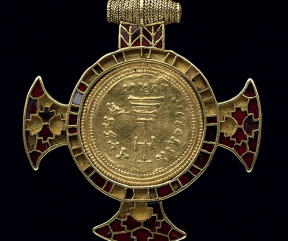
The remarkable career of Theodore of Tarsus, Archbishop of Canterbury, shows how the political and religious turmoil in the seventh-century eastern Mediterranean had a direct impact upon the English kingdoms. Asked to name the most significant archbishops of Canterbury, it is likely that few would name the seventh-century monk, Theodore...
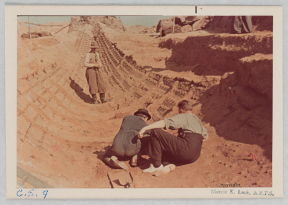
Laura Howarth, Archaeology and Engagement Manager at the National Trust property of Sutton Hoo, reflects on the discovery of the ship burial in 1939 and its portrayal in the 2021 film, The Dig. In a corner of Suffolk during the summer of 1939, an archaeological discovery was made at Sutton...
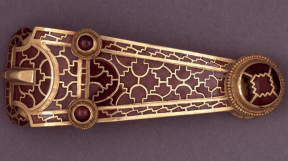
This article looks at the importance of long distance connections between the English kingdoms and the eastern Mediterranean in the sixth to eighth centuries. The relationship between the ship burial at Sutton Hoo – in the eastern English county of Suffolk – the people who discovered and excavated it, and...
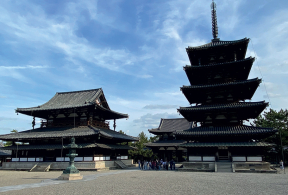
Simon Kaner explores the fascinating parallels revealed by the international research project From Nara to Norwich between life and religious belief at the ends of the Silk Roads. Nara is the ancient capital region of Japan. The eighth century imperial treasury, the Shōsōin, with its treasures from China and central...
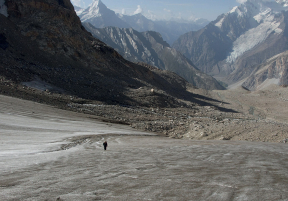
The question of whether the ‘Silk Road/s’ is a useful concept for historical analysis, or too vague or too all-encompassing to have interpretative value, is one that scholars have been debating ever since the term moved into the cultural and scholarly mainstream. Although the use of the term in marketing...

Read The Historian 160: Sport in History This edition of The Historian has a focus on sport in history. A story told by Duncan Stone in his article here suggests that this particular theme may need some justification, as an eminent professor dismissed a doctoral study of the history of...
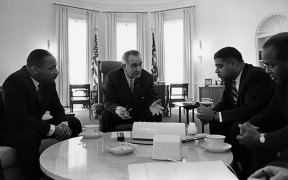
Paula Kitching interview with Professor Anthony J. Badger about his latest book. 2024 is an election year in the United States. For many in the UK and around the world the US political system can be confusing, with simple processes seemingly more complex than you would expect. It is not...
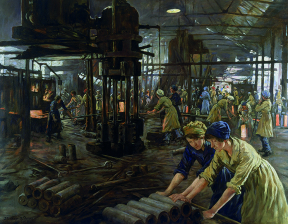
When the First World War started in the summer of 1914 it began a series of events that would change the world for ever; it also accelerated changes and ideas that were already underway. In some cases, big issues appeared to be put to one side while the immediate needs...
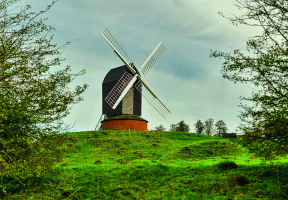
In this article Josephine Glover discusses the long history of her ‘favourite history place’, the Buckinghamshire village of Brill. She explains how there has been a human settlement there since Mesolithic times. Using various fragments of evidence, she pieces together the extent to which the village was important to early...