
Historian articles
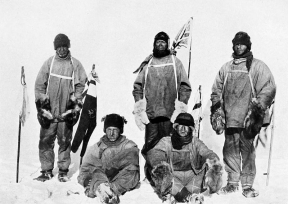
No longer "A Pole Apart": Antarctica 100 years on from Captain Scott At last on 12 November 1912 the search party found the tent almost totally buried in snow. According to Thomas Williamson: ‘Mr Wright came towards us, and said it was the Polar Party ... it was a great...

Bettany Hughes Norton Medlicott Medal Winner Lecture In 1991 I travelled to the BBC for a meeting with a senior television producer. It seemed to me that history just wasn't getting a fair crack of the whip. I talked animatedly about the on-screen discoveries that could be made and the...
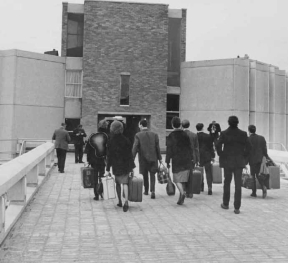
New Universities of the 60s: One professor's recollections: glad confident morning and after Living history How long do professional historians wait before writing about their own personal involvement in episodes of lasting significance in history? If they wait too long they are dead, and their evidence is lost. A striking...
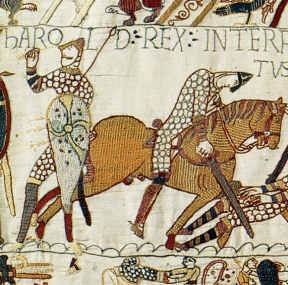
In the first of an occasional series Alf Wilkinson, HA CPD Manager, explores Mountfitchet Castle, in Essex - his favourite history place. As every schoolchild knows, William the Conqueror landed near Hastings in 1066, pursuing his claim to the throne of England. He was accompanied by the Pope's blessing, but...
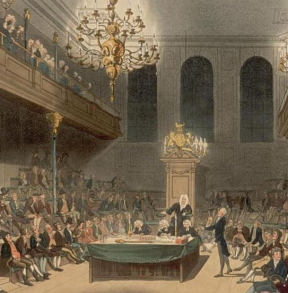
The public man and his career Spencer Perceval's career as a public figure lasted from 1796 when he became a King's Counsel and MP for Northampton until his murder sixteen years later at the age of 49. He was shot in the lobby of the House of Commons at 5.15pm...
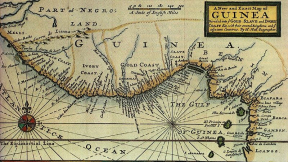
In 1660, the Company of Royal Adventurers Trading to Africa was established under the leadership of Charles II's brother James, the Duke of York. Founded as a slaving company, the Royal African Company, as it became known, also traded in gold. African gold was mined in the interior before being...
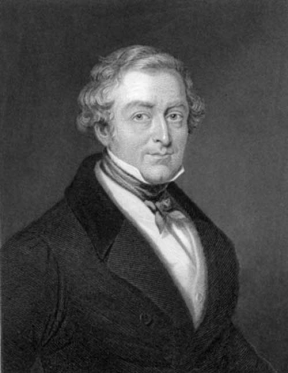
On 4 March 1856, during a debate in the House of Lords on a motion to form a ‘Gallery of National Portraits', the Conservative peer Earl Stanhope quoted Thomas Carlyle's view that ‘one of the most primary wants [of the historian is] to secure a bodily likeness of the personage...
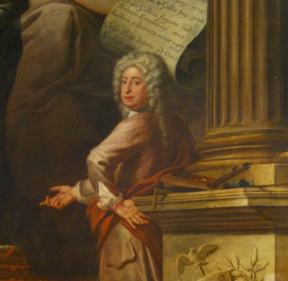
History Painting is defined in Grove's Dictionary of Art as the ‘depiction of several persons engaged in an important or memorable action, usually taken from a written source.' Though History Painters as important as Rubens and Van Dyke worked - in Van Dyke's case for nine years - in England,...
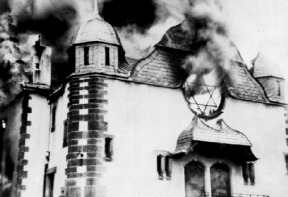
Why Reichskristallnacht? In The Third Reich Michael Burleigh writes: ‘We should be cautious in seeing spontaneity where frequency suggests instigation from a central source.' He comments on ‘a dialectic between "spontaneous" grassroot actions and "followup" state sponsored measures.' These remarks relate to 1935, the time of the Nuremberg Laws [the...
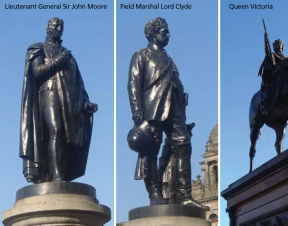
Glasgow's George Square statues -‘Through the looking glass' History is often illumined by writers of genius but Glasgow did not produce a Zola, a Balzac, a Dickens or even an Arnold Bennet. We are, therefore, thrown back on looking at other manifestations of a powerful and wealthy city to augment...
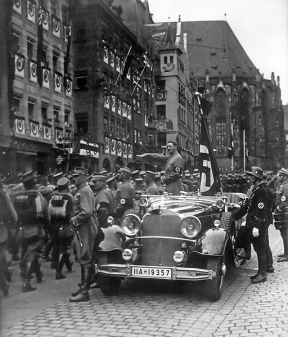
Read more like this: Nazism and Stalinism Fascism in Europe 1919-1945 Kristallnacht Anti-semitism and the Holocaust The Coming of War in 1939 Political internment without trial in wartime Britain Neville Chamberlain: villain or hero? The Mechanical Battle of Britain Since the 1960s, there have been two main schools of thought...
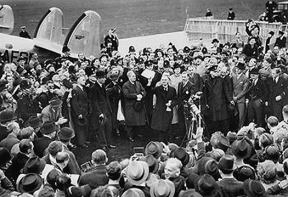
Perhaps no other British figure of the twentieth century has been as vilified or as celebrated as Neville Chamberlain, the British Prime Minister from 1937 to 1940. In 1999, a BBC Radio 4 poll of prominent historians, politicians and commentators rated Chamberlain as one of the worst Prime Ministers of...
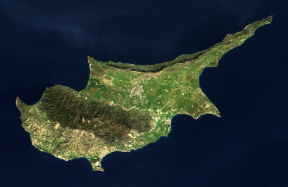
Although Cyprus, the third largest Mediterranean island, remained nominally under Turkish suzerainty until 1914, the British were established there after the 1878 Congress of Berlin. The idea then was that, from this base, Britain could protect Turkey against threats from Russia, while ensuring that the Turks reformed their treatment of...
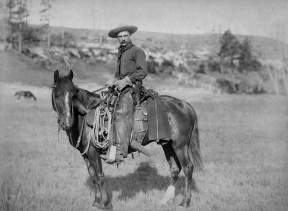
The Western movies that from around 1910 until the 1960s made up at least a fifth of all the American film titles on general release signified escapist entertainment for British audiences: an alluring vision of vast open spaces, of cowboys on horseback outlined against an imposing landscape. For Americans themselves,...
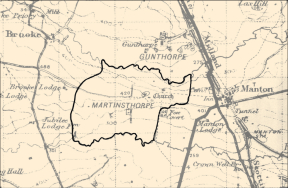
History is nothing if not an exercise in informed imagination. On a country walk in Rutland arranged by a group of (non-historian) friends, I noted that the Ordnance Survey map showed our planned route, following a ridge of high ground separating the valleys of the meandering Gwash and Chater rivers,...
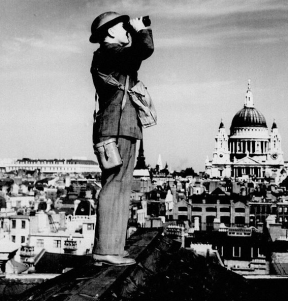
The Battle of Britain is often described as the point at which the Nazi threat began to diminish and cracks began to form in Hitler's regime. The air campaign launched by the Germans in the summer of 1940 intended to wipe out the existence of the British Royal Air Force...
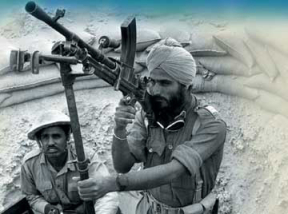
India was vital as a source of men and material for the British in the Second World War, despite the constitutional, social and economic issues which posed threats to its contribution. Leo Amery, Secretary of State for India 1940-5, wrote to Churchill, 8 April 1941: ‘My prime care had naturally...
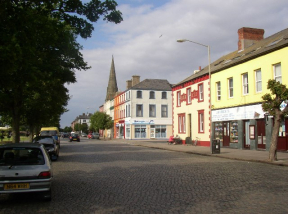
Situated north west of the Lake District, Silloth is a seaside resort, looking across the Solway Firth to Dumfries and Galloway. The origins of this settlement lie in medieval times because the monks of nearby Holme Cultram Abbey had established storage facilities there to receive and store the grain from...

‘You've gone over to The Dark Side'. These were the words of a well-respected historian to whom I'd been enthusing about the pleasures and perils of Dressing Up. During 2009-10 I spent several months in historic costume, recreating the habits and rituals of domestic life in the past. It was...
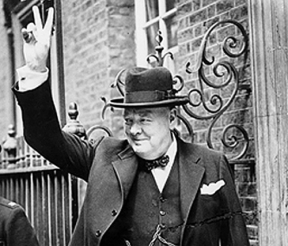
Winston Churchill is generally regarded as one of the most prominent figures of the twentieth century. As Prime Minister he led Britain to victory against the Nazi war machine, leading Time to name him ‘Man of the Year' in 1940 and ‘Man of the Half Century' in 1949. As recently...