
Historian articles
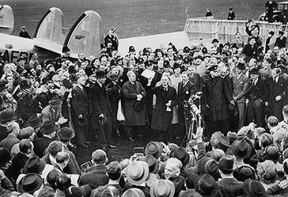
Brent Dyck is a Canadian teacher and a previous contributor to The Historian. In this short essay he offers us his objective interpretation of the achievements of Neville Chamberlain. For some what he says may seem surprising and for others it might even be controversial. However, editorially it seemed entirely...
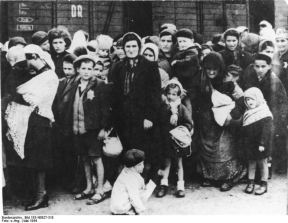
Daniel Goldhagen defines anti-semitism as ‘negative beliefs and emotions about Jews qua Jews.' Nazis believed Jews to be the source of Germany's misfortunes, and that they must be denied German citizenship and removed from German society. Hitler never compromised on the need to settle what he regarded as the Jewish...
East Yorkshire is a somewhat neglected area for touring. Yet, the villages in the chalk Wolds possess much charm and a lot of surprising history to reward those who would explore them. In my youth, I toured these villages many times both on foot and by bicycle. This route is...
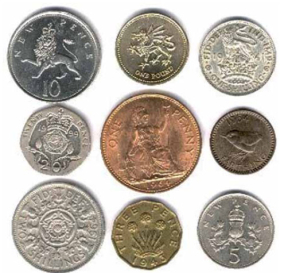
Decimal Day in Britain was Monday 15 February 1971. New coins and notes were circulated. There was no special issue postage stamp to commemorate the occasion, only a new series with some unfamiliar values, such as 7½p instead of 1s 6d. The fortieth anniversary of the arrival of decimal currency...
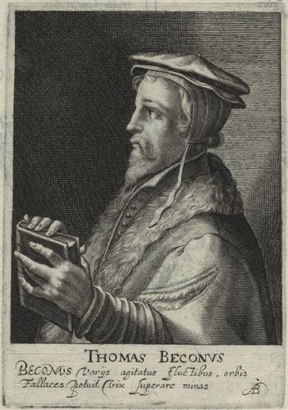
The Elizabethan Reformation in Staffordshire had a shallow seedbed. The radical reformers of the 1540s had greeted the conversion of the county with a mixture of high hopes and hyperbole. The East Anglian preacher and disciple of Latimer, Thomas Becon, wrote a treatise The Iewel of Ioye urging that itinerant...
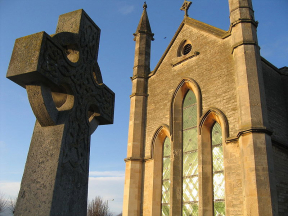
This is more than one of our conventional ‘Out and About in Local History' items because Ken Rogers introduces us to a process whereby visual architectural and industrial history of Trowbridge has been saved from destruction; and then he gives us some clear guidance as to where to go and...
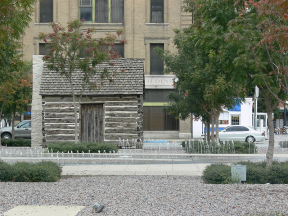
The viewer of the internationally popular television show Dallas was routinely treated to an aerial tour that skimmed across the open prairie over the distinctive skyscrapers across the fifty-yard line of Texas Stadium and up the manicured pastures of South Fork. This façade of larger-than-life Texana reflects an urban reality...

Historical diaries written by children are rare and only seven from England and the United States written before 1800 are known to have survived. One of these, found tucked away in the London Metropolitan Archive, is the diary of William Hugh Burgess, a fifteen year-old boy who grew up in...

When the Spanish Conquistadores arrived in Mexico during the early sixteenth century there were many repercussions for the indigenous people. Their conversion to Christianity and the sacking of their temples are two of the most well known examples. However, it is often forgotten that the Aztecs had only a pictorial...
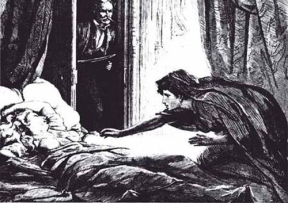
The now legendary film company Hammer made such classics as The Curse of Frankenstein (1957) and Dracula (1958), plus their numerous sequels and subsequent remakes of old Universal Gothic chillers (The Curse of the Werewolf, The Mummy, The Phantom of the Opera), as well as making international stars out of...
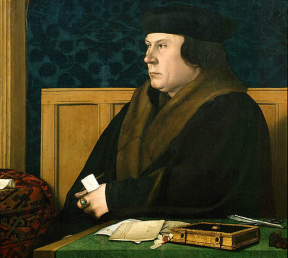
Since the late Middle Ages periods in which it was fashionable for men to be clean-shaven have alternated in Europe with periods in which it was fashionable for men to wear beards. In some periods clean-shavenness went together with long hair, at others beards went together with short hair, and...
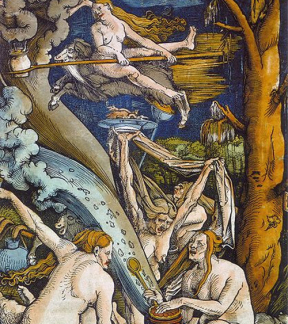
Occult and Witches: Some Dramatic and Real Practitioners of the Occult in the Elizabethan and Jacobean Periods One purpose of this paper is to show a correspondence between real-life Elizabethan and Jacobean practitioners of the occult and the depiction of their theatrical counterparts, with particular reference to perceived differences between,...
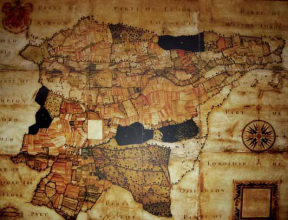
Where is Laxton? The village is in north Nottinghamshire, formerly called Lexington (Lexitune). The village is based around the Church of St Michael and, of course, its hostelry, the Dovecote Inn. Most of the farms are properties which are long and thin and they have "closes" which stretch back from...
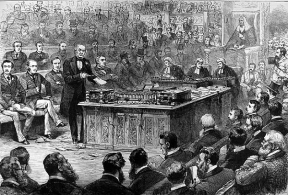
One hundred and twenty years ago the advent of the first red May Days caused major concern across Europe. To general surprise, in 1890 and the next few years some of the largest rallies occurred in London. In Britain the main demonstration on the nearest Sunday to May Day passed...
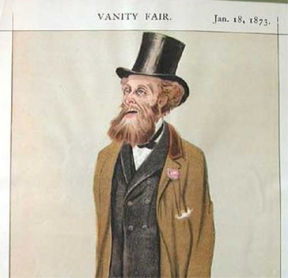
Family Background and Early Life Charles Gilpin was born in Bristol in 1815, the son of James Gilpin, a Quaker draper, and Mary Gilpin nee Sturge. The Sturges were a notable Quaker Liberal family, active in the campaign against slavery. Their relatives included the Darbys of Coalbrookdale. Charles Gilpin was...
Memorandum that Edinburgh was won on 8th day of May in the 36th year of the reign of Henry VIII and year of God 1543 and this book was acquired and brought away by me Wm. Norris of Speke, Knight, on 11th day of May aforesaid and is now the...

The late Frank Ellis was working on a full biography of John Wilmot, earl of Rochester, at the time of his death in 2007. He had contributed a life of Wilmot to the Oxford Dictionary of National Biography which appeared in 2004. In it he wrote that ‘on 21 November...
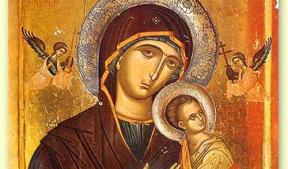
The First Crusade may be considered the only really successful crusade in that it achieved its stated goal, but it demanded great courage and stamina of its participants in their journey to the Holy City of Jerusalem, fighting their way through an unforgiving hostile territory. But courage and stamina by...

It ought to be possible to match many of the letters of the alphabet to an English place-name and its particular food-stuff. From Bath Buns to Yorkshire Pudding, this puzzle might go, by way of cakes from Eccles and Pontefract. Can you think of other letters of the alphabet and...
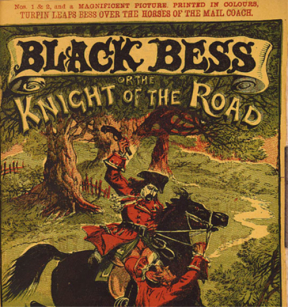
"I wish I know'd as much as you, Dick. How did you manage to pick it up?" "Mother taught me most, and I read all the books I can get." "So do I; sich rattling tales, too ---‘The Black Phantom; or, the White Spectre of the Pink Rock.' It's fine,...