
Historian articles
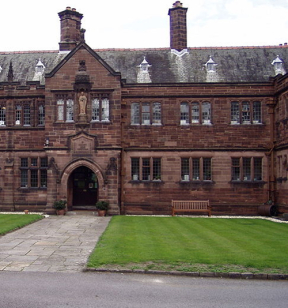
To stand amidst the books in St Deiniol's Library is an intimidating experience for it is an encounter with the restless, brooding intelligence that was William Ewart Gladstone. Lord Runcie of Cuddesdon, Archbishop of Canterbury (18 May 1998) The ‘Temple of Peace' St Deiniol's Library was founded in 1894 by...
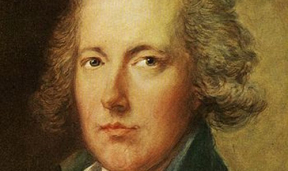
Two hundred years ago it must have seemed to some as if the time for political and economic reform in Britain had arrived. A number of the necessary conditions appeared to be in place: recent examples from America and France showing how readily and rapidly established systems could be overturned...
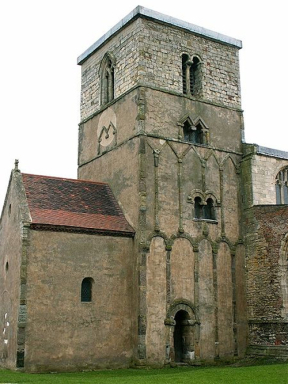
Barton-upon-Humber is a small historic town situated on the south bank of the River Humber, in the old north Lincolnshire area of Lindsey. It is almost opposite the large city and port of Kingston-upon-Hull. The name is derived from ‘Beretun', which meant ‘Barley Town', a tribute to its importance in...
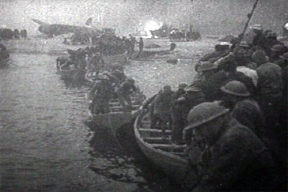
Seventy years after the outbreak of the Second World War, British foreign policy in the 1930s remains as controversial as ever. While appeasement is now a byword for political failure, the reasons for its adoption and the responsibility of the statesmen concerned are constantly debated. In general, opinion looks unfavourably...
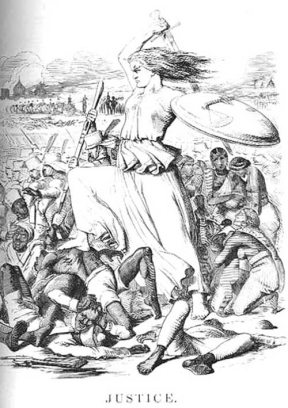
Many historical books contain cartoons, but in most cases these are little more than a relief from the text, and do not make any point of substance which is not made elsewhere. Political cartoons should be regarded as much more than that. They are an important historical source which often...
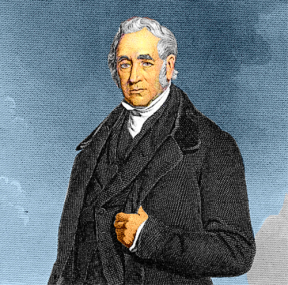
Richard Trevithick & George Stephenson: a twenty firstcentury Reassessment Two hundred years ago, a remarkable event took place in London. At the instigation of Richard Trevithick, engineer, polymath and inventor - who many regard as the greatest Cornishman ever - an elliptical circuit of cast iron rail was laid out...
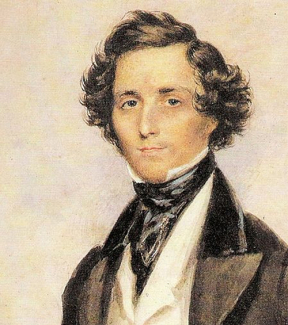
It is appropriate, in this bicentenary year of Mendelssohn's birth, to remember a great day in Birmingham's musical and social calendar. A day when the composer's Oratorio, Elijah, especially commissioned for the city's 1846 Triennial Festival to raise money for the Children's Hospital, was first performed in the newly refurbished...
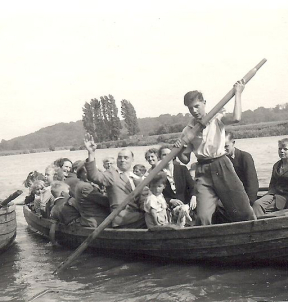
In the muddy corner of a field fringing Biddulph Moor in North Staffordshire, a small fenced enclosure surrounds Trent Head, ‘official' source of the River Trent (SJ905 579). In truth, any of a handful of springs that rise nearby might serve. Pilgrims are well advised to equip themselves with Wellington...
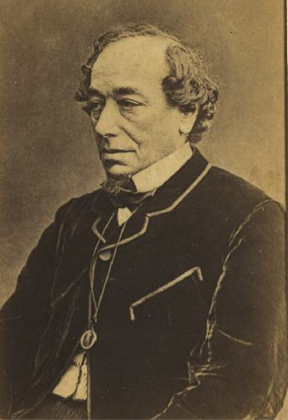
During the years from 1826 to 1830 Benjamin Disraeli went through the slough of despond. His first major biographer,William Flavelle Monypenny, observed the ‘clouds of despondency which were now settling upon Disraeli's mind'. In his magisterial life of the great tory leader Robert Blake commented that ‘after completing Part II...
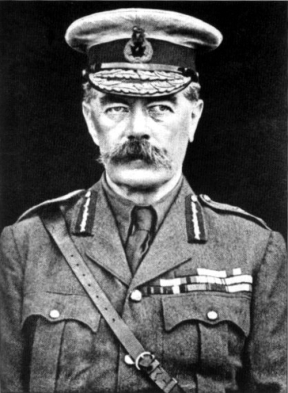
Faced with the testimony of the huge casualty lists of the First World War, the desperate battles of attrition, the emotive evidence of the seemingly endless cemeteries and memorials, the moving war poetry of men such as Owen and Sassoon, and the memoirs of those who fought, it is not...
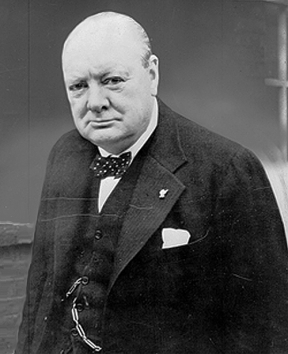
Winston Churchill had a major impact on British and world history in the twentieth century. A great deal has been written on his roles in the two world wars and on many aspects of his career. Yet relatively little attention has been paid to his relations with the Islamic world....
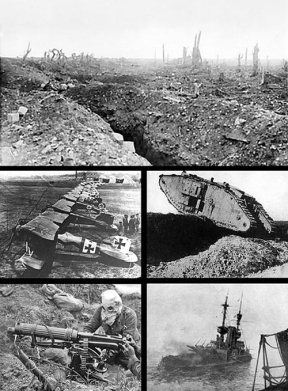
Research into family history is well-known as likely to dig up some uncomfortable evidence. Nearly every family has had its bastards; nearly every generation has had someone on poor relief. We had both. But more troubling was my recent suspicion that a hundred or so years ago not one but...
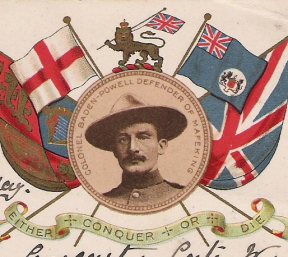
Sir Francis Patrick Fletcher Vane, fifth baronet (1861-1934), a man of wideranging but seemingly contradictory passions and interests, was an idealistic but also hard-working aristocrat who played a major role in shaping the early Boy Scout movement in London. While the name of the founder of the Boy Scouts, Robert...
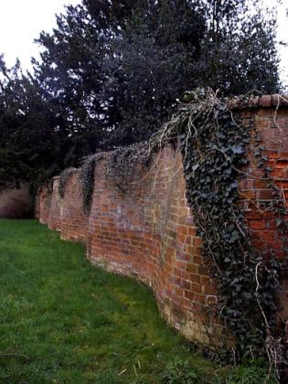
At the village of Easton in Suffolk one of its most distinctive features is its crinkle crankle wall. It is said to be the longest example of this form of wall construction and design. When Easton Hall, the seat of the Duke and Duchess of Hamilton was demolished and transported...
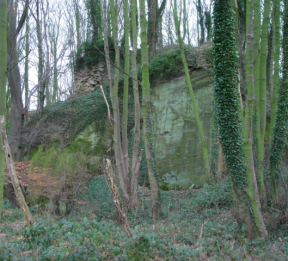
Ruined buildings shrouded in trees, masonry crumbling into the undergrowth. It sounds like the backdrop for an Indiana Jones movie, the sort of thing people trek across Central America or the wilds of Cambodia to find. But Britain has its own share of enigmatic relics. Three very different such historical...
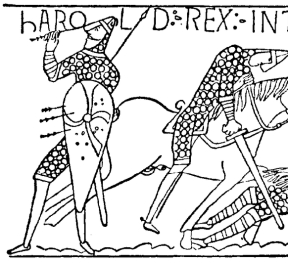
How did King Harold II die at the Battle of Hastings? The question is simple enough and the answer is apparently well known. Harold was killed by an arrow which struck him in the eye. His death is depicted clearly on the Bayeux Tapestry in one of its most famous...
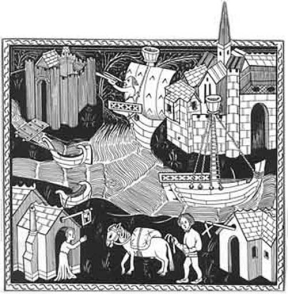
The project: A three-year research project started in December 2007 with the aim of investigating the credit arrangements of a succession of English monarchs with a number of Italian merchant societies. The study, based at the ICMA Centre, University of Reading, is funded by the Economic and Social Research Council...
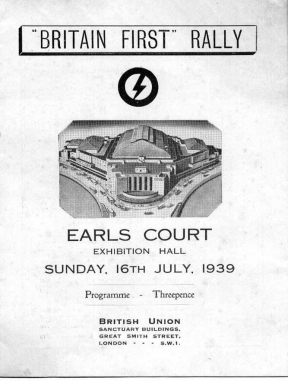
In the spring and early summer of 1940, the British government carried out a programme of mass internment without trial. On 11 May, the first of thousands of ‘enemy aliens' were interned. Many of these internees were refugees from Nazi Germany, often Jews who had fled Germany in fear of...
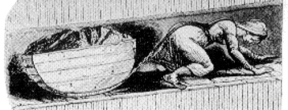
On 1 March 1771, thirteen year-old John Davies, a London charity school boy, left his home in Half MoonAlley and made his way to Bishopsgate Street. There he joined thirteen other boys of similar age who, like him, were new recruits of the Marine Society, a charity that sent poor...
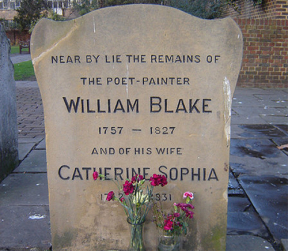
The grave markers in churchyards and cemeteries are for the most part depressingly unimaginative both in their design and in their inscriptions but one occasionally meets with an attempt at striking an individual note, such as a sculpted depiction of a motor vehicle, or an animal, or the head-gear worn...