
Historian articles
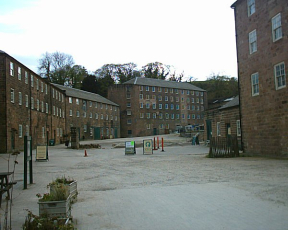
Cromford Mill, one of the best known, and the Lumsdale Valley, one of the least known of the early industrial sites, are linked today by being managed by the Arkwright Society. They have also been the subject of a recent BBC1 programme in a series: ‘Britain's Hidden Heritage'. They are...
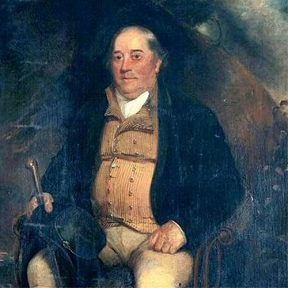
Commonly hailed as a discovery or a ‘medical breakthrough', vaccination against smallpox with cowpox exudate was a development of variolation i.e. inoculation with live smallpox matter - a technique popularised amongst the gentry in the early eighteenth century by Lady Mary Wortley Montagu who had observed the procedure in Turkey...
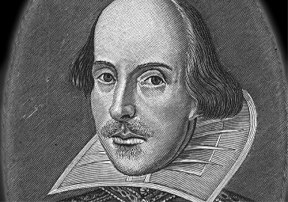
Shakespeare's identity is an issue historians normally avoid - with 77 alternatives to Shakespeare now listed on Wikipedia, it has become a black hole in literary studies. Denial of the orthodox (Stratfordian) view* that William Shakespeare was the Bard dates back a century and a half, but has escalated in...
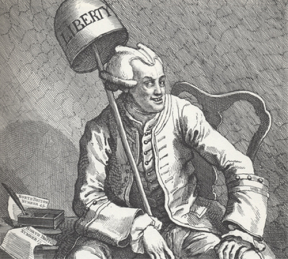
For Lord North in 1775, one John Wilkes was enough, ‘though ... to do him justice, it was not easy to find many such'. The impact of Wilkes between 1760 and 1780 was profound, a cause as much as a person. For Philip Francis, thought to be the satirist ‘Junius',...
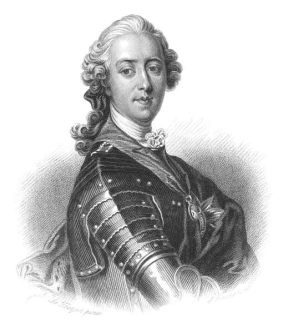
Thirty thousand pounds was an enormous sum of money in 1746. That was the reward offered by the British government for the capture of Prince Charles. Many Highlanders knew where he was at various times and places after Culloden, but they did not betray him. As one of his helpers...
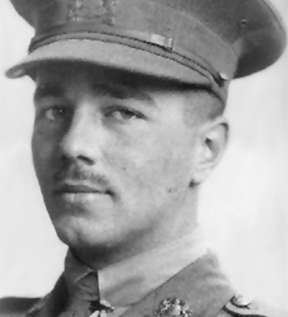
The last two decades have seen a slow shift in the academic understanding of the impact of the Great War on interwar Britain. The work of a small group of cultural historians has challenged strongly held pre-existing interpretations of the cultural impact of the Great War. However, there is still...
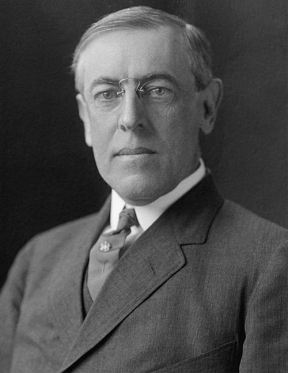
Unpublished papers in Britain's National Archives at Kew reveal curious undercurrents in Anglo-American relations. After the conclusion of the Boer War, for example, the British Army supposed that the next major conflict would be not with Germany but with the U.S. A memo printed for circulation in July 1904 entitled...
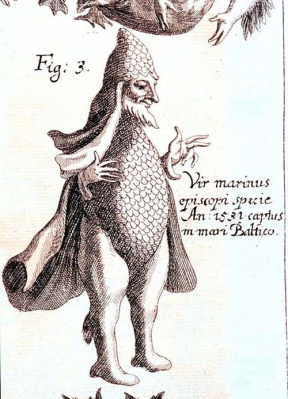
Medieval ‘Signs and Marvels': insights into medieval ideas about nature and the cosmic order. Many aspects of life in the Middle Ages puzzle the modern reader but some are stranger than others. What can possibly explain an event reported from Orford Castle, in Suffolk? This is an amazing tale and...
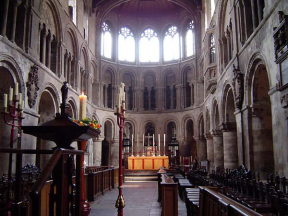
On the north-western side of the City of London, directly in front of St Bartholomew's Hospital near the ancient church of St Bartholomew the Great, there once lay a ‘smooth field', now known as Smithfield. This open space of around ten acres had a long and turbulent history. In medieval...
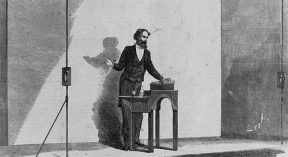
For many years London South Bank University [LSBU] trainee teachers have been engaged in a wide range of mini history-led, cross-curricular projects in local primary schools, culminating in the students teaching lessons to groups of children. Some of these projects have been on different aspects of community history, including in-depth...
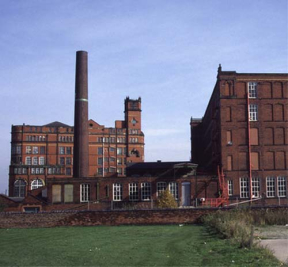
Despite its old name of Bolton-le-Moors, the history of Bolton is tied up with the Industrial Revolution. Its population grew from 17,000 inhabitants in 1801 to nearly 181,000 in 1911. It is well known that the damp climate of England's north west was perfectly suited to the textile industry, and...
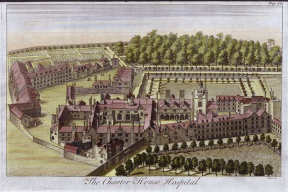
Four hundred years ago, in 1611, Thomas Sutton was reputed to be the wealthiest commoner in England but he was nearing the end of his life. He had been a financier and he was formerly the Master of Ordnance in the Northern Parts. He decided to take up good works...
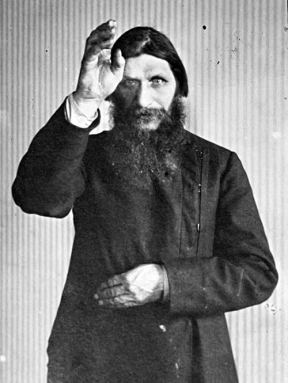
Has the role of Alexandra and Rasputin in the downfall of the Romanovs been exaggerated out of all proportion? If a country is defeated in war, the rulers run the risk of being overthrown. In 1918 the Kaiser left Germany for Holland, Germany became a Republic; the Austro-Hungarian Empire came...
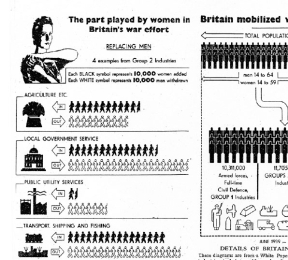
One of the gifts of the social sciences to history is the use of expository diagrams; but attention is rarely given to the history of diagrams. Maps - schematized representations of locations in spatial relation to one another - can be dated back to Babylonia in the late third millennium...
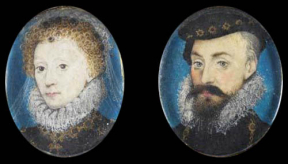
Books as evidence The study of books as objects can reveal a great deal about their owners and the society in which they lived. By examining why the books were printed in the first place, and by whom; why they were acquired and for what purpose; how they were bound;...
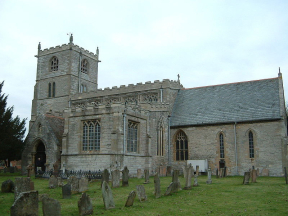
It is at Newark that the River Trent turns northwards. Running parallel to the river are the Great North Road (now the A1) and the East Coast Mainline railway. The easily missed village of Norwell lies seven miles north of Newark and one and a half miles west of the...
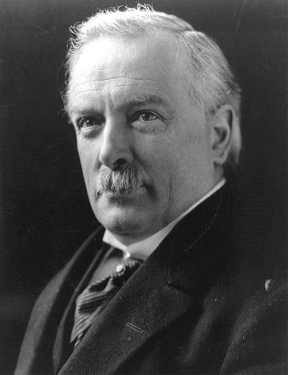
When Lloyd George succeeded Asquith as Chancellor of the Exchequer in April 1908, his first task was to introduce the old age pensions Asquith had initiated. His second was to prove even more momentous. On 29 April 1909 he presented what has become known as "The People's Budget". The task...
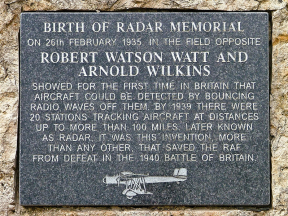
Whenever British radar is discussed the name that usually comes to mind is that of Robert Watson Watt. Our history books and our dictionaries of biography consistently attribute the discovery of radar in Britain solely to Watson Watt, with little or no mention of the key role played by his...
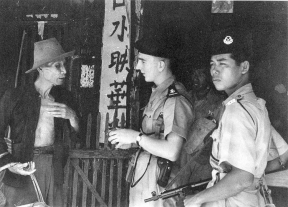
‘To think that the people of Indochina would be content to settle for less [from the French] than Indonesia has gained from the Dutch or India from the British is to underestimate the power of the forces that are sweeping Asia today'. An American adviser in 1949 cited: Robin Jeffrey...
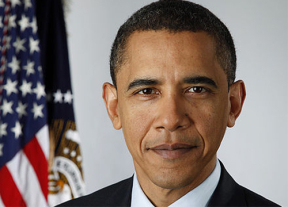
Introduction Shortly after noon on 20 January 2009 Barack Obama began his historic Inaugural Address as 44th President of the United States of America. On the west porch of the Capitol, home to the US Congress, and under propitiously blue skies, the first African American president spoke before more than...