
Historian articles
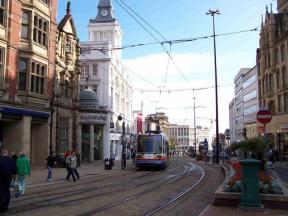
This article was commissioned by the Sheffield Branch of the Historical Association in response to an editorial invitation for items of wide Local History interest to be submitted for publication. It is hoped that John Salt's insight will encourage members to visit Sheffield and also give them ideas on what...
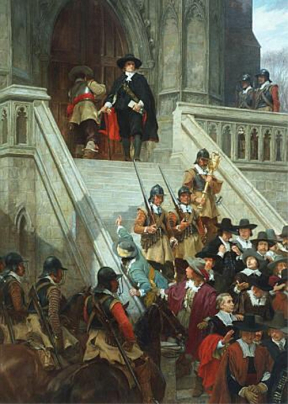
In the spring of 1643 William Lithgow, a Scot born in Lanark in 1582, who had spent most of his life travellingaround Europe, often on foot and having many fantastic adventures, decided to return to Britain. Having just turned sixty, he was obviously feeling pretty gloomy. ‘After long 40 years...
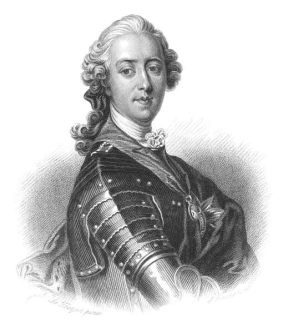
The harsh reality The 1745 Rebellion has become part of the romantic heritage in both British and Scottish history. At the time there was little romance to it. The many myths and misconceptions about Bonnie Prince Charlie and his followers need to be corrected and the glamorous image of the...
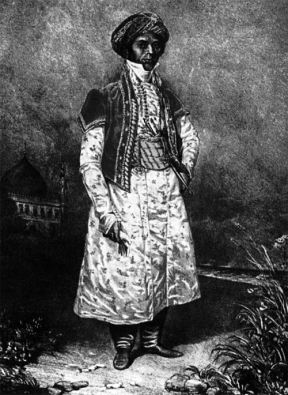
The National Portrait Gallery in London is home to many thousands of portraits, photographs and sculptures of the great and the good, as well as those who travelled on the darker side of history. In 2007 it hosted a small exhibition in the Porter Gallery entitled Between Worlds: Voyagers to...
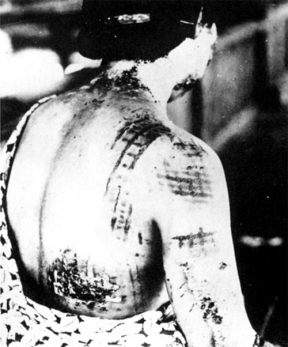
High school history teacher Brent Dyck is one of our Canadian readers. He has offered this item to The Historian as a contribution to our commitment to explore the historical approaches and values that we are seeking to convey to young people and the wider public. We hope that you...
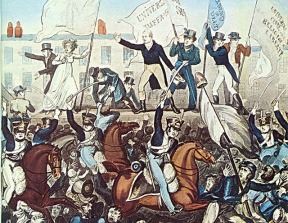
The BBC News at 10 on Saturday 5 July included an announcement that Manchester's campaign to have a memorial erected to the victims of the Peterloo Massacre had ‘got under way'. That afternoon, a workshop organised by the Peterloo Memorial campaign had encouraged members of the public to express their...

Coventry and ‘phoenix' seem to be complementary words. Different images to different people. The central medieval area of Coventry is well worth the enjoyment of a gentle stroll. It contains the potential challenge of 400 listed buildings to visit! This article is intended to be an ‘appetite-wetter' which will draw...
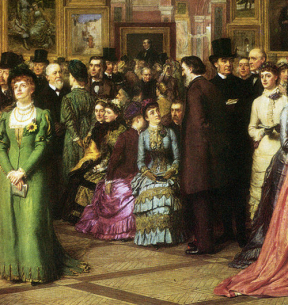
First referred to by Richard Morton (1637-98) in his Phthisiologia under the denomination phthisis nervosa as long ago as 1689, anorexia nervosa was given its name in a note by Sir William Gull (1816-90) in 1874. Gull had earlier described a disorder he termed apepsia hysterica, involving extreme emaciation without...
Though people are still sometimes prosecuted for repeatedly marrying immigrants to rescue them from the attentions of the Home Office, while forgetting to get divorced between times, one uncovenanted result of the now common practice of living together without matrimony is the decline of that celebrated Victorian institution: bigamy. In...
Why is Henrietta Luxborough, who was born in 1699, of interest today? In the first place because of whom she was; in the second because of what happened to her; and in the third because of her courage which enabled her to overcome adversity and lead a life utterly different...
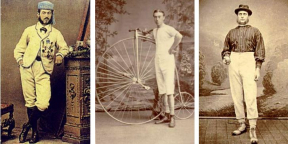
Forty-six years before the modern Olympics began, the small Shropshire market town of Much Wenlock was the seemingly unlikely setting for the establishment of an ‘Olympian Games'. Commencing in 1850, they were to become an annual festival in the town. The architect of this sporting enterprise was a local surgeon...
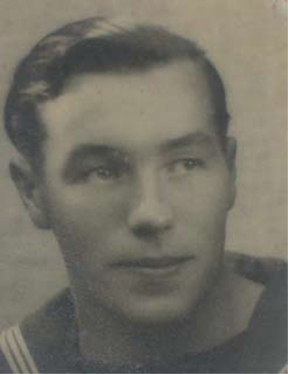
16-year-old Daisy Black of Newcastle-under-Lyme School in Staffordshire was the Senior Award winner in the Spirit of Normandy Trust Young Historian competition in 2007. Having been judged the winner by the Young Historian panel, the Spirit of Normandy Trsutees were so taken with her entry that they gave her an...
An anomaly of the British honours system is the name of the award most frequently given - the Order of the British Empire created in 1917. Each medal carries the words: ‘For God and the Empire'. When the connection between the person honoured and the church is often very tenuous...
Eastwood is a busy, small town, about twelve miles west of Nottingham. It lies just within the county boundary with Derbyshire. Its name probably derived from a settlement in a clearing of the old Sherwood Forest. It sits mostly on a hilltop, which is the meeting place for main roads...
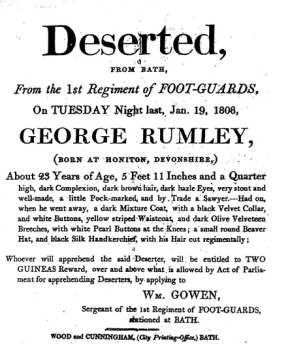
Wellington's Soldiers in the Napoleonic Wars The war with France, which began in 1793, had moved to the Iberian Peninsula by 1808. This year is therefore the two-hundredth anniversary of the commencement of the Peninsular War campaigns. War on the Peninsula demanded huge resources of manpower in order to defeat...
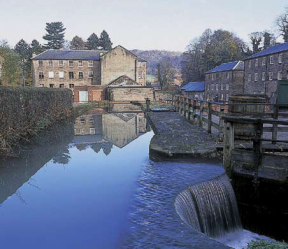
The River Derwent is a dominant feature of the Derbyshire landscape from the Ladybower Reservoir to where it joins the River Trent just south of Derby. This river is noted for the sheer power and volume of water it carries: in the 1720s Daniel Defoe observed ‘the Derwent is a...
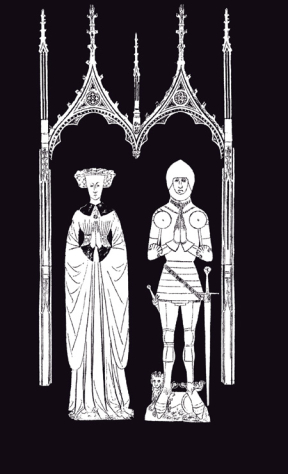
Traditionally, the Middle Ages have been portrayed as the ‘Feudal Age', when men were given land in return for performance of unpaid military service. Whilst this may have formed the basis of the English military system in the eleventh and twelfth centuries, it was most certainly not the way armies...
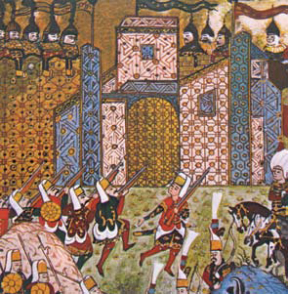
Ottoman society centred on the Sultan. He was lawgiver, religious official, leader in battle-and until the late sixteenth century an active field commander on campaign. The Law of Fratricide of Mehmet (Mohammed) II, 1451-81, urged each new Sultan to kill his brothers in order to produce a capable ruler and...
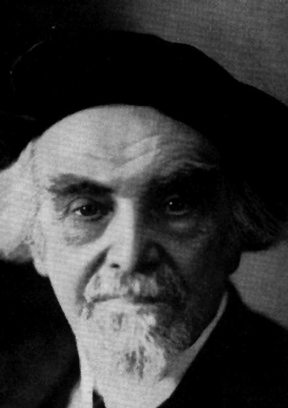
More and more historians, from diverse political viewpoints, are now expressing concern at the fragmentation of history, especially in the schools curriculum. The fragmentation of the subject has followed upon the collapse of sundry Grand Narratives, such as the ‘March of Progress', which once swept all of history into a...
Robert Stewart, 2nd Marquess of Londonderry, better known to his contemporaries and to history as Viscount Castlereagh, committed suicide on 12 August 1822, at the age of fifty-three, when Foreign Secretary and Leader of the House of Commons. He was one of the great statesmen of his age: as Chief...