Britain & Ireland 1509-1745

In this section you will find articles to help you unpick the truths from the myths of the Tudor period, examine how Cromwell took the country to war and explore how some the most important political thinkers began to shape the modern world. There is also guidance for teaching some of the information collected here to pupils and different age ranges.

Sort by: Date (Newest first) | Title A-Z
  • Royal Women: Queen Anne, Elizabeth I and Elizabeth II

    Multipage Article

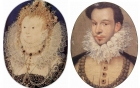
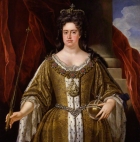
    In June 2012 the Historical Association and Historic Royal Palaces joined forces to offer a fantastic CPD opportunity in line with the Queen's diamond jubilee. Two CPD events around the theme of Royal Women charted the private histories of queens of the past from within the walls of their palaces. What...

    Click to view
  • Scottish Diplomatists 1689-1789

    Article

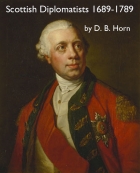
    The object of this pamphlet is to show the gradual penetration of Scotsmen after the Union into a particular branch of the public service - what may be conveniently though not very accurately described as the diplomatic service. This essay makes a study of the actual negotiations conducted by Scottish...

    Click to view
  • Seeing beyond the frame

    Article

    History teachers frequently show pupils visual images and often expect pupils to interrogate such images as evidence. But confusions arise and opportunities are missed when pupils do this without guidance on how to ‘read’ the image systematically and how to place it in context. Barbara Ormond gives a detailed account...

    Click to view
  • Shaping macro-analysis from micro-history

    Article

    Please note: this article pre-dates the 2014 National Curriculum and some content may be outdated. Many history teachers are inspired by the work of historians and want to share their stories and arguments with students in school. Hywel Jones found Malcolm Gaskill's Witchfinders ‘gripping and intriguing'. He decided to use...

    Click to view
  • Sir William Petty: Scientist, Economist, Inventor, 1623-1687

    Article

    In December 1687 Sir William Petty, a founder member, attended the annual dinner of the Royal Society. He was obviously seriously ill and in 'greate pain' and shortly afterwards, on December 16th, he died in his house in Piccadilly, opposite St James Church. It was a quiet end to a...

    Click to view
  • The Armada Campaign of 1588

    Article

    Between 1585 and 1588 a state of undeclared war existed between England and Spain. During the course of those years, Philip II devised a plan for the 'Enterprise of England'. It was probably  the most ambitious military operation of the sixteenth century: a massive invasion to be mounted jointly by...

    Click to view
  • The British Empire on trial

    Article

    In the light of present-day concerns about the place, in a modern world, of statues commemorating figures whose roles in history are of debatable merit, Dr Gregory Gifford puts the British Empire on trial, presenting a balanced case both for and against. In June 2020 when the statue of slave-trader Edward Colston...

    Click to view
  • The Cromwell Discussions: podcast series

    Multipage Article

    On the 30th June 2015, The Cromwell Association, held a series of round table discussions at Selwyn College, Cambridge. This set of podcasts feature Professor Ronald Hutton of the University of Bristol, Professor John Morrill and Dr David Smith of the University of Cambridge and Dr Patrick Little from the...

    Click to view
  • The Darien Scheme - Pamphlet

    Article

    The colonisation project that became known as the Darien Scheme or Darien Disaster was an unsuccessful attempt by the Kingdom of Scotland to become a world trading nation by establishing a colony called "Caledonia" on the Isthmus of Panama on the Gulf of Darién in the late 1690s. This pamphlet...

    Click to view
  • The Eighteenth Century in Britain: Long or Short?

    Article

    W. A. Speck reviews an historical debate central to the interpretation of the eighteenth century in Britain. Few British historians treat the eighteenth century as consisting simply of the hundred years from 1701 to 1800. Until recently political historians tended to end it in 1783. Many textbooks reflect this treatment...

    Click to view
  • The Enlightenment

    Article

    Can a movement as varied and diffuse as the Enlightenment of the eighteenth century be contained within the covers of a short pamphlet? The problem would certainly have appealed to the intellectuals of that time. Generalists rather than specialists, citizens of the whole world of knowledge, they relished the challenge...

    Click to view
  • The Establishment of English Protestantism 1558-1608

    Article

    The Reformation which Queen Elizabeth and her ministers created was a series of acts of state, but if we consider it only at the level of official hopes and pronouncements, we will paint a picture of hopeless unreality. For the Reformation to success, the government needed to follow up its...

    Click to view
  • The Evidence of the Casket Letters

    Article

    It has been well said that the last word will never be written on the tragedy of Mary Stuart, for her fate presents problems which invite solution from the historians of successive generations, and yet can never be wholly solved, If the charge brought against the Queen of complicity in...

    Click to view
  • The Local Community and The Great Rebellion

    Article

    A.M. Everitt goes past a normal look at The English Civil War, and examines individual communities and resurgence in popular interest in it. More than that, how the Civil War has been documented and what the effect of this flawed teaching and writing on the subject has had on popular...

    Click to view
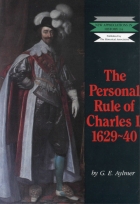
  • The Personal Rule of Charles I 1629-40

    Article

    Historians are often accused of viewing the past with hindsight, or of being wise after the event. Not being prophets or soothsayers, we have to look backwards in time because we cannot look forwards. The real question is from what vantage point or perspective we view a particular part of...

    Click to view
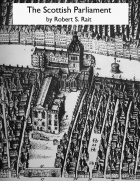
  • The Scottish Parliament by Robert S. Rait

    Article

    This short pamphlet by the former Historiographer Royal for Scotland, Robert S. Rait, provides an introduction to the Scottish Parliament from its early origins to the Acts of Union of 1707.

    Click to view
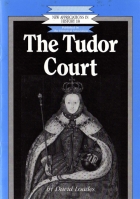
  • The Tudor Court

    Article

    In 1976, in one of his challenging Presidential addresses to the Royal Historical Society, Professor Geoffrey Elton drew attention to the importance of the court as a ‘point of contact' between the Tudors and their subjects. It was, he suggested, a central and essential aspect of personal government, but in...

    Click to view
  • The Tudor Monarchy in crisis: using a historian's account to stretch the most able students in Year 8

    Article

    Please note: this article pre-dates the 2014 National Curriculum and some content may be outdated. Contributors to this journal have long recognised that success in public examinations is at least partly achieved by carefully teaching in Key Stage 3. A critical component of A-Level is that students who wish to...

    Click to view
  • The particular and the general

    Article

    When your pupils use terms such as ‘king’ and ‘Parliament,’ what image do they have in their head? Do they know what they are talking about at all? Do they have a nuanced, period-specific vision of what these terms mean in the context of their current historical studies, and of...

    Click to view
  • Triumphs Show 150.1: meeting the challenges of the A2 synoptic unit

    Article

    A collaborative project between Richard Rose Central Academy and University of Cumbria PGCE History trainees to meet the challenges of the A2 synoptic unit. "If I tell you to eat, you will eat! You wanted cake! You stole cake! And now you've got cake! What's more, you're going to eat...

    Click to view