
Britain & Ireland 1901-present

All content for this article has been provided by Just like Us. Just Like Us has released its independent research report into the experiences of LGBT+ young people across the UK, ahead of School Diversity Week 21-25 June 2021. The report, Growing up LGBT+: The impact of school, home and...
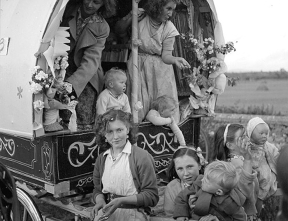
Gypsy, Roma and Traveller people are the largest minority ethnic group in some communities (and therefore in some schools) in the UK. Yet the past of Gypsy, Roma, Traveller people may rarely be part of history lessons. The result is that pupils of Gypsy, Roma and Traveller heritage may not...
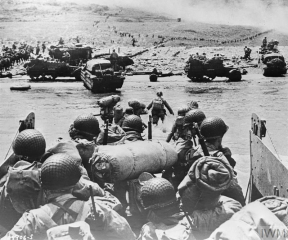
The HA has worked with film-maker, historian and Legasee ambassador Martyn Cox on a series of webinars looking at untold stories from the Second World War. Many of these stories are taken for the oral histories provided in interviews given to Martyn on film. In this filmed webinar, Martyn goes...
Field-Marshal Montgomery has a reputation as a strong-willed battle-hardened leader, with a touch of the impetuous. Few know of his charitable side and yet in his later years this side was just as important to his activities. In this article we find out a bit more of this often simplistically...
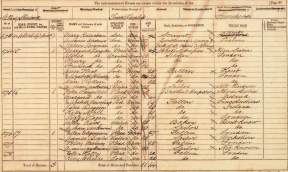
As we approach the next census in March 2021, we are reminded of what a rich historical source the census is. For historians, using the census can shine a light on particular people and places – a snapshot in time. Big stories can be told through a sharp local lens...
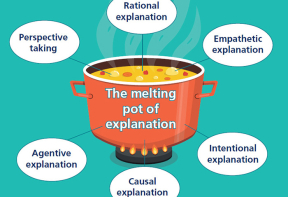
In this article Sophie Harley-McKeown identifies and addresses her Year 12 students’ blind spot over agentive explanation. Noticing that the examination board to which she teaches uses ‘motivations’ rather than ‘aims’ prompted her to consider whether her students really knew what that meant. Finding that her students’ causal explanations tended...
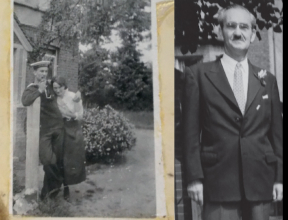
Alex Benger asks whether the mode of enquiry adopted by cultural historians, the construction of webs of past meaning from past perspectives, is underexplored in school history. Benger used a cultural history approach in his building of an enquiry for Year 9 around one man’s experience of the First World...
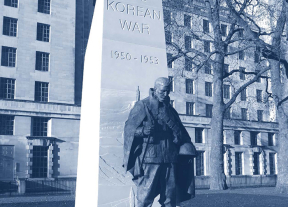
The Korean War has been called ‘The Forgotten War’. Yet it was profoundly significant to the development of the Cold War. It had a cataclysmic impact on both North and South Korea which continues to affect both nations’ development to this day. And it continues to influence relationships between the...
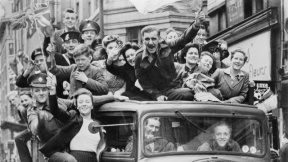
The HA has created a free resource for schools suitable for primary and also Key Stage 3, with activities differentiated for different year groups (attached below). They provide a mixture of historical knowledge and activities to get into the VE Day spirit. Please also read the notes for teachers that...
This resource is free to everyone. For access to our library of high-quality secondary history materials along with free or discounted CPD and membership of a thriving community of history teachers and subject leaders, join the Historical Association today For a long time, history curricula on the 20th century prioritised...
We hope you enjoyed reading Exploring and Teaching Twentieth-Century History. To help you explore the topic further we’ve put together a selection of just a few additional 20th-century history and teaching resources below. All these resources are available free to HA Secondary Members – find out more about Secondary Membership....
David Hibbert and Zaiba Patel decided to work together after becoming concerned that school history curricula might not enable students to interrogate popular British mythologising about World War II. Building on these pre-existing concerns, their collaboration with the historian Yasmin Khan yielded an Interpretations enquiry which asked students to consider...
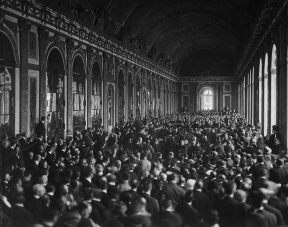
The Paris peace conference resulted in five major treaties, each with one of the defeated Central Powers. Of these the most consequential was the Treaty of Versailles with Germany, signed on 28 June 1919, which was denounced by the young economist John Maynard Keynes in his bestselling polemic The Economic...
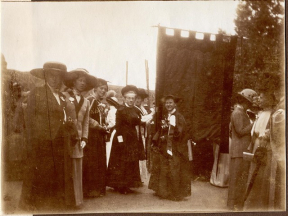
The beginnings of the nationally organised campaign for women’s suffrage began with suffragists’ orchestration of the petition to Parliament in favour of female suffrage in 1866. The petition contained almost 1,500 names from across the country and was presented to parliament by the Liberal MP John Stuart Mill; it was...
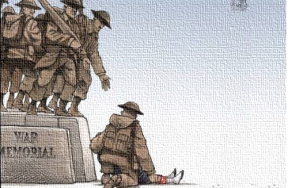
This teacher’s guide, student booklet and scheme of work for Key Stage 3 can be freely downloaded from the Canterbury Archaeological Trust website here. The project involved Year 9 students using the names on their local war memorial as the starting point for an investigation which culminated in them writing...
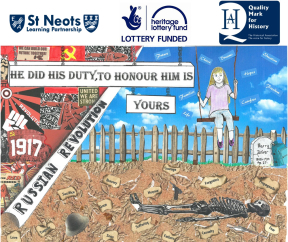
Longsands Academy, a secondary school in Saint Neots, Cambridgeshire was awarded an HA Quality Mark Silver Award in 2016. The History Department at Longsands chose to build on this success by applying for a First World War Then and Now grant from the Heritage Lottery Fund to run a community...
The Historical Association and the Institute of Physics have teamed up to deliver an exciting project for school and youth groups as part of the Royal Air Force centenary celebrations. The RAF100 Schools Project uniquely uses the professional understanding of historians and physicists working in education to create an active...
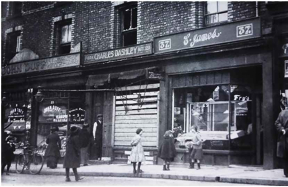
Matt Jones wanted to harness the power of local history to help his students understand the profound social changes experienced across Britain in the first half of the twentieth century. While he hoped that the personal stories of six families in Birkenhead would help to humanise abstract concepts such as...
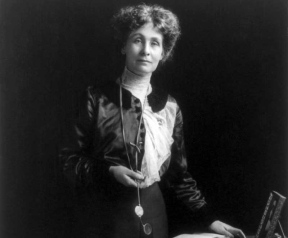
In Part 2 of our series on Social and Political Change in the UK 1800-present we look at the Women's Movement in the UK from its early origins through to the end of the 20th century Part 2 features Dr Anne Logan, Professor June Hannam and Ms Jean Spence. Also...
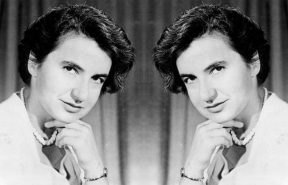
As postgraduate historians with teaching responsibilities at the University of York, Bridget Lockyer and Abigail Tazzyman were concerned to tackle some of the challenges reported by their students who had generally only encountered women’s history in a disconnected way through stand-alone topics or modules. Their response was to create a...