
Britain & Ireland 1901-present
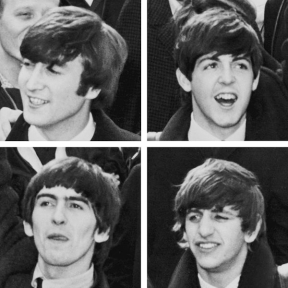
‘The Beatles were history-makers from the start,' proclaimed the liner notes for the band's first LP in March 1963. It was a bold claim to make on behalf of a beat combo with one charttopping single, but the Beatles' subsequent impact on 1960s culture put their historical importance (if not...
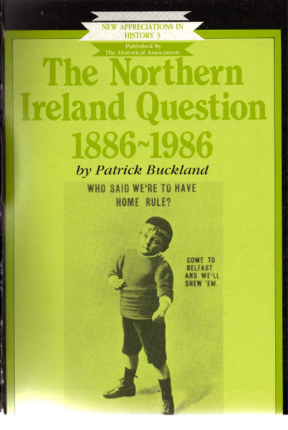
The nature of the rights of majorities and minorities is one of the most intractable of the issues raised by the Northern Ireland question, especially since much depends on definitions. Ulster Protestants are a majority in that province but a minority in both Ireland and the United Kingdom, while Catholics,...

Why did the British get pensions when they did? What part did the great social surveys (Booth and Rowntree) play? Was there something rotten at the heart of Empire? What part did fears of a Red Peril play? Was Britain slow, with Bismarck and even the Tsar providing some measures...
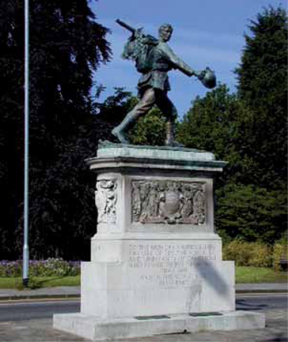
Over the past two decades the historiography of the Great War has witnessed something of a revolution. Although historical revisionism is, of course, nothing out of the ordinary, the speed with which long-held assumptions about the First World War and its impact have been swept away has been quite astonishing....
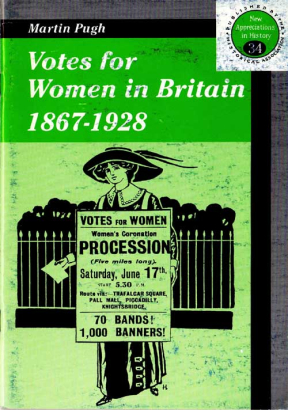
This classic pamphlet takes you through the Votes for Women in Britain movement from its origins to its eventual success, following the case for women's suffrage presented, tactics and strategies, the anti-suffragist argument, party political complications, international perspectives, the Pankhursts and militancy, the revival of non-militant suffragism, the impact of...
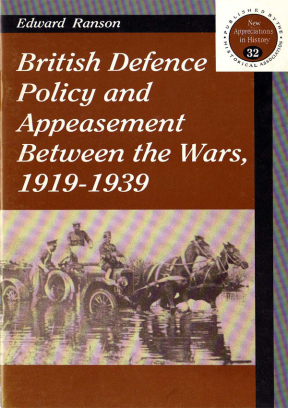
Armed forces never exist in isolation, but always operate against a background of political, economic, social, cultural, intellectual and ideological conditions and attitudes, as well as in relation to diplomatic and strategic factors. Some governments regards their military forces especially their armies, more as instruments for maintaining internal order than...
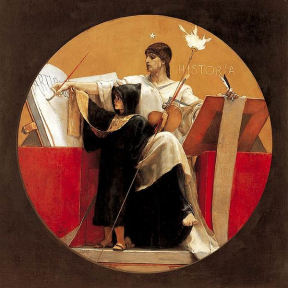
Making History Making History, developed by the Institute of Historical Research, is dedicated to the history of the study and practice of history in Britain over the last hundred years and more, following the emergence of the professional discipline in the late 19th century. Contents This website contains cross-referenced entries...
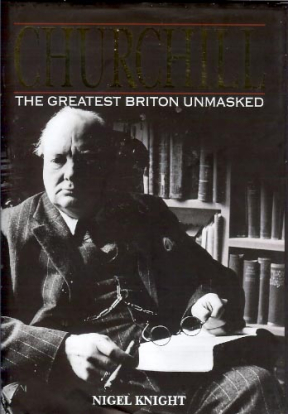
Churchill: The Greatest Briton Unmasked by Nigel Knight. David & Charles, Sept 2008, £14.99; ISBN: 978 0 7153 2855 2 Reviewed by Alf Wilkinson Nigel Knight, a lecturer in British Government at Cambridge, has written a revisionist analysis of Churchill and his achievements. Based on extensive research he has set...
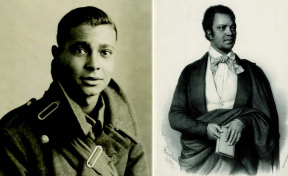
Produced by the Northamptonshire Black History Association and originally published in 2008, this is one of a set of resources for schools offering a more inclusive map of the past that includes an appreciation of Black History within the local, national and global context. The resources provide a range of...

Leisure time - like time itself - is fluid, and keeps changing its social meanings. From a ‘serious' high political perspective there is no history of leisure and leisure is trivial. Such perspectives have long lost their grip on the historical imagination, of course, and we have had histories of...
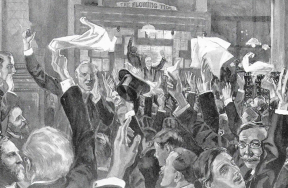
On 1 May 1997 the Conservative party suffered an electoral defeat so overwhelming that political commentators were left rummaging through the statistics of the previous two centuries to find anything similar. The Times concluded on 3 May that it was the party's worst performance since 1832, though 'The disaster suffered...
History is the study of the past; some of the past is more recent than a glance over many schemes of work might lead us to think. Chris Culpin makes the case for ignoring the 20 year rule and tackling head on – and, crucially, historically – the big issues...
Polychronicon was a fourteenth-century chronicle that brought together much of the knowledge of its own age. Our Polychronicon in Teaching History is a regular feature helping school history teachers to update their subject knowledge, with special emphasis on recent historiography and changing interpretation. This edition of 'Polychronicon' investigates World War...
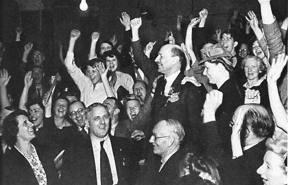
‘The past week will live in history for two things’, announced the Sunday Times of 29 July 1945, ‘first the return of a Labour majority to Parliament and the end of Churchill's great war Premiership.’ Most other newspapers concurred. The Daily Mirror, of 27 July, proclaimed that the 1945 general...
Lloyd George, who died sixty years ago on 26 March 1945, grew up and began his Parliamentary career in Queen Victoria's reign. In taking up a major Welsh issue, disestablishment of the Church of Wales, he memorably clashed with William Ewart Gladstone, perhaps the greatest of all Liberal Prime Ministers....
Polychronicon was a fourteenth-century chronicle that brought together much of the knowledge of its own age. Our Polychronicon in Teaching History is a regular feature helping school history teachers to update their subject knowledge, with special emphasis on recent historiography and changing interpretation. This edition of 'Polychronicon' considers the historical...
This was an opportunity all good historians dream about. A large box crammed with artefacts about a soldier who fought in the First World War, just begging to be read, studied, sorted and organised. Being faced with such a wealth of uncatalogued primary evidence could have proved daunting enough without...
History teacher and head of department stand outside noisy Year 9 class. Bombs (paper ones) fly everywhere; in corner of room mutiny is being discussed ... many pupils are refusing to follow their leader's last minute orders - they will not be opting for history! The war of attrition (excessive...
Ben Walsh presents a structured practical activity for teaching pupils about Northern Ireland through the use of murals. The activity can be carried out in Year 9 as part of a study on the twentieth-century world, or as part of a GCSE course. He stresses the importance of an informed...
All of this edition is based on the assumption that the teaching of history can have a significant impact upon the values, views and attitudes of our pupils. But how much impact does it have and of what type? And do we ever examine that impact in order to rethink...