
Early Medieval
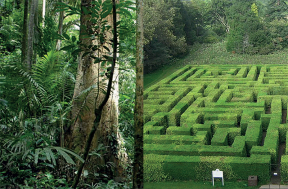
The defining qualities of a good enquiry question have been regularly revisited by contributors to Teaching History in the 25 years since Riley first outlined what he saw as three essential characteristics. Despite these endeavours, Ben Arscott notes that the properties of a good enquiry question remain somewhat elusive. His...
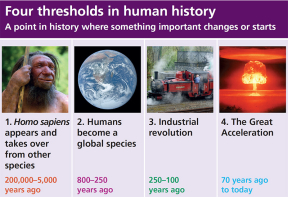
How can we bring climate change into our classrooms without making it ‘small’? Peter Langdon tackled this question by drawing on a ‘big history’ approach to design an enquiry that allowed his students to think about the relationship between humans and climate throughout the whole history of our species. Langdon’s...
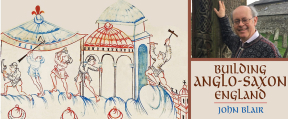
Building Anglo-Saxon England demonstrates how recent excavations enable us to grasp for the first time the diversity of the Anglo-Saxon built environment. The book explores how the natural landscape was modified for human activity, and how settlements were laid out with geometrical precision by specialist surveyors. It also shows how...
In this Virtual Branch talk best-selling author and renowned historian Marc Morris joined us to discuss the process of researching for, structuring and writing his new book The Anglo-Saxons: a history of the beginnings of England. Drawing on a vast range of original evidence - chronicles, letters, archaeology and artefacts...
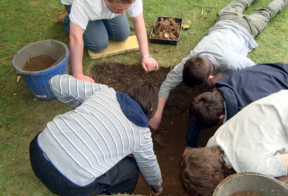
In March 2020, when Covid-19’s lockdown restrictions saw schools closed to the majority of children, Carenza Lewis quickly began thinking of ways to help both teachers and parents. Drawing on extensive experience of enabling children and young people to learn from practical engagement in archaeology, she came up with a...

Cunning Plan for using the metaphor of a tree to help students characterise the process of change and engage with a historian’s argument. In this Cunning Plan, Eve Hackett sets out how she used a recent work of history about the Norman Conquest as inspiration for her teaching of Year...
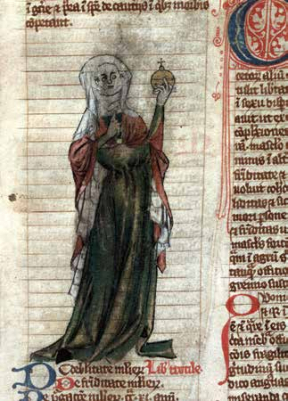
The history of medicine, health, and illness between c. 500 AD and 1500 has received a great deal of scholarly attention in recent decades. It’s a fascinating field that can tell us a great deal about medieval people’s everyday lives and their day-to-day worries: after all, everyone is ill or...
This resource is free to everyone. For access to our library of high-quality secondary history materials along with free or discounted CPD and membership of a thriving community of history teachers and subject leaders, join the Historical Association today Three words sum up the approach of this publication to the...
Medieval history is on the rise. Among the many recent reforms in the history curriculum is a requirement for medieval themes at GCSE and across the country the new linear A-level offers fresh opportunities for teachers to look beyond the traditional diet of Tudors and modern history. The huge divide...
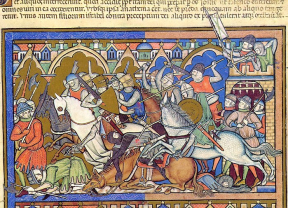
Medieval history has always been a Cinderella era for post-16 students. Some schools offer A-levels in classical civilisation, but most A-level history courses focus on the early-modern and modern periods. A few schools teach an A-level medieval module, with the Crusades being a popular choice. I was therefore excited at...
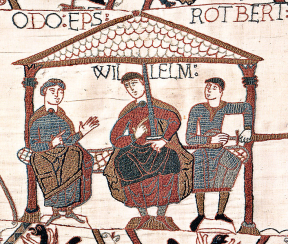
As the most pivotal and traumatic event in English history, the Norman Conquest continues to generate controversy and debate, especially among those who know little about it or enjoy passing judgement on the past. Who had the better claim to the English throne, William the Conqueror or Harold Godwineson? Was...
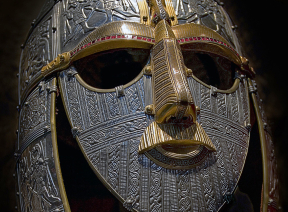
In this HA Podcast Series Professor Joanna Story of the University of Leicester looks at the history of the Anglo-Saxons.
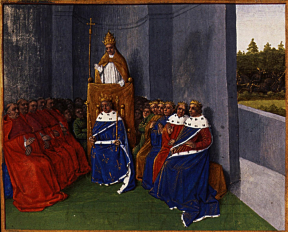
An HA Podcasted History of the Crusades featuring Professor Jonathan Riley-Smith, Professor Jonathan Phillips of Royal Holloway, University of London and Dr Tom Asbridge of Queen Mary, University of London.
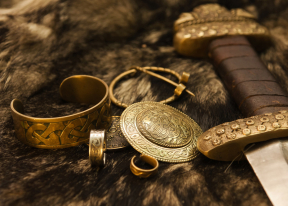
An HA Podcasted History of the Vikings featuring Professor Rosamond McKitterick, Sidney Sussex College, University of Cambridge.
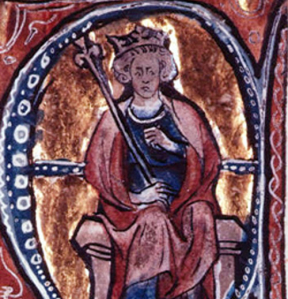
When Queen Victoria died in 1901, the Annual Register remarked that the feeling of forlorn-ness which swept the country had no parallel since the death of King Alfred. The men of the new century were driven to seek a Saxon parallel. So too were men at the beginning of the...

An HA Podcasted History of the Rise of an Islamic Civilisation featuring Dr Caroline Goodson of Birkbeck, University of London.
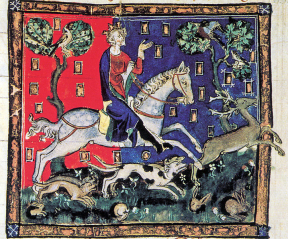
Magna Carta provided a commentary on the ills of the realm in the time of King John. Sophie Ambler looks at what grievances were addressed in the Charter, how the Charter was made, and what the Charter tells us about King John himself. The world from which Magna Carta came...
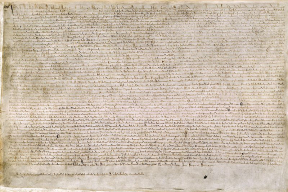
Magna Carta was to go through a number of revisions before it finally took its place on the statute book. Nicholas Vincent takes us through the twists and turns of the tale of the Charter's death and revival after June 1215. The Charter issued by King John at Runnymede is...
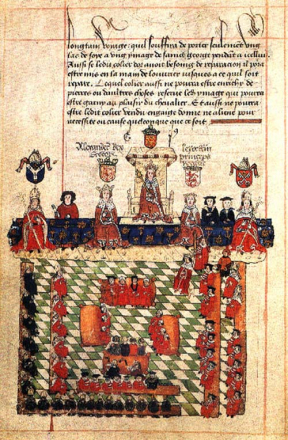
In February this year the four surviving originals of Magna Carta were briefly brought together in the Houses of Parliament. John Maddicott, examining the Charter's role in the early development of Parliament, shows that the setting was well chosen. What did Magna Carta contribute to the origins of parliament? If...
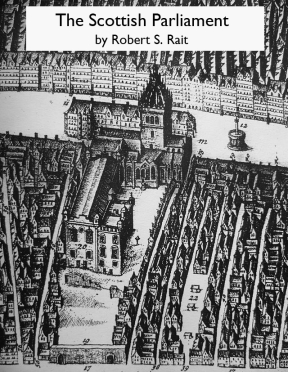
This short pamphlet by the former Historiographer Royal for Scotland, Robert S. Rait, provides an introduction to the Scottish Parliament from its early origins to the Acts of Union of 1707.