
Europe 1066-1509
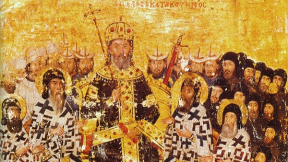
Medieval history is often a story of kings and their dates, primarily of England or, at best, western Europe. This funded webinar series aimed at secondary history teachers will introduce teachers to educational approaches to the Middle Ages that go beyond both kings and this narrow geographical range. It takes...
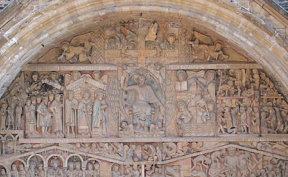
In principle, Rachel Foster had long been aware of the value of creating an interplay between depth and overview across the history curriculum. But in practice, as she acknowledges here, she had tended to shy away from telling outline stories that encompassed a big chronological or geographical range. Recognising the...
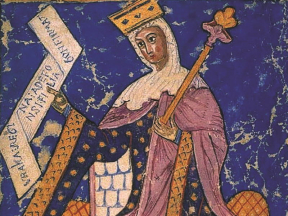
How was the power of a Queen described and how far did It extend? In this article some of the most important queens of the Medieval period are examined for the authority they were able to wield. When we think of queens, the idea that they are extraordinary women, elevated...
History Abridged: This feature seeks to take a person, event or period and abridge, or focus on, an important event or detail that can get lost in the big picture. See all History Abridged articles Towards the end of the Bronze Age, the climate across Europe began to warm. This...
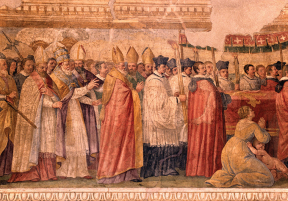
Much has been written in recent years about how historical scholarship can be used to shape practice in the classroom. As an historian of the medieval period now working as an history teacher, Dhwani Patel offers a fresh perspective on these debates. During her PGCE year, Patel found herself reflecting...
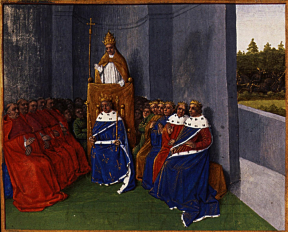
An HA Podcasted History of the Crusades featuring Professor Jonathan Riley-Smith, Professor Jonathan Phillips of Royal Holloway, University of London and Dr Tom Asbridge of Queen Mary, University of London.
Do they learn about Agincourt in France? 2015 was a year of anniversaries. As part of our funded commemoration projects surrounding the 600th anniversary of the Battle of Agincourt, we have commissioned an enquiry looking at the battle and how it has been remembered, particularly aimed at pupils in years...
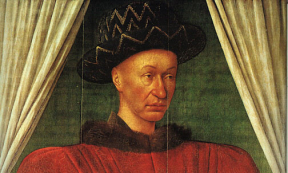
How can a war last 100 years? What did this mean for the peoples of England and France during the medieval period? How significant were the battles of Poitiers, Crecy and Agincourt? In this podcast series the 100 Years War is explained, explored and brought to life. The lists of...
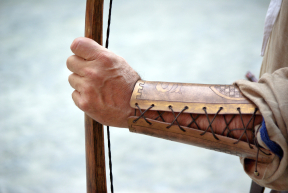
Adam Chapman debates the evidence for a Welsh presence among Henry V’s highly-successful force of archers at Agincourt in 1415. Michael Drayton, in his poem of 1627, The Bataille of Agincourt, described the Welsh presence in Henry V's army: ‘who no lesse honour ow'd To their own king, nor yet...
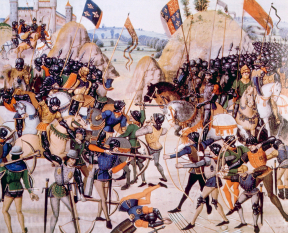
In the tradition of landscape historians, Peter Hoskins has explored some of the route marches taken by English armies during the Hundred Years War. After the battle of Crécy in 1346 and the capture of Calais by Edward III in the following year the Hundred Years War settled into an...
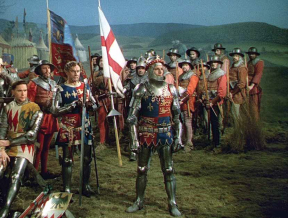
Public attitudes to Henry V are very much influenced by WilliamShakespeare's interpretation. Richard Inverne discusses howShakespeare's version has been translated into cinematic form byLaurence Olivier and Kenneth Branagh. Shakespeare indulges himself considerably with his own relatively recent history - Richards II and III, Henrys IV, V and VI, for example....
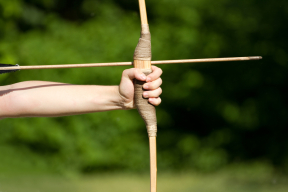
Our perspective on how archers performed in battle is enhanced byMark Hinsley's research into their use of protective stakes. On the approach to Agincourt in 1415 a small skirmish took place at Corbie, on the Somme. A force of French men-at-arms sallied out from the town and cut up some...
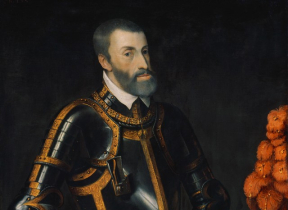
An HA Podcasted History of the Spanish Golden Age featuring Dr Glyn Redworth of Manchester University and Dr Francois Soyer of the University of Southampton.
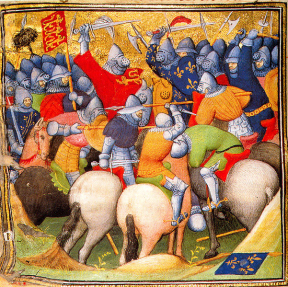
Agincourt has become one of a small number of iconic events in our collective memory. Anne Curry explores how succeeding generations have exploited its significance. In his budget statement of 18 March 2015 the Chancellor of the Exchequer, George Osborne, announced £1m had been awarded to commemorate the 600th anniversary...
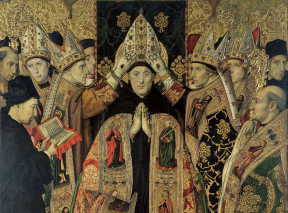
In this set of podcasts Professor Miri Rubin of Queen Mary University of London, Professor Robert Swanson of the University of Birmingham & Dr Francois Soyer of the University of Southampton look at Christianity, Judaism and Islam in Medieval Europe.
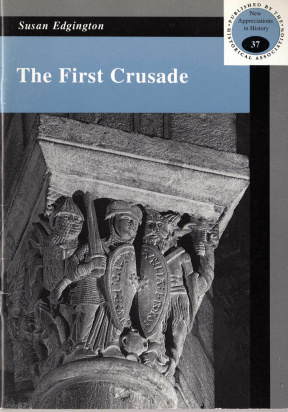
Nine centuries after enthusiasm for pope Urban's expedition to Jerusalem swept western Europe the phenomenon of the first crusade continues to fascinate. This pamphlet examines the nature of the crusades and the motives of those who joined it, describes the hardships of the long journey to the Holy Land and...
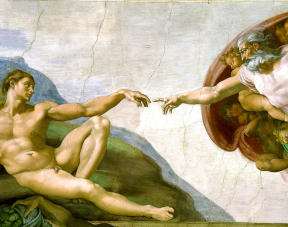
In this podcast Dr Gabriele Neher of the University of Nottingham provides an introduction to the Renaissance.
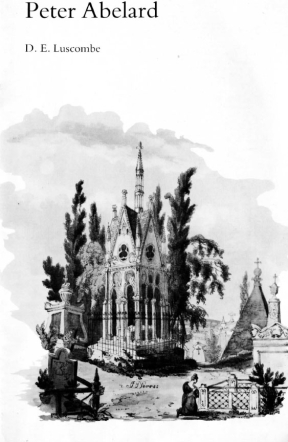
The Catalogue of Printed Books in the British Library contains a large number of entries under the name of Peter Abelard. Most relate to books published in the last two hundred years and most of the editions of works written by Abelard, as distinct from books about him or about...
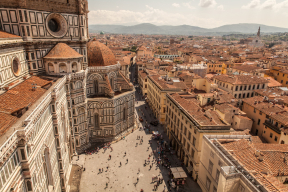
In this podcast Dr Anne Murphy of the University of Hertfordshire looks at the early origins of the European financial markets from the Italian Renaissance to the present day. Dr Murphy also provides a useful introduction to finance, the stock market and the bond market.
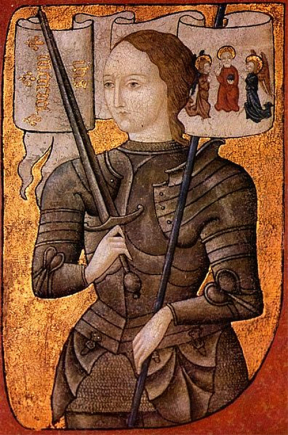
In 2011 Professor Anne Curry, President of the Historical Association, gave a lecture on Joan of Arc to the Swansea Branch. This is a podcast of that lecture.