Europe 1901-present

While war seems to be a backdrop to events in Europe in this time period the articles collected here explore many of the wider impacts and elements to the war. Medicine and technology are explored alongside dramatic changes in social attitudes. The political events that disrupt and shape Europe of the 20th century are explored though a range of engaging articles that include Russia and the USSR, Fascism and European co-operation.

Sort by: Date (Newest first) | Title A-Z
Show: All | Articles | Podcasts | Multipage Articles
  • Triumphs Show 192: Balancing micro- and macronarratives of the Holocaust

    Article

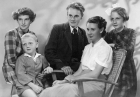
    Lien de Jong celebrates her 90th birthday in September 2023. In lots of ways, her biography is similar to many Europeans of her generation. She was born, grew up and went to school in The Hague during the 1930s. She trained to work in a nursery. In the 1950s, she...

    Click to view
  • Triumphs Show 193: Year 8 imagine the First World War trenches

    Article

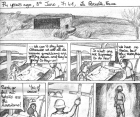
    Deep into my PGCE year, I found myself discussing with my mentor how to pre-empt the barriers to understanding the past that students may face. One barrier we discussed was presentism: the tendency of students to interpret the past in light of their own modern knowledge, values and experiences. In particular, we considered...

    Click to view
  • Triumphs Show: Diversifying the curriculum at A-level

    Article

    There is a wealth of literature arguing for the importance of accommodating a wide range of perspectives and experiences in school history curricula. Many have contended that it is crucial to include the stories of those traditionally omitted from historical records in order to teach history well. Others have emphasised...

    Click to view
  • Triumphs Show: Recovering the queer history of Weimar Germany in GCSE history

    Article

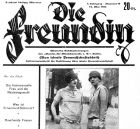
    Berlin staged its first Christopher Street Day celebration in 1979. This queer pride event commemorated the Stonewall riots that took place a decade earlier in New York City, and it has continued to be a popular annual event in Germany. Its celebration of a landmark moment in American history, however,...

    Click to view
  • Triumphs Show: ‘The Strands of Memory’

    Article

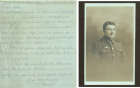
    In 2014, a group of French pupils from Lycée Léopold Sédar Senghor in Évreux was due to meet a British Second World War veteran, Eric Rackham, to hear him talk about his war experiences. Sadly, he passed away before the planned meeting. Paradoxically, this failed meeting led to the development...

    Click to view
  • Unsung Heroes: The British Merchant Navy WW2

    Multipage Article

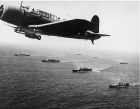
    The British Merchant Navy was a term that applied to the employees of British shipping companies whose vessels ranged from the sleekest ocean liners to obsolete tramp steamers. Merchant seamen already included contingents of Black, Asian and Arab sailors and the British Merchant Fleet was swelled between 1939 and 1945...

    Click to view
  • Using nominalisation to develop written causal arguments

    Article

    How nominalisation might develop students’ written causal arguments Frustrated that previously taught writing frames seemed to impede his A-level students’ historical arguments, James Edward Carroll theorised that the inadequacies he identified in their writing were as much disciplinary as stylistic. Drawing on two discourses that are often largely isolated from...

    Click to view
  • Using the concept of place to help Year 9 students to visualise the complexities of the Holocaust

    Article

    Inspired by the work of the social and cultural historian Tim Cole, Stuart Farley decided to look again at the way he teaches the Holocaust. He wanted to focus on the geographical concept of place as a way of enabling his Year 9 students to build far more diverse narratives,...

    Click to view
  • Using visual sources to understand the arguments for women's suffrage

    Article

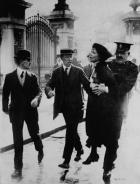
    Visual sources, Jane Card argues, are a powerful resource for historical learning but using them in the classroom requires careful thought and planning. Card here shares how she has used visual source material in order to teach her students about the women's suffrage movement. In particular, Card shows how a...

    Click to view
  • Using ‘Assessment for Learning' to help students assume responsibility

    Article

    Robin Conway's interest in student led enquiry derived from a concern to encourage his students to take much more responsibility for their own learning. Here he explains how his department gradually learned to entrust students with defining the enquiry questions and planning the kinds of teaching and learning activities to be...

    Click to view
  • VE Day: free home learning resource

    5th May 2020

    The HA has created a free resource for schools suitable for primary and also Key Stage 3, with activities differentiated for different year groups (attached below). They provide a mixture of historical knowledge and activities to get into the VE Day spirit. Please also read the notes for teachers that accompany...

    Click to view
  • Virtual Branch recording: The Maginot Line

    Article

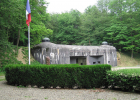
    Why did the the Maginot Line – that marvel of 1930s engineering with its miles of fortifications and bunkers to deter German invasion – fail so spectacularly in 1940?  Its vast underground forts were designed to withstand artillery and chemical attack, yet France fell in just six weeks, leaving the Line as a symbol...

    Click to view
  • Virtual Branch recording: Why has Monarchy survived in Europe?

    Article

    In the lead-up to the Queen's Platinum Jubilee, Dr Bob Morris joined the HA Virtual Branch in March 2022 to consider why the monarchy has survived in Europe.  Dr R. M. (Bob) Morris is a Senior Honorary Research Associate at the Constitution Unit, University College London. He was formerly a...

    Click to view
  • WWI and the flu pandemic

    Article

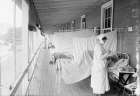
    In our continuing Aspects of War series Hugh Gault reveals that the flu pandemic, which began during the First World War, presented another danger that challenged people’s lives and relationships. Wounded in the neck on the first day of the battle of the Somme, 1 July 1916, Arthur Conan Doyle’s son Kingsley...

    Click to view
  • Waking up to complexity

    Article

    Waking up to complexity: using Christopher Clark's The Sleepwalkers to challenge over-determined causal explanations Teaching student to construct causal argument is a staple of history teaching and, in this year, questions about the causes of the First World War are particularly pertinent and once again the public eye. Claire Holliss,...

    Click to view
  • What Have Historians Been Arguing About... immigration in French history

    Article

    3 July 2024 marks the 50th anniversary of a significant, yet little known, event in French history: the declaration of an end to the recruitment of economic migrants. Over the previous decades, some three million migrant workers had arrived to surprisingly little fanfare, building the economic growth later mythologized by...

    Click to view
  • What kinds of feedback help students produce better historical narratives of the interwar years?

    Article

    Narrative has begun to take its place alongside the essay, for so long the stereotypical currency of the history teacher and student. In this work, based on his experiences as a PGCE student, Alex Rodker argues powerfully that it is time now to consider how to help students to produce...

    Click to view
  • What’s in a narrative? Unpicking Year 9 narratives of change in Stalin’s Russia

    Article

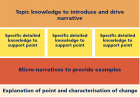
    Is it structure or the selection of knowledge that makes writing historical narrative so difficult? Where does a conceptual focus on change, or causation, come in? James Ellis set out to explore the challenges his Year 9 pupils faced in writing historical narratives about change. Inspired by the work of...

    Click to view
  • Whose past is it anyway? Telling Russian and Soviet history through diverse Jewish voices

    Article

    When Alistair Dickins came to teach A-level Russian and Soviet history (1855–1964) he was rather surprised by the very limited references to Jewish history within the exam board specification. His own detailed knowledge in this area (a ‘little side-project’ from his doctorate on the Russian Revolution), led to a revision of the course. This article...

    Click to view
  • Why do we continue to study the Holocaust?

    Article

    Educators at Imperial War Museums (IWM) have been leading voices in Holocaust education since the Holocaust Exhibition opened at IWM London in June 2000. In this article, Clare Lawlor shares the design of IWM’s new Holocaust Learning Programme for schools, and the pedagogic research that underpinned the design process. The...

    Click to view