
Inclusion
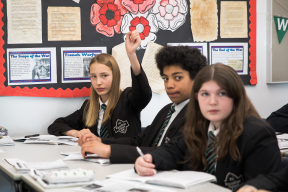
In the Curriculum and Assessment review, the importance of oracy has been highlighted and strengthened across all subjects. However, this can lead to generic approaches. In this film in partnership with the English Association, we examine oracy in both subjects, looking at what where there is common ground and what...

Move Me On is designed to build critical, informed debate about the character of teacher training, teacher education and professional development. It is also designed to offer practical help to all involved in training new history teachers. Each issue presents a situation in initial teacher education/training with an emphasis upon...
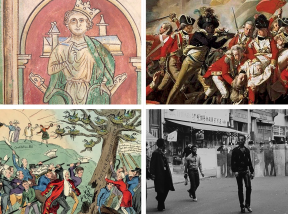
Have you ever felt that teaching significance at Key Stage 4 is hard with a limited cast of characters? Do students ask questions that you don’t have the resources to answer? Are you stuck for sources that push the standard narratives of key topics? These four workshops will fix that:...
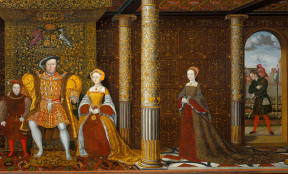
After listening to a talk by historian Phillipa Vincent-Connolly and following this up with reading about disability in history, Alex Fairlamb examined her own department’s teaching to consider how effectively it included narratives of disabled people. This was the beginning of a productive journey. She concluded that much more needed...
Move Me On is designed to build critical, informed debate about the character of teacher training, teacher education and professional development. It is also designed to offer practical help to all involved in training new history teachers. Each issue presents a situation in initial teacher education/training with an emphasis upon...
Move Me On is designed to build critical, informed debate about the character of teacher training, teacher education and professional development. It is also designed to offer practical help to all involved in training new history teachers. Each issue presents a situation in initial teacher education/training with an emphasis upon...
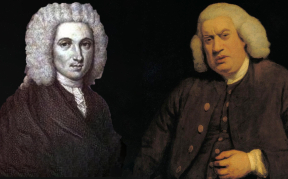
In Episode 6, Dr Declan Kavanagh (University of Kent) discusses the development of ideas around, and responses to, disability in Britain and Ireland in the 18th century. Dr Kavanagh examines the definition given in Samuel Johnson’s Dictionary in 1755 and looks at the medical and charity models of responding to...
My students struggle with... Every student has an entitlement to learn history and to high quality history teaching. In this section you will find support for helping students who struggle with specific aspects of learning history. For each aspect of learning history that students struggle with you will find: A...
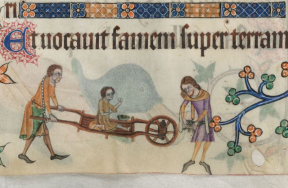
Disabled people are part of the fabric of every society past and present, yet the stories, achievements and struggles of disabled people have often been hidden or marginalised by societies who refuse to adapt. Coping with disability, societal attitudes towards disability and the stories, voices and contributions of disabled people...
Danielle Donaldson’s history department was already working within a professional culture that sought opportunities for making the history curriculum diverse and representative. Responding to wider debates within and beyond the history education community, however, the department began to ask fresh questions about what it meant to decolonise a curriculum. Donaldson...
At the end of March the Department for Education published both an education white paper and a green paper and consultation stemming from the long awaited SEND review, first commissioned in 2019. Among other things, the white paper outlined a further drive towards the formation of larger multi academy trusts...
Many history teachers have been busy making space in their curriculum plans for different sorts of histories. This process, as Priyamavda Gopal has argued (in response to claims that moves to decolonise the curriculum constitute an attempt to censor history by editing out those bits viewed as ‘stains’ on the...
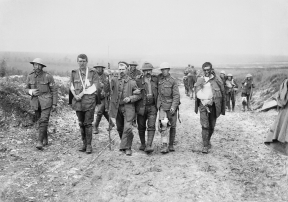
This webinar was presented by Richard Rieser, who is a campaigner and champion for disability rights and the coordinator of UK Disability History Month. His presentation is part of our ongoing work to explore disability history and the arguments and representations of it and ensure that people from disability groups...
Whilst many teachers in mainstream schools now have useful links with primary coordinators and have a working knowledge of how the curriculum is approached and implemented in Key Stages 1&2, few colleagues have contact with special schools and the expertise which our colleagues in special education can share with us...
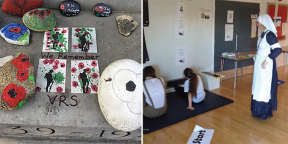
In this update, I plan to share ideas and practice from colleagues who lead and teach history in special schools in the northeast of England. Ten years have passed since the publication of History for All and this therefore seems a good moment for reflection. By 2011, in many of...
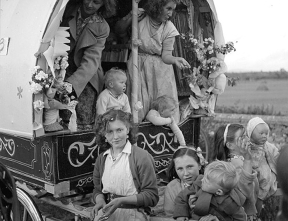
Gypsy, Roma and Traveller people are the largest minority ethnic group in some communities (and therefore in some schools) in the UK. Yet the past of Gypsy, Roma, Traveller people may rarely be part of history lessons. The result is that pupils of Gypsy, Roma and Traveller heritage may not...
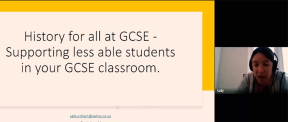
In this webinar recording aimed primarily at beginning teachers, Sally Burnham looks at practical strategies to help motivate and support our lower attainers in the history classroom, particularly at GCSE. She explores ways to help students develop secure knowledge, recall that knowledge and use the knowledge effectively so that all...
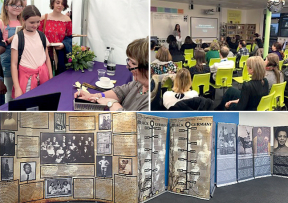
In this article, Jess Angell shows how her department seeks to make extra-curricular activities accessible to all. There is a strong focus on involving professional historians, since so many students seem not to understand who historians are, or what they do. But the audience is wider than just history students:...
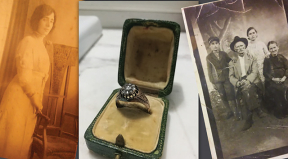
Teaching in Greece, a country with extensive recent experience of immigration, Maria Vlachaki and Georgia Kouseri were interested to examine how they might use family history as a means of exploring the historical dimensions of this potentially sensitive topic. They hoped that encouraging pupils to explore their relatives’ stories would...
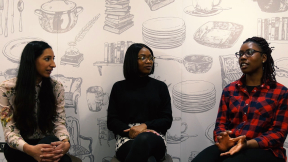
This resource is free to everyone. For access to our library of high-quality secondary history materials along with free or discounted CPD and membership of a thriving community of history teachers and subject leaders, join the Historical Association today This film (above) recorded in March 2019 features a discussion between...