
Substantive concepts
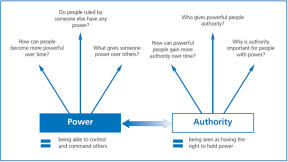
Several years back, Alistair Dickins and Tommy-James Alexander realised they wanted to incorporate explicit consideration of substantive concepts into their Key Stage 3 teaching, to enable students to make sense of and order information about the past and to offer students a usable language that would support their historical reasoning....
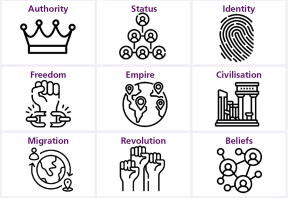
A central organising principle of any curriculum is the substantive concepts that underpin it. They provide a secure structure and enable students to develop deep understanding through multiple encounters with essential abstract ideas that are given concrete form in different historical contexts. Identifying the different levels or tiers to which...

Move Me On is designed to build critical, informed debate about the character of teacher training, teacher education and professional development. It is also designed to offer practical help to all involved in training new history teachers. Each issue presents a situation in initial teacher education/training with an emphasis upon...
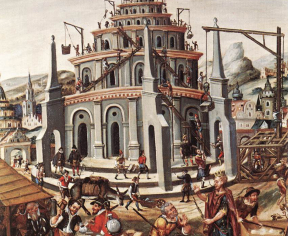
My students struggle with... Every student has an entitlement to learn history and to high quality history teaching. In this section you will find support for helping students who struggle with specific aspects of learning history. For each aspect of learning history that students struggle with you will find: A...
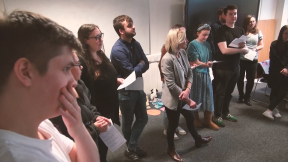
Active learning strategies are engaging but, far more importantly, they make history learning memorable, they encourage resilience and independence, and they are an excellent way to make complex history accessible for all. When used with clear purpose and with knowledge of specific students' needs, they are a tried and tested...
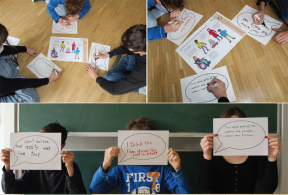
Although perhaps unfamiliar to the majority of our readers, concept cartoons are not a new educational tool. Christoph Kühberger here lays out his rationale for using this technique, borrowed from science education, in history teaching. Concept cartoons provide a means for pupils to express such difficult historical concepts as the...
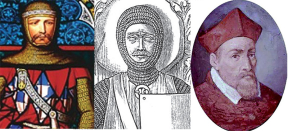
Diane Relf was concerned by what felt like an unbridgeable gulf between Year 7’s vocabulary and comprehension, and her aspirations both for their inclusion in history and their later academic success. As a subject leader without the benefit of any history-specific training at the start of her career, she embarked...
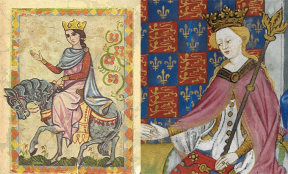
Dissatisfied by her previous enquiries on medieval kingship and inspired by Helen Castor’s 'She-Wolves', Elizabeth Carr sought to incorporate the stories of powerful medieval women such as Empress Matilda and Eleanor of Aquitaine into her Key Stage 3 curriculum. Carr used these stories to highlight to her pupils the crucial...
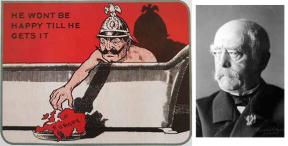
Frustrated by her students’ glib use of catch-all terms such as ‘militarism’ in addressing causation, Alexia Michalaki wanted her Year 9 students to produce mature causal explanations of World War I. To encourage this to happen she went back into decades of pedagogical writing and research, teasing out the ways...
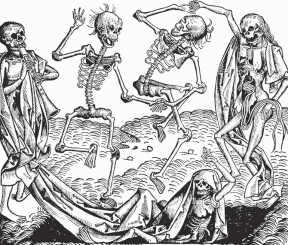
In the summer of 1348, the Chronicle of the Grey Friars at Lynn described how sailors had arrived in Melcombe (now Weymouth) bringing from Gascony ‘the seeds of the terrible pestilence’. The Black Death spread rapidly throughout England, killing approximately half the population. While the cause of the disease, the...
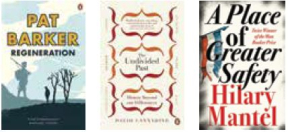
Discussions with sixth-form students about reading led Carolyn Massey and Paul Wiggin to start a sixth-formreading group. They describe here the series of themed sessions that they planned, and the student discussion and reflections that resulted. Listening to their students discuss their reading led Massey and Wiggin to reflect on...

This feature is designed to build critical, informed debate about the character of teacher training, teacher education and professional development. This issue’s problem: Eleanor Franks doesn’t really understand her students’ frames of reference and the difficulties that many of them have in making sense of the particular historical phenomena she...

This page is for those new to the published writings of history teachers. Each problem you wrestle with, other teachers have wrestled with too... History is a complex enterprise. In order to produce sophisticated arguments, pupils need firm foundations. One foundation is knowledge of the argumentative structures that historians deploy,...

What, exactly, is learned knowledge - and why does it matter in history teaching? Michael Fordham seeks to use the general tenets of cognitive psychology to inform the debate about how history teachers might get the best from their students, in particular in considering the role of memory. Fordham surveys...

"What shall I say next? We were all indeed huddled together like sheep in a fold, trembling and frightened, surrounded on all sides by enemies so that we could not turn in any direction. It was clear to us that this had happened because of our sins. A great clamour...
There are three basic strands to our lessons. How should we teach? What skills should we enable our students to build? What content should we use to deliver those skills? In this article Tony McConnell, who has been re-designing the curriculum in his school in response to a changed examination...

It’s worrying when pupils reach Year 9 or 10 unable to properly interpret or find fluency in major abstract nouns that crop up again and again in history. They should have bumped into ‘empire’, ‘republic’, ‘federation’, ‘peasantry’, ‘commons’ and ‘communism’, many times by Year 10, so why are many students...
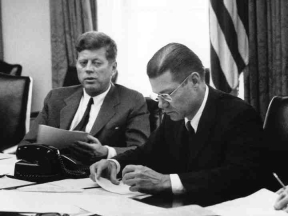
‘What exactly is parliament?' finding the place of substantive knowledge in history The relationship between knowledge and literacy is a central concern for all teachers. In his teaching, Palek noted that his students were struggling to understand complex substantive concepts such as ‘parliament' and decided to explore the relationship between...
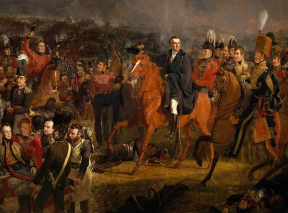
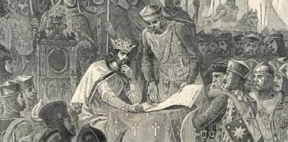
2015 is something of a year of anniversaries. It is 50 years since Churchill's death, 200 years since Waterloo, 300 since the Jacobite ‘Fifteen', 600 since Agincourt, 800 since Magna Carta. Clearly every year brings around its own crop of anniversaries; this year just seems to have quite a few...

Year 10 use an interactive learning wall to cement their understanding of substantive vocabulary It is the first term of their GCSE course and Year 10 are already starting to flag a little. They are enjoying studying the Russian Revolution, but are struggling to remember all the new words they...